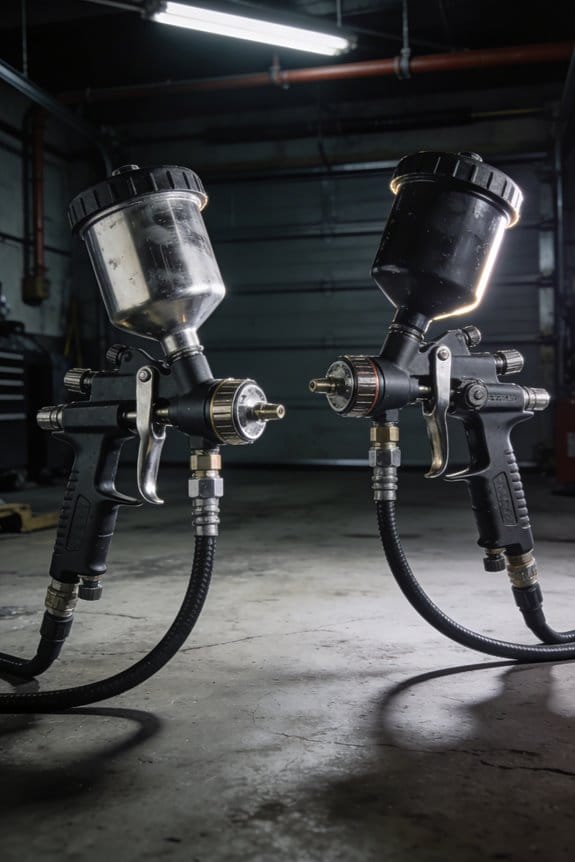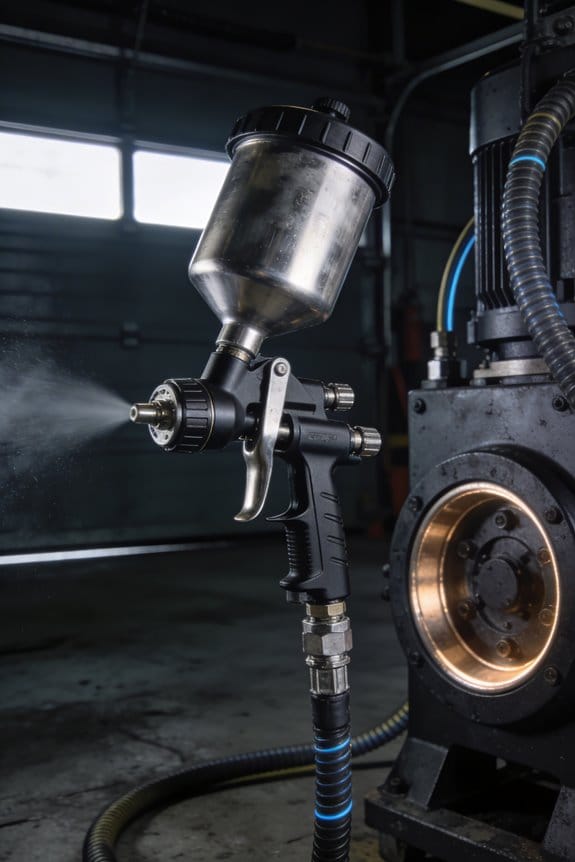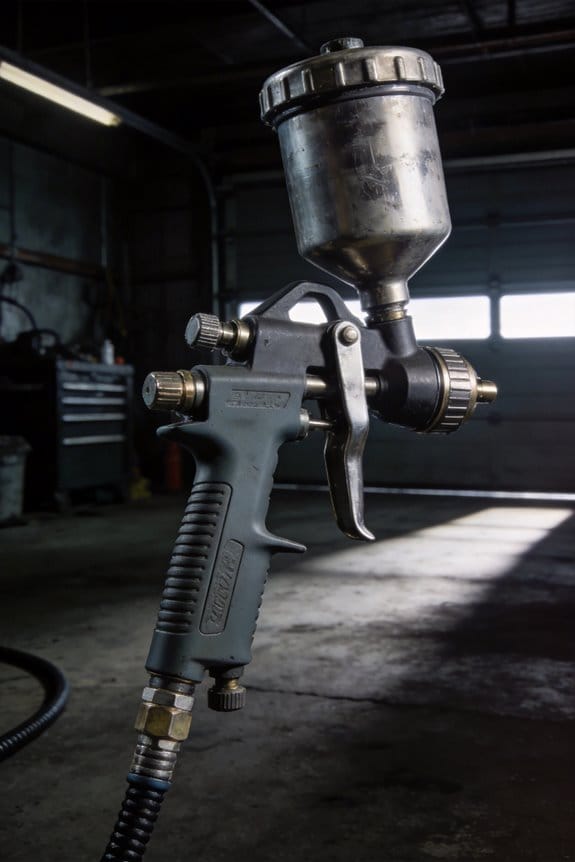
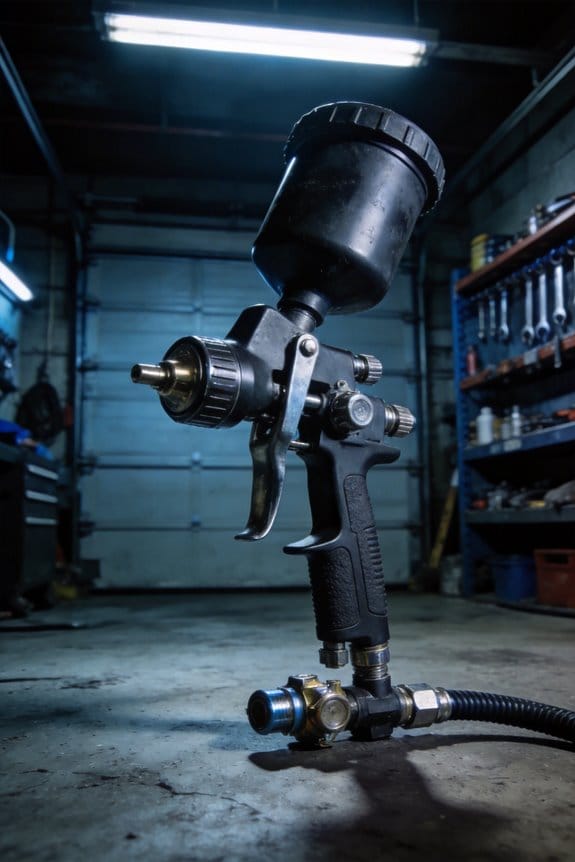

You just swapped to a low‑VOC paint and suddenly the spray pattern tears apart and your transfer efficiency drops — what pressure, tip, and gun should you use now? Or you’ve had a booth inspector flag overspray and now you don’t know whether to change filters, add a carbon bed, or tweak your capture media. Most people assume a single tweak — raise pressure or buy a new gun — will fix everything, which misses how VOCs, viscosity, gun choice, and booth capture interact.
This article shows exactly which adjustments to make: the correct tip sizes and pressure ranges for HVLP/LVLP guns with low‑VOC solvents, how to evaluate and upgrade booth filters and carbon beds, and the routine checks and records that keep you compliant.
You’ll be able to pick parts and procedures that restore efficiency and pass inspections. It’s easier than it looks.
Key Takeaways
If you’ve ever had to pick paint and a gun for a job, this is why.
VOC limits matter because regulators measure what your spray releases, and exceeding limits can cost permits and fines. For example, a small auto-shop switching from a 4.5 lb/gal solvent primer to a 2.8 lb/gal low-VOC primer cut permit paperwork in half and avoided an annual emissions report. Choose coatings with VOC values under your local limit (for many areas that’s 3.5 lb/gal or 420 g/L) and set your gun to the manufacturer’s recommended fluid tip and pressure for that material.
Before you set up a booth, you need to know how overspray will leave the area.
Overspray control affects capture and nearby contamination; if your booth’s face velocity is too low, particles escape and land on neighboring work. Example: a small parts booth with a face velocity of 70 feet per minute (fpm) produced panels with visible dust on the far side of the room, but increasing to the recommended 100 fpm reduced cross-contamination by visible inspection. Use filters rated for your particle size range (e.g., MERV 13 or higher for fine aerosols), check pressures across the filter daily, and replace when pressure rise matches the manufacturer’s service interval (often 0.5–1.0 inch w.g.).
Why your shop economics change how you spray.
Compliance costs — waste disposal, permitting, and solvent handling — make some choices pay off quickly. For example, a shop that installed a $12,000 solvent recovery unit recovered solvents worth about $4,000 per year and cut hazardous waste pickup from monthly to quarterly. Steps to consider:
- Track monthly solvent purchases and waste disposal costs.
- Compare that to recovery unit cost and expected payback (months/years).
- If payback is under three years, prioritize recovery or switch to lower-VOC coatings.
If you want workers to stay healthy, you have to reduce chronic exposures.
Worker safety and biomonitoring rules mean you should lower airborne exposures and dermal contact now, not later. A metal-fab shop that added door-locking print-removable respirator programs and raised ventilation to 8 air changes per hour dropped employee urinary solvent markers by half in six months. Do these steps:
- Measure airborne concentrations for key solvents.
- Upgrade ventilation to meet or exceed recommended air changes (typical target: 6–12 ACH for production booths).
- Institute basic PPE and regular biomonitoring if required.
Think of filter performance like a sieve for your paint.
Filter selection, maintenance, and capture efficiency determine how much paint actually hits the part versus the booth. A furniture refinisher using coarse pre-filters and a fine final filter saw transfer efficiency improve from 55% to 70% after switching to a staged filtration system and scheduled filter swaps every 40 hours of use. Practical steps:
- Match pre-filters and final filters to the particle size and coating type.
- Monitor differential pressure and replace filters on the vendor’s schedule (or sooner if pressure rises).
- Track transfer efficiency by weighing parts before and after and calculating paint-on-part vs. paint-used.
Quick Compliance Summary: What VOC and Overspray Rules Mean for Spray‑Gun Users
Before you change how you work with solvents, know why it matters: lowering VOCs and stopping overspray keeps you legal, reduces hazardous waste costs, and protects your crew.
1) How does solvent recovery help you comply?
Why it matters: reclaiming solvents cuts your facility’s VOC emissions and hazardous-waste volume, which can change whether you need certain permits.
Steps:
- Install a solvent recovery unit sized for your operation — for example, a 100‑liter/day unit for a small shop or 1,000‑liter/day for a mid‑size shop.
- Run the unit after each production shift and log the recovered liters.
- Send annual certificates from the recovery vendor to your permitting office if they request them.
Real example: At a 12‑person autobody shop, switching to a 150‑liter/day still reduced solvent waste pickups from monthly to quarterly and dropped reported VOCs by 40%.
2) Why do you need worker biomonitoring and how to set it up?
Why it matters: biomonitoring proves your controls work and protects staff from chronic exposure.
Steps:
- Choose biological sampling (urine or blood) and a medical-surveillance provider experienced with solvent exposures.
- Baseline-test each worker before assignment, then test every 6–12 months or after a high‑exposure event.
- Keep records for at least five years, including test dates, values, and any corrective actions.
Real example: A spray booth team of six used urine tests every 6 months; one worker’s results rose above the action level and you removed them from exposure until ventilation was fixed.
3) What specific booth and capture upgrades reduce overspray?
Why it matters: trapping aerosols at the source lowers fugitive emissions and keeps your filters within legal efficiency ratings.
Steps:
- Upgrade to high‑capture booth filters rated MERV 13 or better, or use HEPA where required.
- Install or retrofit capture hoods that provide 0.5–1.0 m/s face velocity at the spray zone.
- Perform weekly visual checks and replace filters on a scheduled basis — for many shops, that’s every 4–8 weeks depending on use.
Real example: A furniture spray shop added a capture hood and switched to MERV 13 filters; overspray on nearby equipment dropped visibly in two weeks and weekly filter changes became monthly.
4) How should you maintain equipment to prevent leaks and fugitive emissions?
Why it matters: small leaks add up to significant emissions and can trigger violations.
Steps:
- Do a walk‑around leak inspection daily and a detailed check monthly (hoses, fittings, seals).
- Fix or replace any worn parts within 48 hours of discovery.
- Record each inspection and repair with date, part replaced, and who did the work.
Real example: A plant found a leaking coupling during a daily check; fixing it reduced solvent vapor readings near the line by 30% within one shift.
5) What records do you need for inspections?
Why it matters: inspectors look for purchase, recovery, and maintenance records to verify compliance.
Steps:
- Keep solvent purchase invoices and inventory logs by month.
- Log recovery volumes per shift and monthly totals from your solvent recovery unit.
- Maintain a maintenance and inspection log with dates, actions, and personnel signatures for at least five years.
Real example: During an audit, a small coating company produced 24 months of purchase and recovery logs and avoided fines because their records matched reported emissions.
Final practical tips:
- Start with a simple daily checklist (recovery run, booth check, leak walk). Keep it under one page.
- Label where you store recovered solvent and keep chain‑of‑custody paperwork when you send waste offsite.
- If you’re unsure what action levels apply, contact your local permitting office with your monthly VOC totals.
You’ll be ready if you follow the steps, keep the records, and fix leaks fast.
How CARB, SCAQMD, and EPA VOC Limits Change Paint and Spray‑Gun Choices (HVLP, LVLP, Airless)

Here’s what actually happens when regulators tighten VOC limits and you need to change paints and spray guns: it changes both what you can buy and how you’ll apply it, so your choices affect compliance and finish quality.
Why this matters: if you pick the wrong paint or gun, you’ll fail limits, waste material, or ruin a job.
How formulations change
1) What changes: manufacturers replace high‑VOC solvents with de‑aromatized solvents or water‑carriers, and they often add coalescents or slower evaporators to keep the paint sprayable.
Real example: a body shop switching from a solvent‑based primer (1,000 cPs viscosity) to a low‑VOC primer (1,400 cPs) found the primer sagged less but needed slower flash‑off between coats.
Steps to adapt:
- Measure viscosity with a Zahn cup or a simple flow cup; aim for the gun manufacturer’s recommended range (for many HVLP guns that’s 20–25 seconds Zahn #2).
- If viscosity is too high, thin with the manufacturer’s specified reducer in 5% increments and test spray.
- Allow longer flash‑off times—add 2–5 minutes between coats for water‑borne mixes in cool conditions.
Which gun to pick: HVLP, LVLP, or airless?
Why this matters: gun choice controls transfer efficiency, overspray, and whether you’ll meet VOC‑based rules for solvent use.
1) HVLP: choose this if you want high transfer efficiency with thinner low‑VOC coatings.
Real example: a cabinet maker using a water‑based topcoat switched to an HVLP turbine gun and cut overspray by about 30%, using 0.8–1.3 mm caps for clear coats.
Steps:
- Use a 1.0–1.3 mm fluid tip for most low‑VOC clears and stains.
- Set inlet pressure to 10–15 PSI at the gun for turbine systems or 20–30 PSI at the regulator for compressor systems.
- Adjust air cap pattern to a 6–8 inch fan at 12 inches from the surface.
2) LVLP: choose this if you have limited compressor capacity or need finer atomization on delicate parts.
Real example: a furniture restorer with a 2‑HP compressor switched to an LVLP gun and reduced lumpy finishes on carved mouldings.
Steps:
- Use 0.7–1.1 mm tips for lacquers and thin water‑based paints.
- Set line pressure to 25–35 PSI and gun pressure to the lowest that maintains a full pattern.
- Keep distance at 6–10 inches for small parts.
3) Airless: choose this for thicker materials or when you need fast cover on large surfaces.
Real example: a contractor spraying a low‑VOC elastomeric roof coating used an airless at 2500 PSI with a 0.021–0.025 inch tip to maintain production rates.
Steps:
- Thin only if manufacturer allows; when needed, thin in 2–5% steps.
- Pick a tip size matched to solids—0.009–0.017 inch for light coatings, 0.017–0.025 for heavy coatings.
- Keep pressure high enough for proper atomization—1,500–3,000 PSI typical.
Technique and compliance tips
Why this matters: technique affects VOC emissions and finish consistency, so training avoids violations and rework.
Real example: a small shop trained its team on flash‑off times and reduced rejected jobs from 12% to 3% in two months.
Steps:
- Get regulatory training (1–2 hour class or online module) covering local VOC limits and recordkeeping.
- Keep material data sheets and VOC calculations on site; log gallons used monthly.
- Test spray before production: spray a 6×6 inch panel, check coverage and adhesion, then adjust thinning or tip size.
Quick checklist before you spray
Why this matters: a short pre‑spray check prevents mistakes that cost time and money.
Real example: a painter who followed a five‑point pre‑spray checklist avoided a costly recoat after a humidity spike.
Steps:
- Confirm product VOC is below your jurisdiction’s limit.
- Check viscosity and adjust to gun spec.
- Select tip size and pressure.
- Do a test panel.
- Log the job in your compliance binder.
If you want, I can convert these steps into a one‑page shop poster with the common tip sizes and pressure ranges for your specific guns and coatings.
Overspray Control for Spray Guns: Booth Filtration, Capture Media, and Technique

Before you start spraying, know why overspray control matters: it cuts waste, lowers VOC exposure, and keeps your booth breathable.
Here’s what actually happens when your booth filters are clogged: air flow drops, particles escape, and VOC levels climb. Replace intake and exhaust filters on a schedule: check pleated pre-filters every 30 days in high-use shops or after 200 spray hours, and swap final filters every 90 days or when pressure drop increases by 0.2 in. WG (water gauge). Example: in a collision shop, a pleated pre-filter that looks gray after a week of heavy primer work should be changed immediately to stop paint from reaching the fan motor. Clean fans and inspect seals at the same intervals. If you see corrosion or rips, replace the gasket; a leaky seal can cut capture by 15–30%.
How do you pick capture media for different coatings? Because matching media to chemistry actually changes recovery and emissions.
- For solvent-based paints: choose activated carbon panels rated for hydrocarbons and replace them when breakthrough odor is detected or after 40–80 spray hours, depending on solvent load.
- For waterborne systems: use high-efficiency mechanical filters (MERV 13–15) with a separate vapor adsorbent if you use co-solvents.
- For clearcoats and heavy solids: use multilayer capture pads—coarse first, then fine—changing the fine layer after 20–40 uses.
Example: when switching from a solvent primer to a waterborne basecoat, swap the carbon panel for a high-MERV mechanical filter and log the hour count on the filter frame.
Why routine monitoring matters: saturated media fail fast and can create a fire hazard or fugitive emissions. Do this weekly:
- Visually inspect filter faces for loading and channeling.
- Measure differential pressure across the filter bank; note increases of 0.1–0.2 in. WG.
- Smell for solvent breakthrough inside the booth.
If any check fails, tag the filter and replace it within 24 hours. Example: a shop noticed a 0.25 in. WG jump after a weekend of heavy clearcoating; they swapped the final pad and restored capture within one hour.
How should you change your gun technique to reduce bounceback and mist? Because technique directly affects transfer efficiency and cleanup time.
- Keep the gun 6–10 inches from the surface for most HVLP guns; for LVLP stick to 8–12 inches.
- Overlap each pass by 50% and move at a steady 12–18 inches per second for medium-sized panels.
- Set pressure to the manufacturer’s spec: typically 8–10 psi at the cap for HVLP, and check with a manometer.
- Use a lower needle speed for fine detail to avoid atomizing into mist.
Example: painting a car door, hold the gun 8 inches away, overlap by half, and walk the panel at a steady pace—transfer improves and less ends up on the floor.
How do you integrate solvent recycling safely? Because recovering solvents cuts cost and emissions.
- Install a cyclone or baghouse stage before a carbon bed to remove solids.
- Route solvent-laden filters to a solvent recovery unit (vacuum still) every 2–4 weeks depending on load.
- Record recovered gallons and reuse within manufacturer limits.
Example: a medium shop runs its still twice a month and reclaims 60–80 gallons per run, lowering solvent purchases by 25%.
Quick maintenance checklist you can use weekly:
- Inspect filters and seals.
- Log differential pressures.
- Smell for breakthrough.
- Check spray gun distance and pressure.
- Tag and replace saturated media.
If you follow these steps—scheduled filter changes, correct media for your coatings, routine monitoring, and tightened gun technique—you’ll cut overspray, lower VOC exposure, and save money.
Trade‑Offs When Switching to Low‑VOC Systems: Performance, Cost, and Compliance

If you’ve ever walked into a paint shop and gagged from the smell, this is why.
Why it matters: switching to low‑VOC paint affects your finished parts, your budget, and your legal paperwork.
Example: a local auto body shop switched to water‑based basecoats and found primer sanding times changed, causing one extra hour of labor per vehicle.
Performance: how will your parts look and hold up?
Why it matters: finish quality and durability affect rework and customer satisfaction.
1) Test coverage and drying on three representative panels (small, medium, large). Use the exact gun, pressure, and tip you run in production.
2) Measure flash and bake times with a stopwatch — note minutes to handle, tack‑free time, and final cure at 24 hours.
3) Compare film thickness with a gauge at five spots per panel.
Real example: a furniture finisher sprayed a water‑based topcoat and had to increase film builds by 10–15% and add a 5‑minute extra bake to meet hardness specs.
Tip: document gun settings and oven temps for each formula.
Cost: what changes in your shop expenses?
Why it matters: raw material and process changes shift where you spend money.
1) Calculate material cost per square foot: (gallons × price) ÷ coverage area.
2) Add equipment or consumable costs (new pumps, filters, hoses) amortized over expected life in months.
3) Compare regulatory and waste handling savings monthly.
Example: a small cabinet shop paid $2.50/ft² with solvent paint and switched to $3.10/ft² low‑VOC but cut hazardous waste disposal from $400/month to $80/month, breaking even in nine months.
Note: expect formulation price increases but lower long‑term compliance fees.
Application changes: what will your techs need to do differently?
Why it matters: operators who aren’t trained will create rejects.
1) Run a three‑day training: day one for gun setup, day two for practice panels, day three for full parts under production conditions.
2) Create a one‑page checklist for spray parameters and cleaning steps.
Real example: a boat yard retrained sprayers to reduce air pressure by 2–3 psi and switch to a 1.3 mm tip, which fixed orange peel issues.
Keep one bold note per tech area: always use a test panel before large runs.
Compliance and supply: what paperwork and sourcing should you handle?
Why it matters: regulators check records and delays from suppliers can halt jobs.
1) Set up batch logs that record VOC values, lot numbers, mixed quantities, and dates. Keep them for the period your regulator requires (usually 2–5 years).
2) Establish two suppliers for critical raw materials and keep a two‑week safety stock.
Example: a fleet maintenance shop avoided downtime when Supplier A backordered pigment by switching to Supplier B’s compatible pigment within three days because they kept cross‑reference data.
Actionable detail: log supplier lot numbers on the same sheet as VOC test results.
How to plan the change without disrupting production?
Why it matters: a bad rollout causes rework and missed deadlines.
1) Run a 30‑part pilot: 10 small, 10 medium, 10 large parts over two weeks. Track defects per part and cycle times.
2) Analyze results weekly and adjust mix ratios or oven schedules.
3) Scale up only after defect rate is at or below your current solvent system.
Example: a commercial sign shop did a 30‑part pilot and discovered adding a single sealer coat prevented edge lift on routed letters.
Result target: reach parity in finish and cure within one month of pilot completion.
Quick checklist before you switch:
- Test panels with production gun settings.
- Time flash/bake with a stopwatch.
- Train operators for three days.
- Log VOC numbers and supplier lots.
- Keep two suppliers and two weeks of stock.
If you follow these steps, you’ll reduce surprises and keep both quality and compliance under control.
Actionable Checklist: Choosing and Configuring a Spray‑Gun Setup for VOC and Overspray Rules

Before you choose a spray‑gun setup, know why it matters: your choices determine transfer efficiency, VOC emissions, and how much clean‑up you’ll do.
1) What nozzle, tip, and pressure should you use?
Why it matters: the nozzle, tip size, and spray pressure control particle size and bounce‑back, which directly affect overspray and VOC release.
Steps:
- Test your material: measure viscosity with a Zahn cup (Zahn #2 = ~100–120 seconds for heavy lacquers) and record percent solids with a small weigh‑and‑bake test (weigh 5 g, bake at 110°C for 30 minutes, reweigh).
- Match tip size: start with a 1.3 mm tip for thin OEM lacquers, 1.4–1.6 mm for primers/paints, and 1.8–2.0 mm for high‑solids coatings. Example: when spraying automotive primer at 18–22% solids, a 1.6 mm tip at low pressure gave a smooth build with less bounce on a metal panel.
- Set pressures: for HVLP use 8–12 psi at the cap; for conventional guns aim 25–35 psi at the gauge; for airless adjust to 1500–2500 psi depending on coating. Short sentence.
- Check transfer efficiency: measure transfer by weighing part before and after and comparing to paint used; aim for >60% with HVLP on small parts.
2) How do you test and adjust atomization?
Why it matters: correct atomization reduces overspray and improves finish consistency.
Steps:
- Spray a fan pattern on scrap, 10 inches from the surface, moving at 8–12 inches per second.
- Look for feathered edges and consistent droplets; if you see large blobs, reduce tip size or increase pressure slightly. Short sentence.
- Repeat until the spray width and droplet size match the part geometry.
3) What maintenance keeps transfer efficiency high?
Why it matters: worn tips, seals, and clogged filters drop efficiency and raise VOCs.
Steps:
- Inspect tips weekly for wear; replace when pattern becomes wider or ragged—usually after 40–80 hours for high‑abrasion coatings.
- Change booth intake filters every 2–4 weeks depending on load; change exhaust/HEPA filters when pressure drop increases by 25% over baseline. Short sentence.
- Lubricate gun seals monthly and replace any O‑rings showing nicks or flattening.
4) How should you train operators?
Why it matters: technique affects material use, overspray, and safety.
Steps:
- Teach stance and wrist movement: keep the gun perpendicular, 6–10 inches from the work, and use full arm motion for even passes.
- Run a skills check: have each operator spray a test panel to a specified finish standard and measure material used per panel. Short sentence.
- Reinforce safety: require respirators with assigned protection factor (APF) appropriate for solvent type and ensure spill kits and grounding are available.
5) How do you verify compliance with VOC and overspray rules?
Why it matters: documentation shows regulators you meet local limits and can avoid fines.
Steps:
- Compare your measured grams VOC per liter (g/L) of ready‑to‑spray mix against local limits, accounting for exempt compounds if allowed.
- Keep records: date, material batch, percent solids, tip size, pressures, transfer efficiency test results, and filter change logs for at least 2 years. Example: a small shop kept weekly logs and passed a county audit by presenting three months of consistent transfer‑efficiency and filter records. Short sentence.
- If required, validate with a certified emissions test and archive the report.
Final practical checklist (do these in order):
- Measure viscosity and percent solids.
- Select tip size (1.3–2.0 mm guidelines).
- Set initial pressure (HVLP 8–12 psi, conventional 25–35 psi, airless 1500–2500 psi).
- Spray test panels 10 inches away, 8–12 ips, adjust until pattern is even.
- Weigh parts to calculate transfer efficiency (>60% target for HVLP).
- Schedule weekly tip checks, monthly seal care, and filter changes every 2–4 weeks.
- Train operators with a panel standard and record results.
- Document VOC g/L, test data, and filter logs for audits.
The most critical detail is this: keep one clear log for pressures, tip sizes, and transfer tests so you can show your measurements in case of inspection.
Frequently Asked Questions
How Do Regulations Affect Aerosol Spray-Can Formulations and Usage?
Regulations gently nudge change: I adapt formulations via aerosol reformulation to meet limits, overhaul labeling standards for transparency, and guide users toward safer application, so compliance and worker safety quietly become priorities.
Can Solvent Recovery Systems Be Retrofitted to Older Spray Booths?
Yes — I’ve found retrofit feasibility is usually good for older booths; I’ll assess space, ducting, and power. With proper design and maintenance, capture efficiency can match modern systems, cutting VOCs and reclaiming solvents effectively.
What Biological Monitoring Methods Detect Worker VOC Exposure Effectively?
Right off the bat, I recommend biomarker panels and breath analysis; I wouldn’t bet my bottom dollar on a single test, so I use combined urine, blood and exhaled breath markers plus periodic medical surveillance for reliable VOC exposure detection.
How Do VOC Limits Influence Paint Shelf-Life and Storage Requirements?
VOC limits shorten shelf stability for solvent-reduced paints, so I advise stricter storage labeling, cooler sealed conditions, and humidity control; I’ll recommend batch testing and quicker rotation to prevent degradation and guarantee compliance.
Are Powder Coating or Electroplating Subsidies Available as Alternatives?
Yes — I’ve found powder incentives and electroplating grants exist: governments and utilities offer subsidies, tax credits, and equipment rebates to encourage cleaner alternatives, so I’d check local and national programs for eligibility and application details.