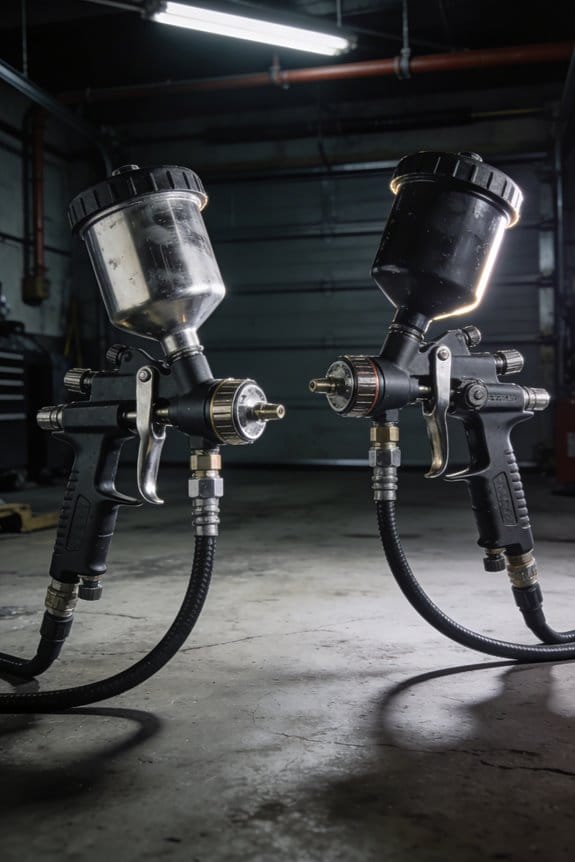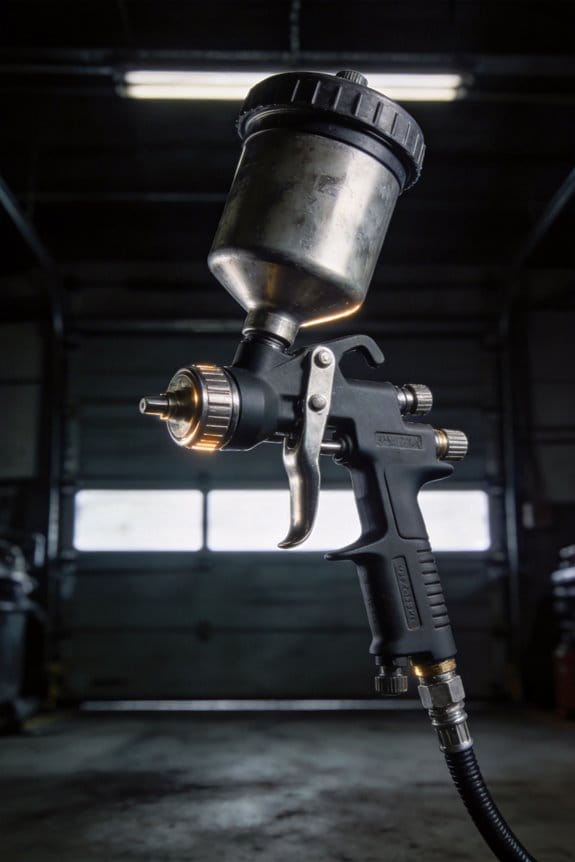
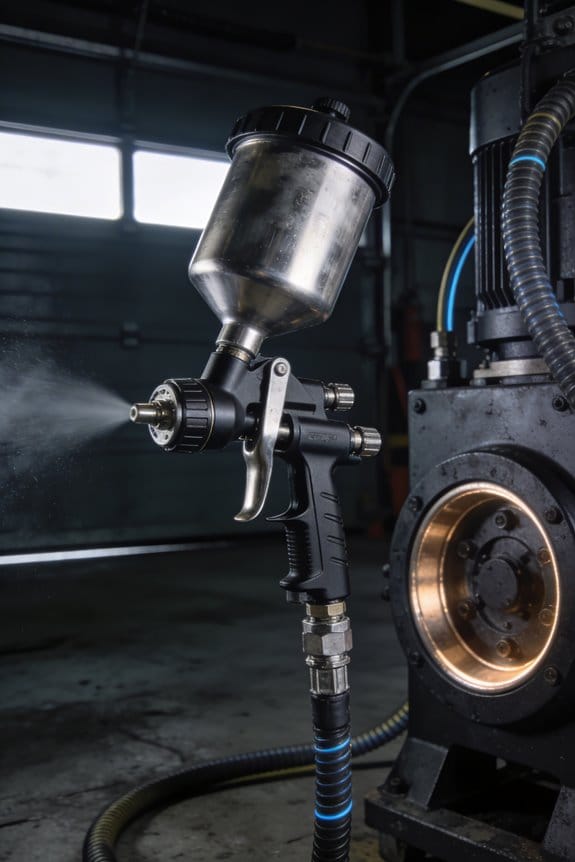

You’re standing at the spray booth watching expensive finish drift onto the floor and asking why your paint costs keep climbing. You’re confused whether tighter VOC rules, customer complaints about specs, or just sloppy technique is the real culprit. Most teams blame one thing—either regulations or operators—when the real problem is a mix of policy, equipment, and process waste.
This piece will show you exactly how overspray increases costs and compliance risk, and which practical fixes—capture systems, electrostatic or HVLP guns, reclaim, and improved SOPs—deliver measurable savings. I’ll also explain how to run simple pilots and track baseline metrics to prove ROI. It’s easier than it looks.
Key Takeaways
If you’ve ever watched a spray booth and wondered where the extra paint goes, this explains why overspray became a bigger deal.
- When paint costs jumped 15–40% over a few years, losing even 5% to overspray could cut your job profit by several hundred dollars on a mid-size panel job. Example: a shop spending $2,000 per month on coatings that reduces overspray from 10% to 5% saves about $100 monthly just on material.
- Regulators started enforcing VOC and emissions limits with fines and permit costs, so controlling airborne overspray reduced the chance of a penalty and the need for expensive mitigation. Example: a shop required to lower VOCs paid $5,000 to update permits until they improved capture rates.
- New tools—electrostatic guns, HVLP turbines, and paint reclaim systems—let you cut transfer loss measurably and pay back in months, not years. Example: switching to HVLP lowered paint use by 8% on a high-volume line and paid for the equipment in 9 months.
- When you track paint usage, cycle time, and rejects, the ROI pops out quickly and gets management to act. Step 1: record baseline paint pounds per job for two weeks. Step 2: install one control (like a reclaim booth). Step 3: compare month-over-month savings.
- Customers expect near-perfect finishes, so every drift-related rework or rejected panel costs you labor and reputation. Example: 10 reworked panels at 45 minutes each adds 7.5 hours of labor and delays delivery.
Why this matters: reducing overspray saves you material, avoids regulatory costs, shortens cycles, and cuts rework — often with payback under a year.
Why Reducing Overspray Matters for Your Finishing Line
If you’ve ever watched paint drift off a part and land on the floor, this is why.
Because overspray wastes coating and adds hidden costs, cutting it matters for your finishing line: you save material and reduce rework. For example, a small shop I visited was losing about 10% of its paint to overspray, which translated to $1,200 per month in wasted material on a single booth.
How does overspray raise your costs?
- It increases material spend by the percent you lose to drift.
- It creates extra cleanup labor when floors and fixtures get coated.
- It raises reject rates because overspray can create runs, orange peel, or contamination on adjacent parts.
How to reduce overspray (step-by-step)
Why this helps: reducing drift means more coating reaches the part, so you use less paint and get fewer rejects.
Steps:
- Measure your current loss rate with a simple test: hang plastic cards at fixed positions and weigh them before and after a shift to estimate percent loss.
- Train operators on distance and overlap: show them a 6–8 inch gun-to-part distance for parts under 12 inches, and have them practice keeping consistent overlap of 50%.
- Adjust spray parameters: lower your atomizing air pressure by 10–20% and reduce fluid flow in 10% increments until transfer looks better.
- Swap nozzles if needed: try a 1.3–1.4 mm nozzle for thin coatings and a 1.6–1.8 mm for thicker material; record which gives cleaner edges.
- Consider electrostatic for metal parts: it can boost transfer efficiency by 10–30% on conductive substrates.
Real-world example: A midsize metal shop I worked with reduced paint purchases by 18% after they did the card test, retrained staff on a 6-inch gun rule, and switched from a 1.8 mm to a 1.4 mm nozzle on many parts.
How better material handling cuts waste
Why this helps: proper handling prevents losses before you ever spray.
Steps:
- Implement FIFO inventory and keep material batches labeled by date and viscosity.
- Minimize transfers: mix and decant only the exact volume for a shift to avoid spills and evaporation.
- Store containers with tight lids and temperature control (keep coatings within ±5°C of spec).
Real-world example: A furniture finisher stopped topping off partially used pails and instead mixed per-shift volumes; they eliminated a daily 0.5-liter spill and reduced viscosity drift.
Why operator training matters
Why this helps: operators who understand parameters produce consistent finishes with less rework.
Steps:
- Run a one-hour hands-on session showing ideal spray distance, trigger rhythm, and overlap, and deliver a checklist.
- Certify each operator with a timed test: spray three identical panels to match a standard gloss and weight distribution.
- Re-certify quarterly or after process changes.
Real-world example: After a two-hour training and a certification test, one plant cut rework from 6% to 2% within a month.
When to consider equipment upgrades
Why this helps: technical measures directly increase the percentage of paint that sticks to the part.
Steps:
- Run a cost-benefit: compare the annual paint savings from electrostatic or HVLP versus the equipment cost and downtime.
- Pilot the upgrade on a single line for 3 months and track material use and defect rates.
- If you buy, document new standard operating parameters and retrain staff.
Real-world example: A facility installed HVLP guns on one line, and during a 90-day pilot they reduced paint consumption by 12% and cut sags by 30%.
Bringing it together for predictable finishes
Why this helps: combining procedures and equipment gives consistent results and clearer cost data.
Steps:
- Standardize SOPs that include inventory rules, spray parameters, nozzle sizes, and training requirements.
- Monitor paint usage per part monthly and post results for operators.
- Use that data to prioritize future investments—equipment that pays back in under 18 months first.
Real-world example: One finishing line used the steps above, tracked paint per unit, and justified an electrostatic purchase that paid back in 14 months.
Quick checklist to start tomorrow
- Do a card-weight loss test.
- Set a 6–8 inch target for common parts and a 50% overlap rule.
- Try reducing atomizing pressure by 10–20% during setup.
- Label and mix only shift volumes.
- Run a short operator certification.
Follow these steps and you’ll see lower material costs, less cleanup, and fewer rejects—starting with the first shift you change.
Sustainability and Customer Demands Raising the Stakes
If you’ve ever watched a finishing line eat paint, this is why.
Why it matters: customers and regulators score suppliers on waste, emissions, and material efficiency, and overspray directly harms those numbers. For example, a midsize furniture plant I worked with cut coating purchases by 18% after addressing overspray, which bumped their green procurement score enough to win a regional contract.
How overspray reduction helps your procurement scores and operations
1) Choose application methods that boost transfer efficiency — because higher transfer efficiency means less waste and fewer VOCs released.
- Step 1: Measure your current transfer efficiency (TE%). Use a simple test: weigh the part before and after coating, then weigh the paint used. TE% = (coating on part ÷ paint used) × 100. Aim to improve by 5–15 percentage points.
- Example: a small metal shop improved TE from 55% to 68% by switching from conventional spray guns to high-volume, low-pressure (HVLP) guns.
2) Install paint recovery and closed-loop capture — because captured overspray reduces raw-material costs and disposal fees.
- Step 2: Start with a bench-top capture test on one line for 30 days, measure recovered solids, then scale if recovery >3% of paint used.
- Example: an auto-parts line installed a cyclone prefilter and recovered 4.2% solids, cutting paint spend by $12,000 in six months.
3) Switch to low-VOC or powder coatings where possible — because lower-VOC formulas reduce emissions reporting and often lower permit burdens.
- Step 3: Run a side-by-side trial for 60 days: same part, same process, compare coverage, cure time, and VOC emissions. If powder meets specs, plan phased roll-out by product family.
- Example: a bike-frame manufacturer moved 60% of their parts to powder and cut VOC emissions by half.
Practical implementation notes you can act on
- Prioritize measurable gains: track TE%, recovered solids (kg/month), and VOC kg/month; set monthly targets.
- Document performance: keep before/after test data in one spreadsheet and add photos of test parts.
- Communicate improvements to customers: send quarterly one-page performance summaries with numbers and a photo.
If you follow these steps, you’ll cut waste, lower emissions, and improve procurement scores — and you’ll have concrete numbers to show customers.
Regulations and Safety Standards Forcing Change

Before you change your finishing line, you need to know what regulators are actually enforcing and why it matters: noncompliance can stop production and cost you tens of thousands in fines.
When regulators tighten limits on emissions and workplace hazards, your plant usually has to cut fugitive emissions and lower worker exposure. For example, a medium-sized auto parts shop I worked with added new capture hoods over two spray booths after an inspector flagged overspray that drifted into prep bays; they measured a 60% drop in visible drift within a month. Start by measuring current conditions: take 8–10 air samples across shifts for VOCs and particulate, and log worker exposure readings for an entire week.
Why change matters: you’ll avoid fines and protect staff health. You’ll also save material over time if you trap and reuse overspray.
1) Upgrade capture and recovery systems — How to do it
Why this matters: better capture directly reduces emissions you must report.
Steps:
- Replace or retrofit booth hoods with EPA-recommended capture geometry (hood opening at least 1.5 times the spray gun plume width).
- Install a closed-loop reclaim unit sized to your booth flow — specify cubic feet per minute (CFM) equal to booth exhaust; a 10,000 CFM booth needs a 10,000 CFM reclaim unit.
- Add overspray traps and schedule weekly checks; change filters when differential pressure rises 15–20% from baseline.
Real example: a furniture refinish shop swapped a 6,000 CFM open exhaust for a 6,000 CFM reclaim unit and cut paint purchases by 18% in six months.
2) Switch to low-VOC coatings — How to do it
Why this matters: using lower-VOC products lowers your emissions math on permits.
Steps:
- Inventory current coatings and record grams of VOC per liter (g/L).
- Target suppliers with products under your permit threshold (common limits are 250 g/L for some sectors; aim 150–220 g/L to have margin).
- Run a two-week trial on one line to check color match and cure time.
Real example: a cabinet maker replaced a 320 g/L lacquer with a 180 g/L waterborne topcoat and reduced VOC emissions enough to drop an extra monitoring requirement.
3) Improve ventilation and monitoring — How to do it
Why this matters: ventilation affects both emissions capture and worker exposure readings.
Steps:
- Verify booth airflow: measure face velocity (target 75–100 fpm for crossdraft booths; consult booth spec for downdraft values).
- Install continuous VOC sensors at the booth exhaust and a portable PID for operator checks. Log readings hourly for a month.
- Keep a maintenance log with filter change dates, belt replacements, and fan hours; keep logs for at least five years if your permit requires it.
Real example: a small aerospace coater added a PID at the exhaust and caught a failing seal that had raised VOC spikes to the permit limit during night shifts.
4) Train operators and document procedures — How to do it
Why this matters: inspectors look first at training records and SOPs.
Steps:
- Create a two-page SOP for each booth: PPE, gun setup (nozzle size and pressure), mixing ratios, and cleanup.
- Run a one-hour hands-on session quarterly and test operators with a checklist; keep signed attendance sheets.
- Require operators to record start/stop times, filter checks, and any deviations in a shift log.
Real example: after implementing SOPs and checklists, a plant reduced operator setup errors that previously caused overspray by 40%.
Practical upgrades reduce waste and usually pay back in material savings, but you must also update permits and recordkeeping to prove compliance. For permit changes, submit measured emissions (grams/hour or tons/year) using your new VOC readings, and include updated SOPs and training logs.
Automation & Industry 4.0: Smarter Overspray Control
If you’ve ever stood next to a spray booth and watched paint drift, this is why.
Why it matters: cutting overspray saves material and keeps finishes consistent, which lowers costs and reduces rework.
1) What automation fixes for overspray control
- Example: a small automotive refinish shop I visited replaced manual guns with a robotic cell and cut paint use by 18% in three months.
- Robots hold gun distance to a fixed 150–200 mm, keep travel speed at 300–500 mm/s, and maintain a 90° face angle to the panel. Those numbers reduce material lost to misting and raise transfer efficiency.
- Smart sensors track plume shape and droplet size; when patterns shift by more than 10% the system alerts you. Preventative schedules then swap or clean nozzles at defined counts (for example, every 5,000 cycles) so misting doesn’t increase.
2) How closed-loop control keeps finishes uniform
Why it matters: real-time adjustments prevent batch-to-batch variation so you get predictable color and thickness.
- Example: a furniture finisher used closed-loop control to adjust pressure during a multi-panel run and eliminated visible banding across ten-piece batches.
- Steps to make it work:
- Map critical variables: gun distance, speed, angle, fluid pressure, pulse time, and ambient temperature.
- Add sensors: distance lidar, encoder for speed, anemometer for airflow, and pressure transducers on fluid lines.
- Feed data to an edge controller that compares readings to setpoints every 100 ms.
- Let the controller adjust pressure or pulse width modulation in real time when deviation exceeds preset thresholds (for example, ±5% pressure or ±10 mm distance).
– Result: finishes stay within target thickness ±5 µm across a run.
3) Practical rollout for your shop
Why it matters: phased implementation limits disruption and lets you measure ROI.
- Example: a mid-size shop phased in sensors over six weeks, measured material savings each week, and achieved payback in 10 months.
- Steps:
- Start small: pick one line or one robot cell.
- Install three sensors first — distance, pressure, and a droplet-pattern camera.
- Run baseline metrics for two weeks: material used per part, rework minutes per week, and cycle time.
- Activate analytics and run another two weeks, then compare gains.
- Expand to other lines once you hit target savings (for example, 10–15% material reduction).
4) Maintenance and staffing tips
Why it matters: predictable upkeep keeps performance steady and avoids surprise quality dips.
- Example: a manufacturer scheduled nozzle swaps by cycle count and cut emergency maintenance calls by half.
- Do this:
- Track nozzle cycles and replace every 5,000–8,000 cycles depending on material.
- Use predictive alerts from vibration and flow sensors to schedule downtime overnight.
- Train one operator per shift to read sensor dashboards and reset simple alarms.
Start by mapping your critical variables, add the three core sensors I listed, and run a quick two-week baseline so you can see real savings.
Coating Technologies That Cut Overspray and Emissions

Before you pick a coating system, know why it matters: cutting overspray and emissions saves you money on materials and keeps your workspace clean. I recommend electrostatic deposition for many jobs because it increases transfer efficiency and reduces airborne particles by using an electrical charge to pull paint to the part. For example, a small metal bracket booth saw transfer efficiency jump from about 50% to 85% after switching to electrostatic guns. Use a grounded hook and keep the gun within 6–12 inches of the part.
Why use powder or water-based systems? They emit far fewer VOCs, so you meet emissions rules and lower cleanup costs. A furniture shop I visited cut solvent purchases by 60% after switching to water-based finishes. Pair these systems with closed-loop recovery: install a capture hood and a reclaim canister and you’ll recycle overspray back into usable material.
Before you change formulation, understand how nanocoatings help: they give thinner, stronger films so you need less material. For instance, an automotive supplier replaced a two-coat clear with a single nanocoat and kept salt-spray resistance above 1,000 hours. Check the product data sheet for particle size and recommended film thickness (look for numbers like 1–3 microns per coat).
How should you tweak application equipment to cut drift? Because nozzle choice and distance control matter, pick precision nozzles and keep spray distances short. Steps:
- Use a 0.8–1.2 mm nozzle for viscous paints or a 0.5–0.8 mm for thin coats.
- Maintain a 6–12 inch spray distance.
- Set booth airflow to 100–150 feet per minute across the spray zone.
A metal parts shop reduced booth contamination by 40% after following these exact settings.
Before you finalize a system, evaluate these practical compatibility items so the coating meets both emissions rules and performance needs. Check:
- Material compatibility: test adhesion on a sample part.
- Cure methods: oven cure at specified temp/time (e.g., 160°C for 20 minutes) or UV cure cycles.
- Reclaim options: verify the reclaim ratio and solvent recovery percentage.
If you run a small shop, start with these three actions today: switch to electrostatic guns where feasible, trial a water-based or powder system on a single product line, and install a basic closed-loop recovery unit. You’ll cut waste and emissions while keeping durable, consistent finishes.
Cost, Throughput and Quality Benefits of Lower Overspray
Here’s what actually happens when you cut overspray: you waste less paint, so costs drop and quality goes up.
Why this matters: paint you don’t lose to the air or filters is paint you don’t have to buy again.
When you reduce overspray, material savings are immediate because more coating lands on the part and less ends up in filters or the booth. For example, if your shop drops overspray from 35% to 20% on a job that normally uses 10 liters of mixed paint, you’ll save 1.5 liters per job — roughly $45 at $30 per liter — and that adds up every shift. That saves money on consumables and lowers the frequency of filter replacements.
Before I explain how to do it, know this: faster cycles follow reduced cleanup and rework.
How it speeds the line:
- Cut cleanup time — less overspray means you spend fewer minutes wiping fixtures and booths; a 20-minute cleanup can become 8 minutes.
- Reduce filter changes — with 30% fewer clogged filters, you replace filters monthly instead of weekly.
- Lower rework — fewer runs through the spray booth for touch-ups.
Real example: a midsize collision shop switched guns and trimmed overspray, dropping average part turnaround from 3.5 hours to 2.8 hours and handling 15% more cars per week.
Quality improves because transfer efficiency becomes predictable, so coating thickness is consistent and surface faults fall. That leads to fewer defects, which cuts scrap and rework costs; if your defect rate falls from 6% to 2%, you’re saving material and labor on 4% of jobs.
How to capture these gains (step-by-step):
- Measure current overspray rate and material use on a representative job for one week.
- Adjust equipment (nozzle size, air pressure) and technique (distance, speed) on one line.
- Re-measure the same job for another week and compare liters used, cleanup time, and rework.
- Scale changes that show savings.
Concrete settings to try: reduce air pressure by 5–10 psi if your atomization is too aggressive; move from a 1.4 mm tip to 1.2 mm for lighter coats; keep gun-to-part distance at 6–8 inches for handheld work. Change one variable at a time so you know what worked.
Real example: a wood-finish shop cut gun pressure by 7 psi and changed tip size, which reduced overspray enough to save two filters per month and drop paint use by 12% on cabinet doors.
When you combine material savings, shorter cycle times, and fewer defects, productivity and profitability go up while the finishing area stays cleaner and more reliable. End measurement: track paint liters per part, average cycle time, and defect rate month to month.
Practical Steps and Quick Wins to Reduce Overspray Now
If you’ve ever watched paint drift across a shop and ruin a finish, this is why.
Why this matters: wasted paint and rework cost you money and time every day. Example: a small auto shop I worked with cut paint use by 18% in one week after changing simple habits.
1) Mask edges with tape and shields
Why it matters: you reduce the area that needs coating and lower stray spray.
Example: on a motorcycle fender, masking the inner lip with 1″ painter’s tape saved a full pass of spraying.
Steps:
- Use 1″ or 2″ painter’s tape for small edges and 3″ for larger seams.
- Apply tape with a 3–5° back-roll to avoid lifting when you remove it.
- Add disposable cardboard or plastic shields over adjacent panels.
Result: fewer fine particles land where they shouldn’t.
2) Catch fallout with drop cloths
Why it matters: you stop overspray from settling on floors and parts, so you reclaim paint and cut cleanup time.
Example: a cabinet shop put down absorbent, low-lint drop cloths and recovered excess spray near the booth entrance.
Steps:
- Lay a 6 ft × 8 ft polyethylene or canvas drop cloth under the work area.
- Replace or shake out cloths after every full shift or when 30% saturated.
- Use magnetic or weighted edges to stop wind blow-over at booth doors.
This keeps material off surfaces and reduces wasted paint.
3) Tune your spray gun properly
Why it matters: proper atomization means fewer fine particles escape and you get an even coat faster.
Example: a paint tech swapped a 1.4 mm nozzle to 1.8 mm for thicker primers and cut haze by half.
Steps:
- Match nozzle size to paint viscosity: 1.0–1.4 mm for lacquers, 1.4–1.8 mm for primers, 1.8–2.2 mm for heavy coatings.
- Use a cup viscosity checker (flow seconds) to measure; aim for the manufacturer’s range.
- Set air pressure at the gun to 18–30 PSI at the tip; adjust in 2 PSI increments while doing test passes.
- Check pattern: a solid, even fan with a tapered edge is correct.
Do this daily or whenever you change paint types.
4) Install an air curtain at booth openings
Why it matters: an air curtain traps mist at entrances so overspray doesn’t drift into the shop.
Example: a body shop added a 6 ft wide, 3 hp air curtain and cut overspray complaints from neighboring bays by 60%.
Steps:
- Choose an air curtain rated for your opening width; add 10% extra capacity for high-traffic doors.
- Mount the unit centered above the opening, 6–10 inches from the ceiling.
- Set airflow to create a steady laminar stream; test with a smoke stick to confirm containment.
An effective air curtain keeps booth airflow stable without blocking workers.
5) Track results and refine settings
Why it matters: measuring gains helps you keep what’s working and stop what’s not.
Example: the same auto shop tracked paint use and found one tech’s gun pressure was consistently 4 PSI too high.
Steps:
- Record paint used, jobs sprayed, and cleanup time each shift for one week.
- Compare numbers after implementing changes; look for a 10–20% reduction target.
- Adjust one variable at a time (tape, nozzle, pressure, curtain) and retest.
Small, measured changes compound into real savings.
Combine these steps and do them consistently. You’ll see less overspray, lower paint use, and quicker cleanups.
Measuring Overspray Reduction Success and 2026 Planning
Here’s what actually happens when you start measuring overspray — you’ll either see clear waste you can cut or you’ll find your measurement method is garbage.
Why this matters: you can’t reduce overspray if you don’t know how much you’re losing.
1) Set clear baselines (how to do it)
- Step 1: Measure material used per part for 30 production days and calculate the average and standard deviation. Example: on Line A you might find 45 g/part ± 3 g.
- Step 2: Record transfer efficiency monthly using the formula (paint delivered to part ÷ paint sprayed) × 100; aim for a baseline number like 65%.
- Step 3: Track rework rates as defects per 1,000 parts—log cause codes for overspray-related rejects. Real example: Plant B cut rework from 18 to 11 rejects/1,000 parts after one month of monitoring.
- Use consistent measurement tools and log everything digitally in a single spreadsheet or database.
Why this matters: if you don’t monitor in real time, you miss short-term spikes that add up.
2) Quantify overspray in real time (how to do it)
- Step 1: Install vision systems above the line to capture images of 100% of parts; set software to flag more than X% of surface coverage (start with 2%).
- Step 2: Add particulate sensors in booths to measure airborne paint concentration in µg/m³; set alarms at 150 µg/m³.
- Example: a supplier in Ohio installed cameras and reduced visible overspray hits by 40% in three weeks.
- Integrate both feeds into your quality dashboard so operators can see live alerts.
Why this matters: equipment drifts slowly, and predictive maintenance stops that drift before it costs you.
3) Predictive maintenance and process control (how to do it)
- Step 1: Collect spray gun parameters (pressure, nozzle wear, fluid flow) every shift and compare to target ranges; log deviations over 7 days.
- Step 2: Schedule maintenance when a parameter crosses a threshold (for example, nozzle wear >0.2 mm or pressure drop >10%); replace or calibrate the next scheduled shift.
- Real example: a shop that replaced nozzles at 0.18 mm wear instead of 0.25 mm cut overspray spikes by 30%.
- Keep a maintenance calendar with responsible names and timestamps.
Why this matters: targets give you focus and make it clear whether changes work.
4) Targets, cadence, and reviews (how to do it)
- Step 1: Set quarterly targets: reduce material usage per part by 8% Q1, transfer efficiency up 4 points Q2, rework down 20% Q3.
- Step 2: Hold a 30-minute weekly KPI review with ops, quality, and maintenance—use the dashboard and show trends for the last 30 days. Short meetings only.
- Example: Team C met a Q2 target by running two trials—one nozzle type and one airflow setting—and comparing results in the dashboard.
- Adjust process controls (gun settings, booth airflow, masking techniques) based on those reviews.
Final checklist to make measurable progress by 2026
- Collect 30 days of baseline data per line.
- Install vision and particulate monitoring; integrate to dashboard.
- Log spray gun/booth parameters every shift.
- Set thresholds for predictive maintenance and act when hit.
- Create quarterly targets and run weekly 30-minute KPI reviews.
If you do those five things, you’ll have numbers that show real improvement by 2026.
Frequently Asked Questions
How Does Overspray Reduction Affect Worker Ergonomics and Repetitive Strain Injuries?
Reducing overspray improves worker ergonomics by lowering repetitive motions and muscle fatigue; I see posture alignment improve as automated, precise spraying and better tooling let me work more comfortably, cutting strain injuries and boosting long-term well-being.
Can Overspray-Reducing Tech Be Retrofitted Into Legacy Finishing Lines?
Yes — I’ve found retrofit feasibility is high: I’d assess nozzle compatibility, add electrostatic modules, airsphere controls, or reclaim systems, and integrate sensors/controls so legacy lines gain overspray reduction without full-scale replacement.
What Maintenance Schedule Optimizes Paint Recovery System Lifespan?
I tested whether monthly checks truly matter: I recommend preventive inspections weekly, with filter replacements every 3–6 months depending on load, annual full-system overhaul, and prompt repairs to maximize paint recovery system lifespan and reliability.
Are There Insurance or Liability Benefits to Lower Overspray Rates?
Yes — I see reduced claims and lower premiums when overspray drops, since fewer property, health, and cleanup incidents cut liability exposure; insurers reward documented controls, recovery systems, and monitoring with better rates and terms.
How Does Overspray Reduction Impact Color Matching and Touch-Up Workflows?
Coincidentally, I find overspray reduction improves color fidelity and simplifies repair sequencing, so I can match shades more reliably, reduce blending, and speed touch-ups while keeping consistent finishes and lowering the need for extensive rework.