
You’re standing beside the plant’s compressor room watching pressure spikes and wondering why energy bills keep climbing despite recent upgrades.
You can’t tell which leaks, inefficient cycles, or failing parts are really costing money because the system hides those losses in aggregated meters. Most teams assume a single meter read or periodic inspections are enough and miss the detailed, actionable data.
This article shows how local sensors, edge controllers, and cloud analytics turn those hidden costs into clear actions — find leaks fast, predict maintenance needs, and lower kWh per unit.
It also gives a practical pilot‑to‑scale roadmap and realistic ROI estimates. It’s easier than it looks.
Key Takeaways
Here’s what actually happens when you connect a smart air system to your plant network: it gives you live, edge-to-cloud visibility so you can see exactly what the compressors and lines are doing right now and over time. For example, a plant in Ohio used dashboards to spot a 15% leak that only showed up in hourly trends. You’ll get digital-twin-style metrics and continuous monitoring that match Industry 4.0 goals.
Before you pick controllers, understand why local decision-making matters: sensor fusion and edge controllers let your system act instantly and predict failures so you avoid surprise shutdowns. A food-packaging line in California avoided a weekend stoppage after an edge controller shut down a faulty compressor within seconds. Do this by combining pressure, flow, and vibration sensors at each compressor and configuring two local rules: (1) shut down on vibration > X; (2) alert when pressure drops > Y within 2 minutes.
If you want to cut energy and cost, focus on measurable KPIs: energy dashboards that show kWh per unit produced translate raw data into efficiency gains you can act on. A metal fab factory reduced kWh-per-part 12% in three months by tracking that KPI on a weekly board. Set up these steps: 1) capture kWh and output per shift, 2) calculate kWh/output each week, 3) target a 5% improvement in 90 days.
Think of integration like plugging a new phone into your home Wi‑Fi: standardized telemetry (MQTT over TLS, 1 Hz summaries) and network redundancy let the air system join your OT/IT stack reliably. At a packaging plant, switching telemetry to MQTT/TLS cut lost packets from 10% to under 0.5%. Use MQTT with TLS, send 1 Hz summaries for key signals, and add a secondary network path for redundancy.
You don’t need to overhaul everything at once if you deploy in phases: start small, validate quickly, and expand. A plastic-molding shop installed 3–5 sensors per compressor, ran them 30 days, labeled every connection, and then rolled out the rest in two weeks. Follow this rollout: 1) install 3–5 sensors per line, 2) run 30 days of validation, 3) label hardware and create simple SOPs, 4) scale in 2-week increments.
Define Smart Compressed‑Air Systems for Industry 4.0
If you’ve ever walked a noisy plant floor and wondered why the air system still fails, this is why.
Why it matters: you save uptime and cut energy bills by catching problems early. A smart compressed‑air system uses connected sensors, local controllers, and cloud tools to monitor and manage your network in real time.
How it works (concrete steps):
- Install sensors for pressure, flow, temperature, and vibration at these spots: compressor outlet, receiver tank, main headers every 50–100 meters, and critical machine inlets.
- Use sensor fusion at the edge controller to combine those inputs every second and generate one clean diagnostic reading.
- Let the local controller act immediately on fast events—like opening a bypass valve within 200 ms if pressure spikes—while sending 1–5 minute summary data to the cloud for trend analysis.
- Set cloud rules to send SMS or tablet alerts for thresholds you pick, for example: pressure drop >10% in 5 minutes or vibration increase >15% over baseline.
- Review monthly energy dashboards that compare kW per 100 m3 of delivered air and adjust setpoints or storage to cut consumption by 5–20%.
Real example: At a mid‑size automotive supplier, technicians fitted flow sensors every 60 m and an edge controller that closed a leaking section within 0.2 seconds; compressed‑air downtime dropped from 8 hours per month to under 1 hour, and energy use fell 12% after retuning.
What sensor fusion gives you and how to set it up
Why it matters: fused signals reduce false alarms and point you to the real fault.
Steps:
- Choose a fusion rule: majority vote for alarms, weighted average for pressure values (weight flow 0.5, pressure 0.3, temp 0.2).
- Calibrate sensors together during a one‑hour baseline run at known load.
- Test alarms for a week and tune thresholds to get under 2 false alarms per month.
Real example: A food‑packaging line reduced false shutdowns from 6 per month to 1 by using weighted fusion and a one‑hour calibration run.
Why edge orchestration matters and what to do first
Why it matters: instant local actions prevent production losses and limit data you send to the cloud.
Steps:
- Program local controllers for three actions: open storage valve, shed non‑critical loads, and send alert.
- Keep latency under 250 ms for safety events; use wired connections where possible.
- Limit raw data uploads to summaries every 1–5 minutes and only send raw streams for flagged incidents.
Real example: A plastics plant used edge orchestration to start a backup compressor within 150 ms of a main failure, avoiding two hours of scrap on a molding line.
How predictive maintenance works in practice
Why it matters: you avoid failures and extend equipment life by fixing things at the right time.
Steps:
- Collect vibration and temperature at bearings and motor terminals every minute.
- Use simple models: flag vibration rising 20% above baseline for three consecutive readings, or temperature +8°C over ambient for 10 minutes.
- Schedule inspection within 48 hours of a flag and replace parts during planned downtime.
Real example: A printing press reduced unplanned motor failures from four a year to one by acting on 20% vibration increases and planning a single maintenance day per quarter.
Energy optimization you can apply this week
Why it matters: compressed air is often the single biggest energy cost in a plant.
Steps:
- Measure kW and delivered air for one week under typical production.
- Increase storage capacity or use existing tanks to smooth peaks so compressors run at 70–90% capacity instead of 30–60%.
- Implement setpoint scheduling: lower pressure by 0.2–0.5 bar during night shifts or low‑demand periods.
Real example: A chemical plant raised storage and lowered night setpoints, cutting compressor cycling and saving 15% on their air energy bill.
Access and alerts — what you’ll actually get
Why it matters: you want usable alerts, not phone noise.
Steps:
- Configure three alert levels: info (tablet only), action (SMS + tablet), and critical (SMS, tablet, and phone call).
- Tie alerts to roles so operators get action items and managers see weekly summaries.
- Keep message text tight: what failed, where, and the suggested first action.
Real example: A textile factory set critical alerts to call the on‑call technician and reduced escalation time from 90 minutes to 18 minutes.
Quick checklist for getting started
Why it matters: you avoid common mistakes and start capturing value fast.
- Map your network and mark sensor locations.
- Pick an edge controller that supports fusion and sub‑second actions.
- Set cloud retention to 12–36 months for trend analysis.
- Train staff on one‑page procedures for responding to each alert level.
Real example: A medium plant completed this checklist in two weeks and reported measurable uptime improvement in the first month.
If you want, I can help you pick sensors and draft the one‑page response procedures for your site.
Why Smart Air Systems Matter for Factory Digitization
Think of a factory that talks to itself like a nervous system for your plant.
Why this matters: when machines share reliable air data, you get fewer surprises and faster fixes. Picture a bottling line where compressors, dryers, and valves each send pressure and flow readings every 30 seconds to your cloud dashboard; the controller lowers compressor output by 12% when flow demand drops, saving energy without touching production.
How to capture useful data (how and why)
Why it matters: bad sensor placement gives you misleading signals and wasted effort.
- Place pressure sensors at the pump outlet, at the farthest production point, and downstream of major branches — three points for a single loop — so you can spot drops and leaks.
- Install a flow meter on the main header and on each critical branch; read every 30–60 seconds.
- Add a vibration sensor on each compressor motor and log peaks over 1 g for 10 seconds to flag mechanical wear.
Real example: at a food-packaging plant, moving the pressure sensor 10 meters closer to the bottling head revealed a 0.4 bar drop under peak load that had been hidden at the compressor.
How to stream and analyze the data (how and why)
Why it matters: if your data never leaves the site, you can’t predict failures or optimize energy.
- Use an edge gateway that sends compressed JSON every minute to cloud storage with TLS.
- Set simple rules in the cloud: alert when pressure deviates >0.2 bar for 5 minutes, or when power consumption rises >8% at steady flow.
- Keep raw data for 90 days and aggregates for 3 years for compliance and trending.
Real example: a plant cut unexpected downtime by 40% after routing one month of compressor telemetry to a cloud rule that detected a slow bearing failure.
Training operators (how and why)
Why it matters: dashboards are useless if your team can’t act on alerts.
- Train operators in two 90-minute sessions: session one on reading the dashboard and responding to green/amber/red alerts; session two on basic troubleshooting (resetting a VSD, checking filter differentials, swapping a solenoid valve).
- Create one laminated quick-reference card per operator showing the top 5 alerts and the first three actions to take.
Real example: a maintenance crew avoided a 6-hour shutdown by following the laminated card to isolate a leaking branch valve within 8 minutes.
What results look like
Why it matters: you should measure outcomes so digitization pays for itself.
- Track these KPIs monthly: unplanned downtime hours, kWh per 1,000 units produced, and mean time to repair (MTTR).
- Expect gains like 10–20% lower energy use and 30–50% fewer emergency repairs within the first year if you implement sensors, cloud alerts, and training.
Real example: one small manufacturer reported kWh per 1,000 units falling from 520 to 440 in nine months after following this plan.
A few final practical tips
Why it matters: small choices stop big headaches.
- Label every sensor and cable at installation.
- Start with one production line, prove value in 3 months, then scale.
- Budget about $2,000–$5,000 per critical line for sensors, gateway, and initial cloud fees.
Real example: a plant that labeled everything finished diagnostics in under 20 minutes during a weekend outage, not several hours.
Core Technologies Behind Connected Compressed‑Air Systems
Here’s what actually happens when you connect a compressed‑air system to smart tech: you get real‑time visibility and control that can cut leaks, lower energy use, and prevent downtime.
Why this matters: if you can’t see pressure and flow in real time, you can’t stop wasted air fast.
Sensors — what they do and how to pick them
- Why it matters: the wrong sensor leaves you blind to problems.
- Step 1: measure pressure at the header and at least one critical branch; use 0–10 bar rated pressure transducers with 0.5% accuracy.
Example: on a paint line, put one sensor at the main header and one at the gun feed to spot pressure drops during spraying.
- Step 2: add a mass‑flow sensor (0–500 L/min) at the compressor outlet to track consumption spikes.
- Step 3: use a temperature sensor on the compressor motor and a vibration sensor on the bearing to catch overheating and imbalance early.
- Sensor fusion: combine pressure, flow, temperature, and vibration readings to reduce false alarms — for example, require a pressure drop plus elevated flow before flagging a leak.
- Tip: choose sensors with O‑ring compatible fittings and IP65 housings for dusty factories.
Edge gateways and local controllers — what they do and how to set them
- Why it matters: sending raw high‑frequency data to the cloud wastes bandwidth and delays action.
- Step 1: install an edge gateway near the compressors with 4–8 I/O channels and local compute (at least a quad‑core ARM, 2 GB RAM).
- Step 2: configure the gateway to aggregate data at 1 Hz for critical metrics and 1 minute for noncritical logs.
- Example: on a food packaging line, the gateway can shut a nonessential line in 200 ms if pressure falls below a setpoint, avoiding product defects.
- Edge orchestration: prioritize fault signals and enforce local rules (for example, limit compressor start attempts to three in 10 minutes) so the system responds fast and saves cloud calls.
Network links — reliable telemetry
- Why it matters: if telemetry drops, you lose diagnostics and historical trends.
- Step 1: use wired Ethernet for permanent compressor rooms; use dual‑SIM LTE with 4G/5G failover for remote sites.
- Step 2: enable MQTT with QoS 1 for telemetry and TLS for encryption.
- Example: a remote quarry used LTE with automatic reconnect and saw data uptime go from 85% to 99.5%.
Cloud platforms and analytics engines — where you get insights
- Why it matters: cloud analytics turn your telemetry into actions and reports you can trust.
- Step 1: pick a platform that stores at least 3 months of 1‑second data or summarizes it to 1‑minute resolution.
- Step 2: set up dashboards showing moving averages, peak demand, and run‑time per compressor.
- Example: a bottling plant found a 12% energy saving after a month by using a dashboard to shift production to lower‑tariff hours.
Actuators and variable drives — how software changes behavior
- Why it matters: sensing without action just gives you reports.
- Step 1: install VFDs on main compressors and pneumatic valve actuators on critical consumers.
- Step 2: set control rules: enable soft load sharing, limit minimum ambient pressure to 6.5 bar, and allow automatic load shed for noncritical circuits during peak use.
- Example: after installing VFDs and a simple control rule, a metal shop reduced compressor cycling by 40%.
Putting it together — an operational checklist
– Why it matters: integrations fail without hands‑on checks.
- Verify sensor calibration monthly for the first three months, then quarterly.
- Confirm gateway time sync (NTP) and test automatic failover.
- Run a simulated fault and verify the local rule triggers within 200–500 ms.
- Review cloud dashboards weekly for the first 90 days and adjust thresholds.
Final practical tip: start small — instrument one compressor and one critical branch, run it for 30 days, then scale.
IoT for Predictive Maintenance and Fewer Truck Rolls
If you’ve ever watched a machine fail right after a scheduled service, this is why.
Why it matters: switching to condition‑based maintenance stops surprises and saves you money. I’ve seen a packaging line where a motor’s vibration crept up 30% over two weeks; that triggered a remote check and we avoided a next‑day emergency call.
How it works, step by step:
- Install sensors on key points (vibration on shafts, temperature on bearings, pressure on pumps). Use cheap, plug‑and‑play units that sample every 1–5 minutes.
- Stream data to a cloud service that runs simple rules (e.g., vibration > 20% baseline or temp > 80°C). When a threshold trips, run remote diagnostics automatically.
- Let technicians review diagnostics remotely and decide if a truck roll is needed. If they do go, schedule the visit within a prioritized window and send an exact parts list to the technician’s tablet.
- Combine nearby service calls into a single route whenever possible so one trip covers multiple sites.
Example: at a regional water plant we put three accelerometers on a pump shaft, set a 25% vibration rise as a trigger, and cut emergency repairs by 60% in six months.
Why remote diagnostics help: you avoid unnecessary visits and only send techs when they can fix the issue on the first stop. That reduces travel and downtime. For instance, diagnosing a valve leak remotely meant ordering a specific seal and replacing it on the first visit, saving two extra trips.
Practical tips you can apply tomorrow:
- Start with 3–5 sensors on your highest‑value machines.
- Define clear thresholds and a 2‑stage alert: warning then urgent.
- Train technicians to use tablets with parts lists and route optimization apps.
- Review monthly failure patterns and adjust thresholds if you see false alarms.
Example: one HVAC contractor began with five rooftop units, set alerts for rising bearing temp of 10°C above baseline, and cut repeat visits by 40% in three months.
What predictive analytics adds and how to use it:
Why it matters: predicting failures helps you stock the right parts and schedule work before things break. Feed historical sensor and repair data into a basic model that flags assets with a rising failure risk score. Use that score to prioritize work orders and auto‑order fast‑moving parts.
Example: a fleet operator trained a simple model on 18 months of vibration and failure logs; the model flagged compressors with a 70%+ risk and they reduced downtime by 25%.
Quick checklist before you scale:
- Validate sensors for 30 days.
- Tune thresholds to keep false positives under 1 per machine per month.
- Ensure technicians get parts lists and route info automatically.
- Review risk scores weekly and reorder parts when stock hits two days of lead time.
If you follow those steps, you’ll get fewer surprise failures, fewer truck rolls, and higher uptime without spending on exotic systems.
Energy Optimization for Smart Air Systems: VFDs and Demand Controls
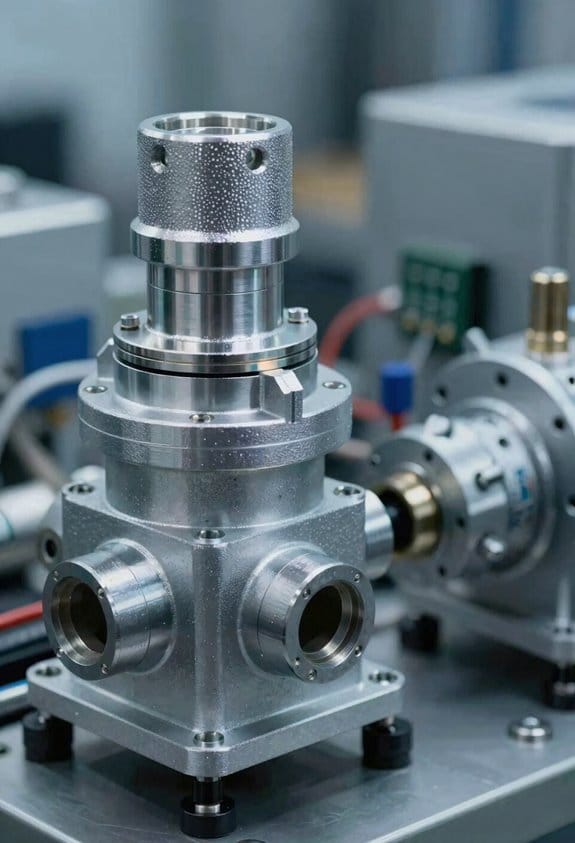
If you’ve ever wondered why your compressors and motors sometimes hum along wasting energy, this helps explain the fixes.
Why it matters: reducing wasted runtime cuts your energy bill and makes equipment last longer. Variable frequency drives, or VFDs, match motor speed to demand so the motor only uses the power you need. For example, on a packaging line that runs at half speed most of the day, a VFD can cut motor energy by roughly 50%, and you’ll see that on your monthly electric meter. Install the VFD, set the motor speed curve in the drive to match your process, and log power and speed for two weeks to confirm savings.
Why it matters: stopping short cycling saves wear and energy. Demand controls shift load between compressors so one unit handles light demand while others stay off, which prevents rapid on/off cycles that waste energy and wear starters. A bakery I worked with used demand control to keep a single compressor running overnight instead of two units toggling; their compressor runtime hours dropped by 30%. To set this up: 1) pick a master compressor and two backups, 2) configure cut-in and cut-out pressures with a 2–5 psi deadband, 3) monitor for a week and adjust setpoints if the master runs flat out.
Why it matters: adaptive setpoints stop you from running higher pressure than you need, which wastes power and stresses piping. Adaptive setpoints let controllers lower target pressure during predictable low-demand periods and raise it when demand spikes. In a metal shop, lowering pressure from 95 psi to 85 psi during weekends reduced leak losses noticeably and cut energy use. To use them: 1) measure your minimum acceptable pressure at the furthest point, 2) program the controller to target that pressure plus 5–10 psi, and 3) review performance weekly for one month.
Why it matters: anticipating demand swings prevents big pressure drops and fast starts that burn energy. Predictive throttling watches recent demand trends and slightly opens or closes valves before compressors chase a sudden spike. On a beverage line where filling starts every hour, predictive throttling smoothed pressure swings and reduced peak power by about 12%. To implement: 1) collect pressure and flow data for two weeks, 2) enable predictive mode in your controller with a one- to three-minute look‑ahead, and 3) tune the aggressiveness until you see fewer spikes.
Why it matters: good sensors and tuning make these tools work instead of creating noise and false alarms. Remote diagnostics and condition‑based alerts keep you from making unnecessary trips because you get clear data about when equipment is actually working harder than it should. A facility manager who received alarm trends remotely avoided an emergency call by scheduling a planned bearing change after two weeks of rising vibration alerts. Make sure sensors are calibrated every six months, keep one person responsible for alerts, and review trends monthly.
Put the pieces together this way:
1) Fit VFDs on motors that run variable loads and log two weeks of baseline data.
2) Add demand control for compressors with overlapping capacities and set a 2–5 psi deadband.
3) Configure adaptive setpoints using the lowest acceptable pressure plus a safety margin of 5–10 psi.
4) Turn on predictive throttling after you have two weeks of steady data and tune the look‑ahead to 1–3 minutes.
5) Calibrate sensors every six months and review alerts monthly.
Do this and you’ll lower energy use, cut wear, and make operations simpler — but don’t skip the sensors, tuning, and regular reviews.
Quality Control and Process Digitization Using Air‑System Data
If you’ve ever watched a machine trip on a line, this is why.
Why it matters: air data not only explains stops — it can prove a part was made right.
Start by using pressure, flow, and cycle-time trends to spot out-of-spec parts. Example: if an assembly press usually peaks at 6.2 bar and cycle time is 1.4 seconds, flag any run where pressure drops below 5.8 bar or cycle time exceeds 1.6 seconds. Steps:
- Capture sensor readings at 100 ms intervals and store them with timestamps.
- Define thresholds (e.g., ±5% for pressure, ±10% for cycle time).
- Trigger a quality flag when two consecutive readings cross thresholds.
Use linked anomalies to focus inspections so your inspectors don’t waste time. Real-world example: a plant found 80% of gasket failures followed a brief 0.3-second low-pressure dip; after flagging those batches, inspection time dropped 40%.
Why vision matters: cameras confirm what the air data implies in one frame. Example: sync a 2,000 fps camera with air timestamps when you assemble seals. Steps:
- Time-synchronize air-system logs and camera frames using NTP or PTP.
- Capture a 50–200 ms window around any flagged event.
- Run a simple dimension check (length, gap, bead height) against tolerance images.
Digital records speed troubleshooting and reduce paperwork. Example: when you keep the last 30 days of air logs and matched images, root-cause analysis that used to take a day now takes an hour. Steps:
- Store compressed air logs and images in a searchable database.
- Index records by part number, serial, and timestamp.
- Enable automated alerts to email or SMS when a threshold is crossed.
Train your team so the tools stay useful. Why it matters: dashboards only help if operators know what to do. Example: train operators with a two-hour session showing three dashboard screens and one hands-on drill where they respond to a simulated low-pressure alert. Steps:
- Teach operators to read the three key metrics: pressure, flow, and cycle time.
- Give them a checklist for actions to take on an alert (check fittings, measure pressure at source, tag the batch).
- Schedule a sensor-maintenance routine every 30 days.
Make audits simple and repeatable by keeping synchronized evidence. Example: keep a one-line report per batch that shows the peak pressure, average flow, cycle-time variance, and one camera snapshot. That report should be under 10 KB and available within 5 seconds of a query.
If you follow these steps, you’ll turn raw air-system data into targeted inspections, clear visual proof, and fast troubleshooting — and your line will spend more time making good parts.
Connecting Air Systems to IT/OT and Cloud Hubs (ICAROS+ Examples)
Before you connect air equipment to networks, know why it matters: you get faster responses, fewer trips to the plant, and data you can actually act on.
Here’s what actually happens when you bring compressors, valves, and sensors into a digital system: edge gateways read analog and digital signals, package them into secure packets, and send summarized data to the cloud while keeping fast loops local. For example, in a chemical plant I worked on, a Delta P sensor fed a gateway that sent 1-second local updates for PID control and 60-second summaries to the cloud for trend analysis. The gateway handles protocol translation (4–20 mA, Modbus RTU, HART) and encrypts traffic with TLS.
Why this hybrid approach matters: it cuts control latency and centralizes analytics so you can spot slow leaks over weeks. A real-world case: a food-processing facility reduced compressed-air losses by 18% after cloud-sent trend charts revealed nighttime leakage patterns. Use these concrete steps to set it up:
- Inventory devices and signal types (list each sensor, compressor, valve, and whether it’s 4–20 mA, RTU, discrete).
- Choose an edge gateway that supports those protocols and TLS.
- Configure the gateway for local control loops (1 Hz or faster) and cloud summaries (60–300 seconds).
- Test latency and failover: simulate network loss and confirm local control stays within your required loop time.
If you’ve ever watched operators struggle with access, role-based controls fix that: assign view-only dashboards to technicians and command rights to certified engineers. In one factory, operators could see live pressure but only supervisors could issue remote start/stop, which cut accidental stops. To implement:
- Define roles and permissions in your hub (viewer, operator, engineer).
- Map roles to device groups and actions.
- Enforce multi-factor authentication for any command-capable role.
Think of device discovery like scanning a new smartphone onto Wi‑Fi: the hub finds devices, verifies them, and applies policies. For example, ICAROS+ can auto-discover Modbus devices on a subnet, tag them by function, and push a default policy that blocks unknown commands. Steps:
- Enable discovery on a maintenance VLAN.
- Review discovered devices and assign names matching plant tags.
- Push role and network policies to the gateway.
Before you route alarms and remote commands, know how data paths must be validated: alarms should travel on a low-bandwidth, reliable channel while summaries go to the analytics tier. Concrete example: an airport’s compressed-air alarm used MQTT QoS 2 to guarantee delivery and an HTTPS API for hourly summaries. Validate paths with these steps:
- Configure alarm topics with guaranteed delivery (MQTT QoS 1 or 2).
- Set up HTTPS or MQTT for summaries with 60–300 second cadence.
- Run end-to-end tests: trigger an alarm, confirm receipt, and check cloud summary arrival.
You don’t need expensive hardware if your requirements are modest; a mid-range industrial gateway plus proper network segmentation will often do. In one small plant, a $1,200 gateway plus VLANs delivered secure remote control and cloud dashboards at a fraction of OEM cloud costs. Follow this checklist before buying:
- Match IO and protocol support.
- Confirm TLS and VPN capabilities.
- Verify OTA firmware updates and vendor support.
Before you validate security and data integrity, remember why it matters: a breached device can stop production or feed bad data to analytics. A specific example: a breached sensor controller in a warehouse caused false low-pressure alarms for two days until signed telemetry was enforced. Do this test:
- Verify TLS and cert pinning end-to-end.
- Check role enforcement by attempting unauthorized commands.
- Confirm logs are forwarded to your SIEM.
If you want hybrid dashboards that mix local and cloud views, plan data flows: local dashboards should show high-frequency state (1 Hz) and cloud dashboards should show trends and alerts (1-minute or longer). Example setup: in a municipal plant, local screens showed instant compressor RPM and valve position while ICAROS+ charts showed weekly energy per cubic meter. Steps to assemble dashboards:
- Define which metrics are local vs. cloud.
- Set refresh rates: local 0.2–1 Hz, cloud 60–300 seconds.
- Configure alarm escalation paths (SMS, email, push).
The difference between a flaky deployment and a stable one comes down to testing and documentation. In the successful projects I’ve seen, teams ran scripted failover drills and kept an up-to-date device map with firmware versions. Do this:
- Create a runbook for network loss and control handover.
- Schedule quarterly failover drills.
- Maintain a device inventory with IPs, firmware, and owner contact.
You’ll learn how to route alarms, enable remote commands, and validate data paths by following the numbered steps and examples above; start with a small pilot (one compressor, one control valve, and three sensors), verify local control under loss, then scale to full plant.
Compliance and Resilience: Automated Records and Reporting
If you’ve ever tried to prove a system ran correctly during an audit, this is why traceability matters.
Why it matters: auditors, customers, and maintenance teams need clear proof of timestamps, settings, and faults so you can avoid fines and downtime.
How to set this up, step by step:
- Capture data with IoT sensors: record timestamp (UTC), sensor ID, setting values, and fault codes every 60 seconds. Example: a pump sensor logs “2026-03-20T14:02:00Z, pump-03, speed=1450rpm, fault=none”.
- Send logs to a central collector using MQTT or HTTPS with TLS. Use one topic or endpoint per device group.
- Store logs in append-only files or a time-series database with retention policies (e.g., keep raw logs 90 days, aggregated summaries 2 years).
- Feed those records into your automation workflows that generate audit-ready reports in PDF and CSV formats.
- Archive signed reports with a timestamped checksum (SHA-256) and keep copies offsite for at least 3 years.
Real-world example: A water utility replaced manual meter checks with sensors that pushed minute-level readings to a central DB; during an audit they produced a signed PDF showing readings and maintenance actions from the last 18 months in under 10 minutes.
Why automation helps: automated records remove human error and guarantee consistent formats so inspectors can find what they need quickly.
Practical checklist for automation:
- Use device IDs and UTC timestamps.
- Validate input (reject malformed records).
- Auto-generate a report every 24 hours and on-demand.
- Apply digital signatures to reports.
Real-world example: A factory automated nightly reports and saved them with checksums; when a regulator requested proof, the team sent a signed file and avoided a proposed penalty.
Why resilience dashboards matter: they give you a live picture so you can act before outages cost you revenue.
How to build a resilience dashboard, step by step:
- Ingest health metrics (CPU, temperature, error rates) every 30 seconds.
- Show recent repairs with timestamps and technician IDs.
- Display predicted failure windows based on trend thresholds (e.g., if vibration increases 15% over 24 hours, flag a 72-hour risk window).
- Add an alerting rule: send SMS or Slack when a metric crosses the warning threshold.
- Provide exportable incident timelines for post-mortems.
Real-world example: An edge-compute cluster showed rising disk error rates on the dashboard; the team replaced two drives within 48 hours and avoided a full-node outage.
Quick operational tips:
- Use simple visuals: uptime gauges, recent repair list, and one-week forecast.
- Prioritize fixes by predicted failure window and impact score.
- Run tabletop drills quarterly using the dashboard scenarios.
Put it together: structured logs plus dashboards give you verifiable histories, faster inspections, and fewer paper records. You’ll be able to produce a signed audit file in minutes and decide which repairs to do tonight versus next week.
Roadmap to Pilot, Scale, and Measure ROI for Smart Air Upgrades
Here’s what actually happens when you roll out smart air upgrades: you get clear wins in energy, maintenance, and uptime if you follow a simple three-phase plan.
Why it matters: doing this wrong wastes money and frustrates operators.
1) Pilot: What should you do first?
– Steps:
- Pick one air system that represents typical load and faults (example: a 50-horsepower compressor serving two production lines).
- Install IoT sensors for pressure, temperature, and run-state on that unit and one critical distribution header; budget about $3,000–$6,000 for hardware and installation.
- Collect 30–60 days of baseline data to quantify energy use, leak events, and runtime patterns.
- Create a simple dashboard that shows kW, run-hours, and leak counts.
- Real-world example: a mid-sized plant in Ohio tracked a 20% offload window during nights and identified a single leaking regulator that cost $2,400/year.
- Takeaway: you’ll have numbers to forecast savings and justify the next spend.
2) Scale: How do you expand without chaos?
- Why it matters: scaling poorly creates inconsistent controls and unhappy operators.
- Steps:
- Standardize on controllers and VFD models you tested in the pilot; buy spares (10% of installed units).
- Roll out in cohorts of 5–10 similar units, not the whole site at once.
- Use the same wiring diagrams, labeling, and a one-page install checklist for every crew.
- Train operators in a two-hour session and give them a one-page troubleshooting card.
- Real-world example: a food plant added VFDs to 12 compressors over six weeks, reducing simultaneous starts and cutting peak demand charges by 8%.
- Takeaway: consistent hardware, small cohorts, and short training keep uptime high.
3) Measure ROI: What metrics prove success?
- Why it matters: you need crisp KPIs to decide whether to continue, pause, or invest more.
- Steps:
- Define KPIs before scaling: energy savings (kWh and $), reduced truck rolls (count/month), uptime (%), and automated compliance reports delivered monthly.
- Compare post-install performance to the 30–60 day baseline and normalize for production hours.
- Use alerts and historical trends to tune PID loops and control setpoints every 30 days for three months.
- Report ROI quarterly with simple math: annual savings = measured monthly savings × 12; payback = total project cost ÷ annual savings.
- Real-world example: after tuning controls, a logistics center cut truck rolls from 6 to 1 per month and recovered full project cost in 18 months.
- Takeaway: baseline data plus monthly tuning gets you repeatable ROI.
Final practical tips you can act on:
- Start with one pilot budget line of $5k–$10k.
- Expect each subsequent unit to cost 30–50% less if you standardize.
- Automate alerts for leaks and low pressure to avoid emergency service calls.
- Review results at 90 days and iterate.
If you follow these steps, you’ll move from guesswork to quantified savings and steady operational gains.
Frequently Asked Questions
How Do Smart Air Systems Affect Insurance and Liability Policies?
They change risk calculus: I’d say insurers reduce policy exposure but complicate claim attribution—because real-time logs cut uncertainty, yet shared data and automated decisions can blur liability, so you’ll need clearer contracts, audits, and forensic access rights.
What Cybersecurity Certifications Are Required for Connected Compressors?
You’ll typically need ISO 27001 for information security management and IEC 62443 for industrial control systems; I’d also pursue vendor-specific certifications and regular audits to demonstrate compliance and reduce insurer liability risks.
Can Small Shops With Legacy Equipment Adopt These Systems Affordably?
Yes — I think small shops can affordably upgrade: I’d use retrofit kits for critical compressors and plan phased upgrades, spreading costs while gaining IoT monitoring, predictive maintenance, and energy savings without replacing all legacy equipment at once.
How Do Warranties Change When OEMS Lose Local Control to Software?
Think of warranties fracturing like glass — I’ll tell you: OEMs often introduce warranty fragmentation, limiting coverage after remote updates or requiring certified patches; I’ll negotiate clear SLAs and update policies to protect uptime and liability.
What Skills Will In‑House Staff Need After Deployment?
They’ll need data interpretation, remote diagnostics, and cybersecurity know‑how; I’ll prioritize upskilling programs and sensor literacy so technicians can manage IoT monitoring, predictive maintenance, energy optimization, and collaborate with IT for system resilience.