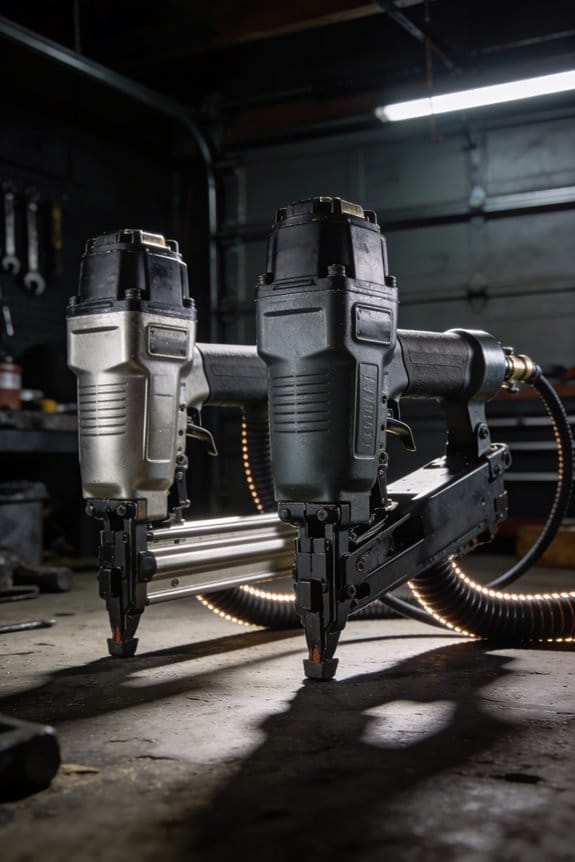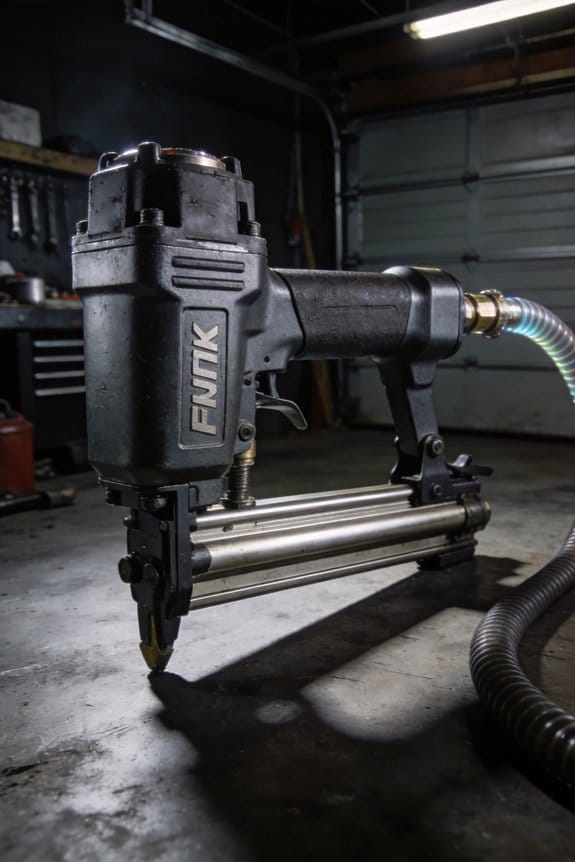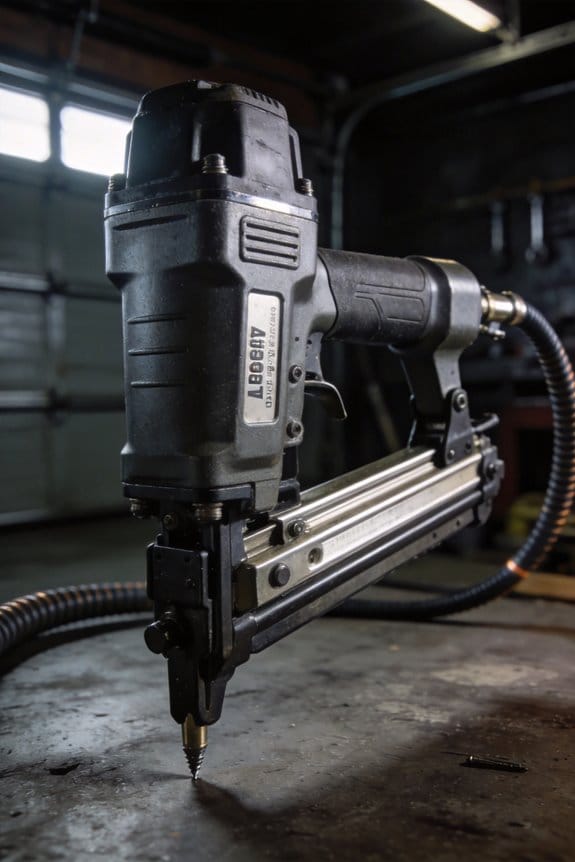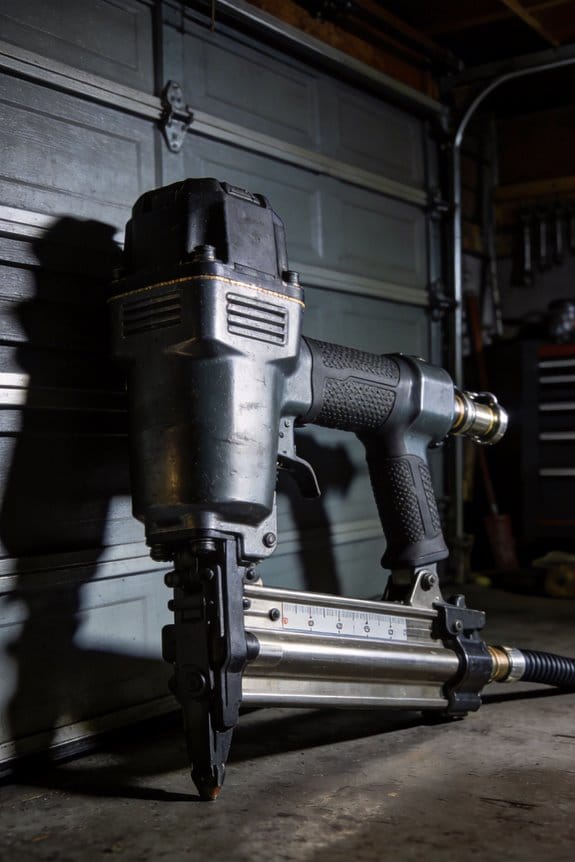
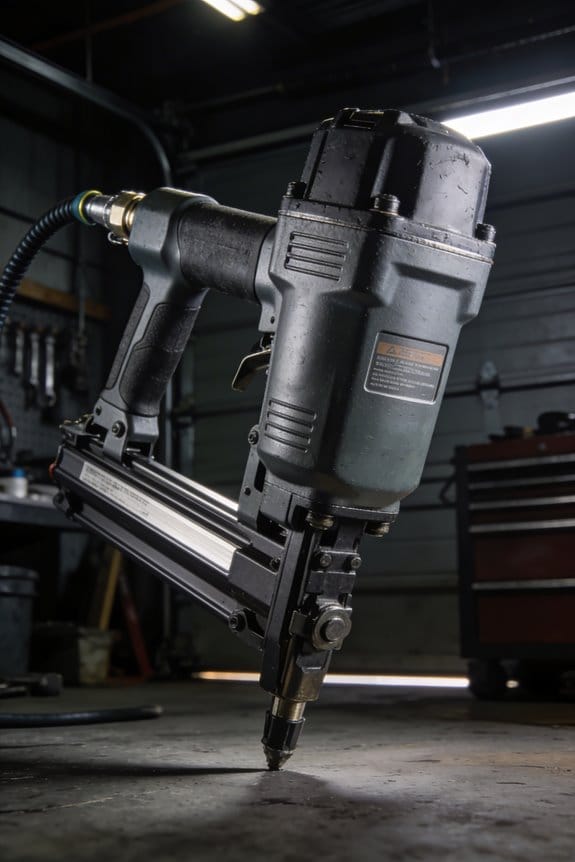

You squeeze the trigger and the trim piece pops off the wall or the nailhead sits proud, and you’re left guessing why the next shot looks different.
You can’t rely on “feel” alone to get consistent nail depth across multiple boards or crew members. Most people blame the tool or the fastener when the real problem is inconsistent air pressure, wrong gauge/length choices, and no documented test process.
This article shows you exactly how to set air pressure, choose gauge and length, test on scrap in small increments, and record settings so every nail seats the same depth.
You’ll reduce visible filler, repairs, and staggered joints.
It’s easier than you think.
Key Takeaways
If you’ve ever struggled to get the same nail look across a bunch of trim pieces, this is why.
Why it matters: consistent nail depth stops extra sanding, filler, and touch-ups.
Example: when you run crown molding for a hallway, setting the nailer to the same pressure keeps every head flush so you only need one pass with the putty knife.
1) Set your regulator to 90–100 PSI for 16-gauge brads and test on a scrap piece of the same stock.
2) Fire three nails, measure sink depth with a small ruler or feeler gauge, then adjust in 5 PSI increments.
3) Record the final PSI and the nailer model on a clipboard or label on the tool.
Repeatable holding power matters because it reduces scrap and gives cabinets consistent joints you can rely on.
Why it matters: consistent holding strength means fewer loose doors and less glued rework.
Example: when assembling a run of shaker-style cabinet boxes, using the same fastener pressure keeps corner joints tight so doors hang true.
1) Choose a target pull-out strength from your fastener spec (for example, 200–300 lbs for a face-frame screw) and note the corresponding PSI range from the tool manual.
2) Clamp one assembled joint, drive three test fasteners, and then try a quick tug test by hand or with a simple scale.
3) Lock the regulator setting that passed and mark the batch sheet.
Before you tune for different woods, know why pressure and gauge selection matter.
Why it matters: different species and fastener sizes need different force to avoid splitting or underdriving.
Example: oak will split easier than poplar, so it usually needs lower pressure or a smaller-diameter nail for the same visual result.
1) For softwoods (pine, poplar), start at 80–90 PSI for small brads; for hardwoods (oak, maple), start at 60–75 PSI and increase only if nails don’t seat.
2) Match gauge selection to fastener: use a fine-gauge nose for 23–18 gauge brads, a wider nose for 16–15 gauge nails.
3) Note species, PSI, and nose type on your test scrap and in the job log.
Testing and recording settings makes setups reproducible for your crew and future shifts.
Why it matters: documented setups save time and reduce trial-and-error between shifts.
Example: on a day shift you dial in a setting that works for stained poplar trim; the night crew copies it exactly and the rooms look the same.
1) Run at least five test fasteners into a scrap of the job material and photograph the scrap next to the regulator showing the PSI.
2) Write the tool model, PSI, fastener length, and wood species on a sticker and stick it to the tool case.
3) Keep a simple binder or digital photo folder with these labeled examples per job.
Stable air supply and correct hose size prevent sink-depth changes during a long run.
Why it matters: pressure drops and narrow hoses can underdrive nails after a few minutes, causing inconsistent finishes.
Example: on a long cabinet assembly line, using a 3/8″ hose instead of 1/4″ kept the pressure steady and eliminated late-shift underdriven fasteners.
1) Use at least 3/8″ hose for runs over 25 ft; use 1/4″ only for short, low-demand setups.
2) Fit an inline gauge near the tool and check it every hour; if pressure dips more than 5 PSI under load, the compressor or hose is inadequate.
3) Inspect fittings and filters weekly and replace clogged inline filters to keep flow steady.
Is Pneumatic Fastening Right for Trim and Cabinetry?
Before you pick a fastening method, know why it matters: consistent nail depth and speed save you time and keep visible trim looking clean.
If you’re wondering whether pneumatic fastening is the right choice for trim and cabinetry, the short answer is yes in many cases because air-powered nailers give consistent depth, speed, and far less surface damage than hammering. For example, when installing baseboard in a 12-foot living room, a pneumatic brad nailer will set 150–200 nails in the time it takes to hand-set 30, and the trim will show far fewer dents. Adjust air pressure so the gun drives nails flush into pine at about 60–70 psi and increases to 90–100 psi for oak.
Why the control matters: you get repeatable results and fewer repairs. A 16-gauge pneumatic finish nailer with adjustable depth prevents over-driving in soft wood and under-driving in hardwood, which keeps paint-ready surfaces smooth. Picture installing cabinet face frames: consistent depth means less filler and fewer sanding passes.
How to decide if pneumatics are worth it for your job:
- Compare costs and savings. List compressor plus nailer cost (for example, $300–$700 for a decent compressor and $80–$250 for a nailer) and compare to labor time saved — expect to cut installation time by roughly 50–70% on medium to large jobs.
- Consider job size. Use hand tools for short runs under about 50 linear feet; use pneumatic systems for longer runs where uniformity matters.
- Ask the homeowner. Clients often prefer dent-free trim and faster completion; a quick demo of a pneumatic gun on scrap wood helps them decide.
Practical setup steps:
- Choose the right tool. Use a 23-gauge pin nailer for delicate moldings, an 18- or 16-gauge finish nailer for baseboards and cabinetry.
- Set pressure by test. Drive three test nails into scrap of the same wood: if the nail is proud, increase pressure by 5–10 psi; if it’s buried and splits the wood, lower by 5–10 psi.
- Maintain your equipment. Drain the compressor tank weekly and use a few drops of pneumatic tool oil each day you work.
Real-world example: a cabinet installer I know swapped from hand nailing to a 16-gauge finish nailer and a 3-gallon compressor; on a full kitchen he cut hours of labor, reduced putty use by half, and delivered cabinets with consistently flush trim.
For small, one-off repairs you’ll be fine with hand tools; for longer runs and professional finishes, pneumatic systems give uniform nail depth, lower material waste, and predictable holding power.
Choosing the Right Tool: Brad, Finish, Pin, and Combos

Before you choose a pneumatic nailer, you need to know what each type actually does and why that matters for your project.
Why it matters: using the wrong nailer can mean visible holes, split trim, or pieces that pull loose later. For example, when you install a 1/4″ thick decorative trim around a door, the wrong gauge can split the wood and ruin the profile.
1) When should you use an 18-gauge brad?
Why it matters: 18-gauge brads leave tiny holes and reduce splitting on thin stock.
Example: attaching 1/4″ shoe molding to baseboard on painted walls.
Steps:
- Set depth so the head is just below the paint surface (about 1–1.5 mm).
- Use 3/4″ to 1-1/4″ brads for typical trim; choose 5/8″ for very thin pieces.
- Space fasteners 8–12 inches apart for light trim; glue plus pins for extra hold.
Tip: If you’re working with softwoods, go 1″ brads to avoid blow-through.
2) When should you use a 15–16 gauge finish nailer?
Why it matters: 15–16 gauge nails give much more holding power for heavy trim and frames.
Example: installing cabinet face frames or 3″ crown molding that sees stress when doors open.
Steps:
- Pick 15-gauge for thicker stock and where stronger hold is needed; 16-gauge for medium jobs.
- Use 1-1/4″ to 2-1/2″ nails depending on combined thickness of workpieces; measure and match nail length so 2/3 of the nail goes into the substrate.
- Space nails 6–10 inches on moldings and 8–12 inches on cabinet frames.
Tip: Countersink by 1–2 mm so wood filler hides the heads after sanding.
3) When should you use a pin nailer?
Why it matters: pin nailers are perfect when you need invisible tacks without splitting fragile trim.
Example: gluing and tacking thin veneer or attaching return pieces on delicate picture frames.
Steps:
- Use 23–23.5 gauge pins that leave almost no hole.
- Choose 1/4″ to 5/8″ pin lengths for veneers and thin returns.
- Rely on glue as the primary bond and pin only to hold alignment while clamping.
Tip: Don’t try to pull load-bearing joints with pins alone; they’re for temporary hold.
4) When does a combo kit make sense?
Why it matters: combo kits save space and money when you switch between nail sizes often.
Example: a contractor who alternates between baseboards (brads) and cabinet trim (finish nails) during a day.
Steps:
- Look for kits that include 18-, 16-, and a pin option or conversion attachments.
- Check that magazines and nosepieces interchange quickly—less than 2 minutes changeover is ideal.
- Compare included case, compressor compatibility, and spare parts.
Tip: If you rarely switch tasks, a single-purpose tool is lighter and cheaper.
Buying checklist before you commit
Why it matters: small differences affect tool longevity and repairability.
Example: choosing between two similarly priced finish nailers—one with a common replacement part and local service, the other with proprietary parts shipped from overseas.
Steps:
- Verify warranty length and what it covers (motor, seals, magazine).
- Check parts availability and local service centers—call your nearest dealer if unsure.
- Confirm accessory compatibility: nail length ranges, coil vs. stick magazines, and safety nosepieces.
Tip: Pick a model with user-replaceable seals and a clearly documented maintenance schedule.
Maintenance basics
Why it matters: regular care keeps nails driving consistently and prevents jams.
Example: after a week of trim work, a lightly oiled tool will fire more reliably the next morning.
Steps:
- Oil the tool per manufacturer specs—usually 1–2 drops of pneumatic tool oil in the inlet before work each day.
- Empty and clean the magazine weekly, and clear jams immediately following the tool’s jam-clearing steps.
- Replace worn O-rings or seals as soon as you see air leaks.
Tip: Keep a small parts kit and the manual in your toolbox.
Final practical advice
Why it matters: matching nailer, gauge, and fastener length to your material will save time and rework.
Example: for painted 3/4″ oak casing, use 15–16 gauge, 1-1/4″–1-5/8″ finish nails, spaced 6–8″ and countersunk 1–2 mm.
Steps:
- Measure your materials and pick nail length so two-thirds enters the substrate.
- Test on scrap before nailing visible pieces.
- Keep proper safety gear—eye protection and hearing protection.
Tip: When in doubt, clamp and glue first, then pin or nail for backup.
How Pneumatic Nailers Deliver Consistent Nail Depth
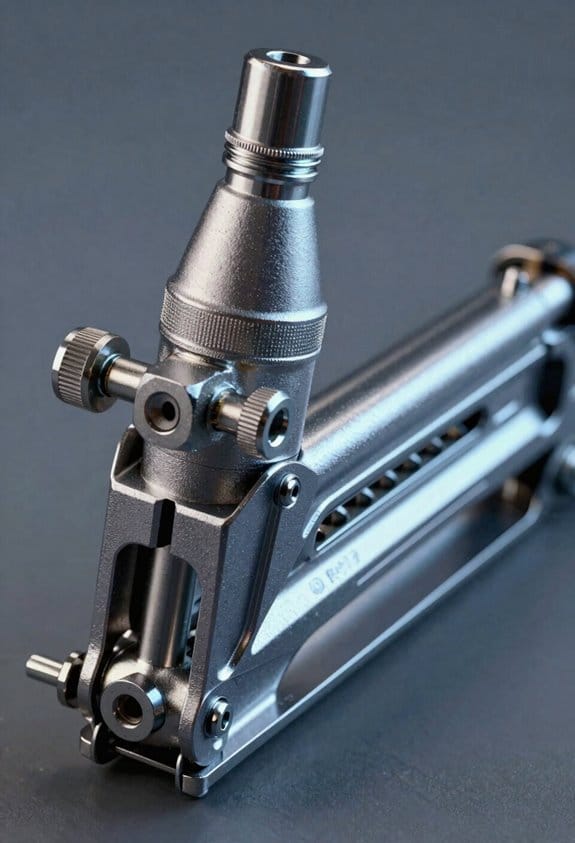
If you’ve ever struggled with nails that sit too proud or don’t sink enough, this is why.
Why it matters: inconsistent nail depth ruins finishes and wastes time sanding or filling.
How pneumatic nailers give consistent depth
1) They use a piston-driven strike that produces repeatable force. For example, a typical 18-gauge brad nailer uses about 60–90 psi input and the piston delivers the same stroke each shot, so nails of the same length sink to nearly the same depth across a run.
2) You need a steady air supply. If your compressor is set below 90 psi under load or you lose more than 10–15 psi through long, thin hoses or leaky fittings, nails will drive shallow. On a job: I once ran a 50 ft, 1/4″ hose and lost 12 psi at peak demand; swapping to a 3/8″ hose cut the loss to 3–4 psi and fixed the shallow sinks.
3) Trigger response affects timing and control. A worn or overly sensitive trigger can cause double shots or misdrives; a crisp trigger with consistent travel prevents that. Try this: set your nailer to sequential mode, fire 50 nails into scrap, and count doubles—if you see more than 1–2 doubles, service the trigger mechanism.
4) Maintenance preserves performance. Check seals and O-rings every 500–1,000 shots and add a few drops of pneumatic tool oil before a full day of work. If you see oil pooling or hear hissing at the cylinder, replace seals; a ripped seal can cut driving force by 20–30%.
5) Placement and pressure finish the job. Hold the nose squarely and apply 10–15 lbs of firm forward pressure—too little and the tip bounces, too much and you compress the wood, changing effective depth. On trim work, rest the nailer against the stile and keep your wrist locked for even runs.
Real-world checklist (quick)
- Set compressor to 100 psi and test under load.
- Use 3/8″ hose for runs over 25 ft.
- Run 50 test shots in sequential mode and inspect depth.
- Add 2–3 drops of oil to the inlet daily.
- Inspect seals every 1,000 shots or monthly.
Example: cabinet door stiles
When I was installing 20 cabinet doors, I hit random shallow nails after lunch because someone had swapped in a 1/4″ hose at the compressor. I measured a 10–12 psi drop under load, switched to 3/8″, ran 50 test shots, and the sinks became uniform—no sanding needed.
Final practical tips
- Keep a small gauge on the hose near the tool to spot drops over 10 psi.
- Carry a spare seal kit and a small bottle of pneumatic oil.
- Use sequential trigger for furniture and trim; bump mode only when you’re experienced.
If you follow these steps, your nail depth will be predictable and your finishes will look professional.
Set Air Pressure and Fastener Type for Repeatable Results

Before you match air pressure to a fastener, know this: getting it right prevents split wood, under-driven nails, and wasted trim.
I start with an air calibration routine and test on scrap to see how deep nails seat. Step 1: set your regulator to 60 psi for 18-gauge brads into pine, then fire three nails into a 1×4 scrap. If they sink about 1/16″ below the surface, you’re good; if they’re flush or above, increase by 5 psi and test again. Example: on a recent cabinet job I began at 60 psi and found the brads were sinking 1/8″ into painted pine, so I dropped to 55 psi and got perfect countersinks.
Fastener selection changes required force, so you need to match type and length to pressure. Lighter 18-gauge brads typically run 50–60 psi into softwoods; 16-gauge finish nails often need 70–90 psi, and 15-gauge into hardwoods can take 90–120 psi. Try one change at a time.
Document the pressure for each fastener and substrate so you can repeat setups across shifts. Write entries like: “18ga brad, 1″, painted pine — 55 psi, 3-shot test.” I tape this list to the compressor for the crew.
If a shot under-drives, raise pressure 5–10 psi and test again. If a shot over-drives or splits wood, lower pressure 5–10 psi or switch to a thinner gauge or shorter length. Small adjustments save you from rework.
This method keeps drives consistent and protects delicate trim; you’ll reduce callbacks and scrap.
Nail Spacing, Gauge, and Adhesive Strategies for Maximum Hold
Before you start nailing and gluing, know that the right spacing, nail size, and adhesive timing keep trim and cabinets from pulling away later.
How far apart should you space nails?
Why it matters: proper spacing prevents gaps and movement as wood expands and contracts.
Example: installing 8-foot baseboards in a living room with 16-inch on-center studs — you’ll feel the difference.
1) Space nails 12–16 inches apart along studs; aim for every 16 inches when you can hit a stud.
2) Put a nail at each end of the board within 6 inches of the corner.
3) For runs over 8 feet, add a nail every 8–10 feet to limit bowing.
Which nail gauge should you use for different trim?
Why it matters: matching gauge to density prevents splitting and gives enough holding power.
Example: fitting 3 1/2-inch crown molding in a dining room.
1) Use 15–16 gauge finish nails for heavy molding or cabinet faces.
2) Use 18-gauge brads for lighter trim like small casings or thin moldings.
3) If wood is very dense or brittle, pre-drill a 1/16-inch pilot hole for larger nails.
When should you apply adhesive versus relying on nails?
Why it matters: adhesive fills gaps and reduces squeaks while nails hold pieces while glue cures.
Example: installing cabinet face frames where seams are visible under bright kitchen lights.
1) Apply construction adhesive in a 1/4-inch bead to the mating surface just before nailing.
2) Nail immediately after applying glue so the clamp of the nail sets joint alignment.
3) Wipe any squeeze-out within 5 minutes with a damp rag to avoid staining.
How do you sequence nailing and gluing for a clean job?
Why it matters: timing prevents glue squeeze-out and keeps your workflow fast.
Example: fitting a long hallway trim run where you need consistent joints.
1) Dry-fit the trim and mark stud locations.
2) Apply glue to a 2–3 foot section, position the trim, then nail that section.
3) Move down the run and repeat in 2–3 foot increments.
How do you strengthen corners and joints?
Why it matters: reinforced joints stop separation in high-traffic areas.
Example: mitered outside corner on a stair landing that gets bumped frequently.
1) Combine nails with lap jointing or use a spline at the miter.
2) Stagger fasteners so nails aren’t all in the same line — offset by 1–2 inches.
3) Use two nails per joint face when possible: one near the edge and one 1–2 inches in.
Quick practical checklist for a repeatable workflow:
Why it matters: a checklist keeps your results consistent every time.
Example: a weekend bathroom remodel where you want pro-looking trim.
1) Mark studs, pre-cut and dry-fit pieces.
2) Pre-apply 1/4-inch bead of adhesive to each mating surface.
3) Nail at 12–16 inches, ends within 6 inches, and add extra every 8–10 feet.
4) Clean squeeze-out within 5 minutes, then touch up paint after glue cures.
Follow these numbers and steps, and your trim and cabinets will stay tight, look clean, and be faster to install.
Speed and Ergonomics: Workflow Tips for Large Jobs
If you’ve ever stood in the middle of a big trim or cabinet job and felt like you were just running in circles, this will help.
Why this matters: cutting trips and wasted motion saves time and keeps your body from locking up after a long day.
1) How should you organize materials so you stop fetching pieces all day?
– Step 1: Preload materials near each work zone — keep a stack of 10–12 trim pieces or cabinet panels within arm’s reach of where you’re working.
Example: on a 12-foot run of crown molding, I lay three 8-foot sticks on sawhorses beside the mitre station so I don’t walk back to the truck every 10 minutes.
Tip: use a labeled bin for small parts (screws, shims) and refill it at the end of each hour.
– Step 2: Stage cut lists in piles so you grab the next piece and go; write the cut length on the end with a marker.
Example: for a 10-cabinet run I mark and stack five identical face frames together; the next piece is always the next one on top.
Why this matters: keeping fasteners and consumables handy keeps you moving and reduces lower-back strain.
2) What should your mobile cart contain and how do you set it up?
– Step 1: Build or use a cart roughly 30–36 inches high so it’s at waist height for most people; keep it on casters.
Example: I use a plywood cart with two drawers and two open trays; nails, glue, spare blades, and driver bits live in the top tray.
– Step 2: Organize by frequency: top tray for what you use every 5–10 minutes (nails, hammer), middle drawer for hourly items (sandpaper, putty), bottom tray for spares (extra bottles, longer screws).
Tip: hang a small magnetic strip on the cart edge for pliers and a combo square.
Why this matters: using the right tool for the right job speeds you up and keeps edges crisp.
3) How do you rotate tools efficiently without slowing the job?
– Step 1: Assign tools by task: pneumatic nailer for repetitive framing, finish nailer for trim, pin nailer or brad gun for delicate pieces.
Example: I use a framing gun for cabinet carcass assembly, then switch to a 15-gauge finish nailer for face frames, and a 23-gauge pin nailer for veneer repairs.
– Step 2: Keep quick-change storage: an open toolbox with the three guns arranged front-to-back so you can grab the next one in one motion.
Tip: oil and check air hoses at lunch so swaps don’t fail mid-run.
Why this matters: alternating tasks rests your hands and prevents repetitive-strain fatigue.
4) How should you schedule task variety to protect your hands?
– Step 1: Break work into 20–40 minute blocks and alternate between cutting, fastening, and sanding.
Example: on door installations I’ll cut and dry-fit three doors for 30 minutes, fasten them for 30 minutes, then spend 20 minutes sanding and checking gaps.
– Step 2: After every two blocks, do a 5-minute stretch and a quick grip-rest routine (open hand, then make a fist 10 times).
Tip: set a kitchen timer or phone alarm to enforce the breaks.
Why this matters: consistent nail depth prevents rework and keeps joints secure.
5) How do you set air pressure and work height for less rework and strain?
– Step 1: Tune your compressor to the nailer’s recommended PSI and test on scrap until nails sit flush: for most finish nailers that’s 70–90 PSI; for framing guns it’s 90–120 PSI.
Example: I test two nails into a scrap board at 75 PSI and add or subtract 5 PSI until the head is flush without crushing the wood.
– Step 2: Position work at comfortable heights: 36–42 inches for waist work, 18–24 inches for low toe-kick tasks, and 48–60 inches for shoulder-level cabinet tasks.
Tip: use adjustable sawhorses or stack plywood to dial in the height quickly.
Put these together and you’ll cut down walking, lower your injury risk, and finish bigger jobs with fewer pauses and cleaner results.
Preventing Damage: Avoid Splits, Dents, and Visible Holes
Before you start nailing, know why this matters: visible splits, dents, and holes make your trim look amateur and reduce holding power.
Here’s how to prep the surface so nails behave predictably. Clean dust with a vacuum or tack cloth and inspect for knots; a knot near a nail path can split unexpectedly. Example: on a painted living-room baseboard, I vacuumed the dust, found a dark knot 2 inches from the end, and moved the fastener location 1 inch inward to avoid a blowout. Steps:
- Vacuum or wipe the area and let it dry.
- Visually inspect for knots and defects within 3 inches of where you’ll nail.
- Mark alternate nail locations 1 inch away from knots.
Match nail type and gauge to your material, because the wrong nail leaves big holes or doesn’t hold. For 1/4″ and thinner trim use 18–23 gauge brads or 23–28 gauge pin nails; for cabinet face frames or thicker trim use 15–16 gauge finish nails. Example: when installing 3/4″ oak cabinet trim, I used 15-gauge finish nails and countersunk 1/16″ for a secure hold. Steps:
- Choose gauge: 23–28 ga for thin trim, 18 ga for medium, 15–16 ga for thick.
- Pick nail length = material thickness + 1 to 1-1/4 inches into substrate.
- Use compatible nails for painted vs. stained surfaces (stainless or galvanized near moisture).
Control your nailer so you don’t over-drive and dent the wood. Lower the air pressure in 2–3 psi increments until the nail seats without crushing the face. Example: on MDF painted casing I reduced my compressor setting from 90 psi to 70 psi and the brads stopped mushrooming. Steps:
- Set your pneumatic gun to the manufacturer’s recommended psi for the gauge you’re using.
- Test on a scrap piece: fire three nails and adjust down by 2–3 psi if they mushroom.
- Lock the pressure and note the psi for future repeatability.
Avoid splits by working with the grain and pre-drilling when needed, because grain direction and hardness control tear-out. Drive nails parallel to the grain when you can, and pre-drill pilot holes with a bit about 70–80% of the shank diameter for hardwood or within 1–1.5 inches of an end. Example: installing maple quarter-round, I pre-drilled with a 3/32″ bit for 15-gauge nails to prevent end splits. Steps:
- Identify grain direction and orient the trim so nails go parallel.
- Pre-drill with a bit 70–80% of nail shank diameter for hardwood or near ends.
- Countersink pilot holes by the nail head depth to keep flush.
Set your depth control and finish consistently so you only need small filler patches, because even countersunk nails leave tiny voids. Adjust the gun’s depth to sink heads 1/32″–1/16″ below the surface for paintable trim, and test on scrap to match. Example: on painted window casing I set the depth to leave a 1/16″ recess, then filled with paintable latex putty and sanded with 220 grit. Steps:
- Adjust depth to 1/32″–1/16″ below the surface.
- Fire three test nails into scrap and measure recess.
- Fine-tune until recess is consistent.
Fill holes the right way so they disappear visually, because filler type and color change the outcome. Use water-based paintable wood filler for painted surfaces and a stainable epoxy or colored filler for stained wood; apply with a small putty knife, let dry, then sand flush with 220 grit. Example: for stained oak trim I used a brown-colored epoxy putty, cured 90 minutes, and blended with 220-grit sanding. Steps:
- Choose filler: paintable water-based for paint, stainable epoxy for stain.
- Pack the hole, let fully cure, then sand with 220 grit.
- Touch up with matching paint or stain.
Follow these concrete steps and you’ll avoid the common mistakes that give trim a DIY look.
Troubleshooting Repeatability Problems and Quick Fixes
If you’ve ever seen a nailer start to wobble after working fine, this is why.
Why it matters: inconsistent drive depth wastes nails and can ruin trim or structural joints in your project. Example: last week I fixed a finish nailer that shot two nails flush and the next one sticking out a quarter inch on the same board.
1) Check hoses and fittings
Why: leaking air reduces PSI and makes depth vary.
Steps:
- Visually inspect hoses and fittings for cracks, cuts, or loose clamps.
- Listen for hissing sounds while the compressor is running; use soapy water on fittings to find small leaks — bubbles show leaks quickly.
- Tighten fittings with a wrench to the torque recommended in your tool manual, or replace hoses that have visible kinks or inner cords showing.
Real-world example: on a jobsite I found a hairline cut in a hose that only leaked under 90+ PSI; swapping the hose stopped every miss.
Final detail: aim for leak rate under 2 SCFM at operating pressure.
2) Check and set the compressor regulator
Why: wrong or fluctuating pressure changes how far nails drive.
Steps:
- Attach a reliable gauge (0–160 PSI dial) near the tool or regulator outlet.
- Set pressure to the manufacturer’s suggested range—commonly 70–120 PSI for framing guns, 60–100 PSI for finish nailers.
- Cycle the tool while watching the gauge; if pressure drops more than 5–10 PSI during use, troubleshoot the compressor or tank drain.
Real-world example: I dialed a trim nailer to 80 PSI for oak; at 60 PSI the nails barely seated, at 100 PSI they over-penetrated.
Final detail: check gauge accuracy annually.
3) Clear or replace a sticking trigger
Why: a sticky trigger makes firing inconsistent and can be dangerous.
Steps:
- Disconnect air and remove all fasteners before touching the trigger.
- Remove the trigger guard per your manual and spray a small amount of manufacturer-approved lubricant into the pivot, then cycle the trigger by hand.
- If the trigger still binds, replace the trigger assembly with the manufacturer part number.
Real-world example: a trigger spring had lost tension on an old gun; replacing the spring restored crisp, repeatable shots.
Final detail: never lubricate with motor oil; use tool-approved lubricant.
4) Inspect nail strips and magazine feed
Why: bent nails or debris cause jams and misfires.
Steps:
- Remove the magazine load and shine a flashlight into the feed channel to look for broken wire, sawdust, or bent nails.
- Straighten slightly bent strips with pliers, but discard any nails with damaged heads or shanks.
- Clean the magazine rails and apply a thin layer of tool lubricant if the manufacturer recommends it.
Real-world example: sawdust from cutting MDF had compacted in a finisher’s magazine and deflected the nail strip; a quick cleaning fixed every miss.
Final detail: use nails specified for your tool (gauge and collation type).
5) Test shots and verification
Why: testing confirms the fix and keeps you safe.
Steps:
- After each repair, fire 5–10 nails into scrap wood of the same density as your workpiece.
- Measure drive depth and look for a maximum variation of no more than 1/8 inch between shots for finish work; acceptable variation is larger for framing.
- If issues continue, note whether the problem is random or follows a pattern and contact the tool maker with model and serial numbers.
Real-world example: after replacing a hose and resetting pressure, five test shots into pine were within 1/16 inch — ready to resume the job.
Final detail: always wear eye and hearing protection during tests.
Best-Practices Checklist for Repeatable, Professional Installs
If you’ve ever started a job and wished you’d get the same clean result every time, this checklist fixes that.
Why this matters: repeatability saves you time and prevents rework. Example: on a kitchen cabinet install, matching the same nail depth and spacing across all doors keeps reveal gaps consistent.
Pre-job workflow — what to verify
Why this matters: catching issues before you start prevents stoppages. Example: at a job last month I caught a slow leak in the airline before installing 20 baseboards, avoiding a ruined finish.
- Check compressor pressure: set tank to 100–120 psi and confirm the regulator reads the same at the tool.
- Inspect the nailer: clean the tip, check the O-rings, and remove jammed pins.
- Choose fasteners: use 16‑gauge for trim and 18‑gauge for delicate moldings; match length so the pin or brad sits 1–2 mm below the surface.
- Test on scrap: fire three nails into a scrap piece of the same material and adjust depth until the fastener sinks to the desired 1–2 mm.
Setting air pressure
Why this matters: correct pressure prevents over- or under-driving, which can split wood or leave loose joints. Example: when fastening hardwood flooring, dropping pressure from 120 to 100 psi stopped splitting along the edges.
- Start at 90 psi for softwoods and 100–120 psi for hardwoods.
- Increase in 5–10 psi increments if nails are under-driven; decrease in 5–10 psi if the material splits.
- Lock the regulator when you hit the right setting.
Fastener placement and adhesive
Why this matters: proper spacing and glue keep pieces secure and reduce nail face visibility. Example: installing chair rails with 16‑gauge nails every 12 inches plus a bead of PVA adhesive kept the rails tight for a year.
- Follow spacing: 6–8 inches on trim corners, 10–12 inches on long runs, and every stud when possible.
- Use adhesive where shear strength matters: apply a 3–4 mm bead of PVA or construction adhesive in the contact area.
- Countersink by 1–2 mm and fill with matching wood filler when visible.
On-the-job quality audits
Why this matters: quick checks catch drift before it compounds. Example: I checked every fifth cabinet door for sink depth and spacing and corrected pressure on the spot, preventing 12 mismatched doors.
- Every 15–30 minutes, inspect three installed pieces for depth, spacing, and surface damage.
- If you find a problem, fix the setting and re-test on scrap before continuing.
- Record any adjustments on your job sheet immediately.
Documenting settings and results
Why this matters: written settings let you reproduce success on future runs. Example: a one-line note—“100 psi, 16‑gauge, 1.5 mm sink, 12 in spacing”—saved half a day when a follow-up order arrived.
- Write: PSI, nail gauge and length, adhesive used, spacing, and any special technique.
- Photograph one representative joint with a ruler for scale.
- Store this sheet with the job file and tape a copy to the compressor.
A final practical tip
Why this matters: consistency builds confidence and speed. Example: once you standardize to a single PSI and nail type per material, you spend less time adjusting and more time finishing.
– Keep a small kit: regulator wrench, spare O-rings, a few sample nails, and a job sheet in a zip bag.
Frequently Asked Questions
How Do Seasonal Humidity Changes Affect Nail Holding and Repeatability?
Like a breathing house, I’ll tell you: seasonal humidity drives wood movement, loosening nails or tightening joints; I adjust fastener selection and spacing, monitor fastener corrosion, and compensate with adhesive or screws to keep repeatability.
Can Pneumatic Nailers Be Used Safely on Painted or Veneered Surfaces?
Yes — I use pneumatic nailers safely on painted or veneered surfaces by ensuring surface protection, selecting finish compatibility (gauge and nail type), adjusting pressure, and testing on scrap to avoid dents, splits, or finish damage.
What Maintenance Schedule Ensures Consistent Nailer Performance?
I recommend daily checks of air lines, fastener feed, and safety before work; I do weekly lubrication of the nailer’s O-rings and moving parts, plus monthly deep inspections, filter replacement, and compressor moisture drains.
Are There Noise Mitigation Tips for Indoor Pneumatic Work?
Like a librarian silencing clatter, I’d use sound dampening mats, mufflers, quieter compressors, and run tools with vibration isolation mounts; I’ll wear ear protection, schedule work off-hours, and keep fittings tight to cut indoor noise.
How Do Compressor Size and Hose Length Impact Repeatability?
Compressor capacity and hose friction directly affect repeatability: I keep adequate compressor capacity to avoid pressure drop, minimize hose friction with short, wide hoses, and that steady pressure lets my nailer deliver consistent depth shot after shot.