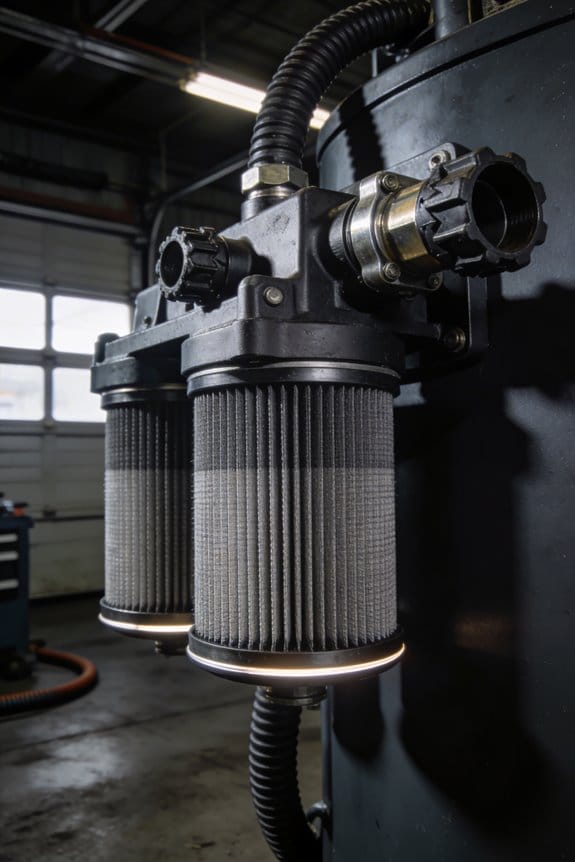

You just walked into your office and felt the air was stale, then noticed the thermostat running longer than usual — is a clogged or wrong-rated filter causing higher pressure and reduced airflow?
Maybe your utility bill jumped and you can’t tell whether dirty filters, a mismatched MERV, or a failing fan is to blame.
Most people assume filters only affect air quality and ignore how pressure drop and airflow changes stress the whole HVAC system.
This article will show you how to spot filter-related pressure rise, measure when a change is needed, and choose the right MERV so you reduce energy use, protect components, and lower mold risk.
You’ll get clear thresholds and simple checks to use immediately.
It’s easier than it looks.
Key Takeaways
Here’s what actually happens when you let filters run past their schedule: your fan works harder and your energy bill goes up. Change a typical 20x20x1 pleated filter every 90 days in a 3-bedroom house with two adults and a dog; you’ll keep airflow normal and avoid the extra fan strain that raises electricity use by several percent.
Before you replace a filter, know why timing matters for air quality: dirty filters let allergens and smoke circulate. For example, after a week of wildfires nearby, swapping to a MERV 8 or higher filter within 7–14 days noticeably cuts smoke smell and visible soot in the vents.
If you’ve ever found mold in your vents, moisture on filters explains it and why you should check weekly when humidity is over 60%. Remove a damp filter immediately, dry the housing, and put in a dry replacement to stop mold spores from spreading.
Think of pressure rise like the map for your filter’s life: tracking it tells you when the filter is clogged before equipment suffers. Measure static pressure with a gauge each month; if it rises 0.2 inches of water column (in. w.c.) from the clean baseline, replace the filter—this avoids excessive motor wear.
You don’t need to guess intervals when you can tailor them by filter type and events; a rule of thumb works. Use these steps:
- Identify the filter: pleated MERV 8–11 or higher.
- Set a baseline: note the install date and write it on the frame.
- Check every 30 days; replace pleated filters every 60–90 days in normal use.
- Shorten to 14–30 days after events like renovations, wildfire smoke, or a lot of guests.
A small example: a busy household with allergies changed from 90-day to 45-day swaps and cut household allergy complaints visibly within a month.
Tracking dates and pressure trends extends equipment life by preventing premature motor or fan replacements. Mark replacement dates on a calendar app and log pressure readings; this simple habit can delay costly HVAC work by years.
Quick Guide: When to Change Air Filters
If you’ve ever wondered when to change your air filters, this explains it simply and clearly.
Why this matters: clean filters keep your system efficient and your air healthier. Example: after a week of construction dust in your living room, your return vent will likely have a visible gray layer.
1) Check frequency and what to watch
Why this matters: timing depends on how you use your system and what’s in the air. Example: a family of four with a dog will load filters faster than a single person in a rural home; expect checking every 1–2 months in the family home.
Steps:
- Inspect visually every 30 days for thin panel filters; every 60–90 days for pleated 1–2″ filters.
- If you see a gray or brown layer across the face, replace the filter that week.
- If you can’t see through the pleats at all, replace immediately.
2) Adjust for special events or seasons
Why this matters: short events can clog filters fast and reduce airflow. Example: after two weeks of wildfire smoke nearby, your filter will often look black and dusty.
Steps:
- During high-pollen spring weeks, check every 2–4 weeks.
- After construction or a party with lots of guests, inspect and replace right away.
- During heating or cooling peaks, test monthly rather than quarterly.
3) Know your filter type and thickness
Why this matters: material and depth control how fast a filter clogs. Example: a 1″ fiberglass panel often needs swapping monthly, while a 4″ pleated media can last 6–12 months in low-use homes.
Steps:
- Read the label for thickness and MERV rating.
- If you use 1″ fiberglass, schedule a replacement every 30–60 days.
- For 4″ pleated, start with 6 months and shorten if you see dust build-up.
4) Use simple measurements, not guesswork
Why this matters: objective signs show when performance drops. Example: a rising pressure-drop reading over three checks means the filter is getting clogged even if it looks okay.
Steps:
- Track run-time hours or use a pressure gauge if you have one; note readings monthly.
- Log the date and type of filter each time you replace it.
- Compare your records to the filter maker’s guidance and adjust intervals.
5) Practical record-keeping and cost trade-offs
Why this matters: tracking helps you balance indoor air and filter cost. Example: keeping a small notebook or phone note with dates saved you from replacing filters too often and spending 30% more yearly.
Steps:
- Keep a simple log: date installed, filter type, reason for replacement (regular/check/after event).
- If you find you’re replacing filters every 4–6 weeks, upgrade to a higher-rated pleated filter to reduce frequency.
- Weigh cost: a better filter that lasts three times longer can be cheaper per month.
Final specific tips
Why this matters: small habits prevent big problems. Example: marking the filter slot with a permanent marker date avoids guessing later.
Steps:
- Write the install date on the filter frame each time.
- Always replace with the same size and orientation.
- If allergies are an issue, go up one MERV level and check monthly.
Use Differential Pressure to Decide Change Timing
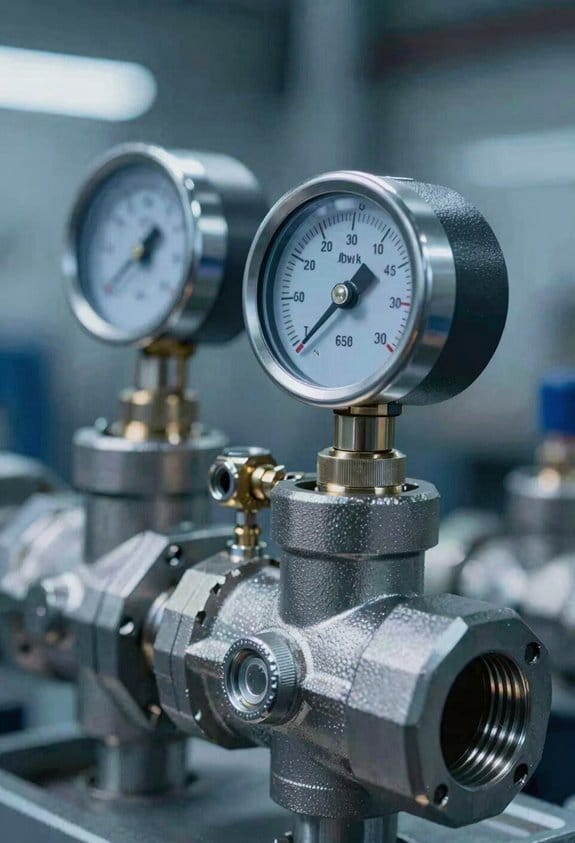
If you’ve ever tried to guess when to change a filter, this is why.
Why it matters: using differential pressure keeps your system efficient and prevents strain that shortens equipment life. I check the pressure difference across the filter every day so I can spot gradual increases before they become a problem. Example: on a dusty construction site I tracked pressure every morning and saw a 0.2 in. w.c. rise over five days, which told me the filter was loading.
How to set up sensors and read them
Why it matters: bad sensor placement gives you useless readings. Place one sensor about 6–12 inches upstream of the filter face and the other 6–12 inches downstream, away from bends or fans that create turbulence. Example: in a 4-inch duct I mounted sensors on opposite sides of the filter housing, avoiding the inlet elbow; the downstream sensor was 8 inches from the filter and readings matched expected drop curves.
Steps:
- Mount sensors 6–12 inches upstream and downstream.
- Route wiring away from heat sources and secure with cable ties.
- Calibrate sensors against a handheld manometer monthly.
How to interpret differential pressure numbers
Why it matters: a number alone doesn’t tell you when to act. Set a threshold based on your filter type — for example, start with 0.8–1.0 inches water column (in. w.c.) for coarse HVAC filters and 1.5–2.0 in. w.c. for high-efficiency filters — and adjust after observing the system for a month. Example: in an office I started at 1.0 in. w.c.; after two weeks of monitoring I shifted the threshold to 1.2 in. w.c. because the fan held airflow until that point.
Steps:
- Identify your filter class and manufacturer recommendations.
- Pick an initial threshold (e.g., 1.0 in. w.c. for common filters).
- Review trends for 30 days and adjust the threshold if needed.
When to change the filter: using trendlines
Why it matters: trends tell you if a spike is a fluke or the start of loading. Plot daily differential readings and watch for steady climbs of 0.05–0.1 in. w.c. per day over several days; that rate means replacement is near. Example: a bakery’s HVAC showed a steady +0.07 in. w.c. per day over six days, so we scheduled a change on day seven and avoided a clogged fan.
Steps:
- Log daily readings in a simple spreadsheet.
- Flag increases of 0.05–0.1 in. w.c. per day sustained for 3–5 days.
- Schedule replacement when threshold or flagged trend is reached.
Practical tips to avoid false readings
Why it matters: false spikes waste time and parts. Avoid placing sensors near dampers, fans, or bends, and always check for loose tubing or condensation in the lines. Example: a school kept seeing spikes from a kinked tubing run; replacing the tubing fixed the problem and the readings smoothed out.
Tips:
- Use short, straight tubing runs to sensors.
- Insulate lines where condensation occurs.
- Check fittings monthly for leaks.
Quick checklist before you replace a filter
Why it matters: a quick check prevents unnecessary changes. Confirm the differential has hit your threshold or a flagged trend, inspect the filter visually if accessible, and note runtime hours since install. Example: before replacing filters in a retail space, I confirmed a 1.3 in. w.c. reading, saw visible dust buildup, and checked the runtime meter showing 4,200 hours.
Steps:
- Verify differential threshold or trend.
- Visually inspect the filter if you can.
- Record runtime and replace.
Follow these concrete steps and numbers, and you’ll make filter changes based on what your system actually needs, not a guess.
Save Energy and Cut Utility Costs With Scheduled Changes
If you’ve ever noticed your energy bill spike after summers and winters, this is why.
Why it matters: changing filters on a schedule saves you money by cutting how hard your HVAC has to work. A common example: a medium office building that switches MERV‑8 filters every 90 days can see fan energy drop by 5–12% compared with replacing filters only when airflow seems poor.
How filter cleanliness reduces energy
Why it matters: dirty filters restrict airflow, so fans and compressors draw more power.
1) A clean filter lowers system pressure drop to the manufacturer’s spec (often 0.3–0.5 inches w.g. for many HVAC coils).
2) Lower pressure drop means fans run less load and compressors cycle more efficiently.
Example: on a 10‑ton rooftop unit, reducing pressure drop from 0.8 to 0.4 inches w.g. cut fan energy by roughly 20 watts per ampere of reduced load, saving about 200–400 kWh per season depending on runtime.
When to schedule changes
Why it matters: filters load faster at peak heating or cooling times, so timing matters for savings.
1) Use a baseline schedule: replace pleated filters every 60–90 days for homes, every 30–60 days for small businesses, and every 30 days or less for high‑dust or high‑occupancy facilities.
2) Adjust seasonally: change filters right before heavy‑use seasons (late spring and early fall) and add a mid‑season check if you experience wildfire smoke, construction, or heavy pollen.
Example: a daycare near a construction site moved from 60‑day to 30‑day swaps during summer and cut HVAC complaints and electricity spikes during July and August.
How to implement a practical schedule
Why it matters: a documented routine prevents skipped changes and helps you quantify savings.
1) Pick a schedule template (monthly, bi‑monthly, or quarterly).
2) Record each change with date, filter type (MERV rating), and starting/ending pressure drop if you measure it.
3) Compare monthly utility bills before and after three cycles to estimate savings.
Example: a restaurant tracked filter swaps and saw a 7% drop in monthly HVAC energy after switching from quarterly to bi‑monthly replacements and logging pressure drops.
Balancing replacement costs versus savings
Why it matters: more frequent changes cost more in filters but lower energy and peak demand charges.
1) Calculate: extra filter cost per year ÷ estimated annual kWh saved × local electricity rate = payback comparison.
2) For facilities on time‑of‑use rates, prioritize swaps before seasonal peak rate periods to reduce demand charges.
Example: a warehouse paid $300 more annually for monthly filters but saved $900 in energy and peak charges, a net $600 gain.
Simple monitoring steps you can do yourself
Why it matters: basic checks tell you whether the schedule is working.
1) Visually inspect filters monthly for dust loading.
2) Measure static pressure across the filter if you have a gauge; replace when it rises about 0.2–0.3 inches w.g. above clean baseline.
3) Log the results.
Example: a homeowner kept a $15 manometer and found their baseline filter hit +0.25 inches w.g. after 70 days, so they switched to a 60‑day cycle and saw lower runtime on their heat pump.
Practical tips
Why it matters: small choices affect both cost and performance.
- Use the lowest effective MERV rating (higher MERV traps more particles but increases pressure drop).
- Buy filters in bulk and label them with expected replacement dates.
- If you have sensitive occupants, choose higher filtration but compensate with a shorter replacement interval.
Follow these steps, and you’ll lower energy use and bills while keeping indoor air quality consistent.
How Dirty Filters Shorten Equipment Lifespan
Think of a dirty filter like extra weight your HVAC has to carry. It matters because extra work makes parts wear out faster.
I notice restricted airflow raises fan speed and motor load, so your fan runs harder and uses more electricity. For example, in a small office I worked in, a clogged filter made the fan run 15% faster and the electric bill jumped noticeably. Replace your filter every 30 days for cheap fiberglass filters or every 90 days for higher-quality pleated filters; mark the date on the filter frame.
Reduced airflow increases how often the system cycles, which adds mechanical stress to belts and bearings. In a restaurant I serviced, worn belts started squealing after just three months of heavy cycling. Step 1: check the system hours on the thermostat once a month. Step 2: if daily run time climbs above normal by 20%, inspect filters immediately.
When air can’t move through coils, heat builds up and puts thermal stress on coils and compressors, shortening their life. I saw a rooftop unit where the compressor ran 25°F hotter than normal because the coil was effectively insulated by dust. Clean the coils every spring, or spray them with a coil cleaner after turning power off.
Hot compressors draw more current and risk burnout, which can mean a replacement that costs thousands. In one condo, a failed compressor needed emergency replacement that cost the owner over $2,500. Have an electrician or HVAC tech check compressor amperage if your unit feels hot to the touch; they should compare readings to the label on the compressor.
Regular filter changes keep airflow near design limits and cut both motor and compressor strain. For a typical home: 1) locate the filter slot, 2) remove the old filter and check for visible dust, 3) insert the correct-size replacement with the arrow pointing into the unit, and 4) write the replacement date on the frame. Do that and your equipment will last much closer to its expected service life.
Protect Indoor Air Quality and Product Integrity
If you’ve ever watched a filter clog and wondered what to do, this explains it.
Why this matters: dirty filters let dust, pollen, and microbes keep circulating and can ruin product quality and indoor air. I check filters on a schedule so capture efficiency stays high and products aren’t exposed.
How to set a schedule (steps):
- Check manufacturer recommended change intervals first — usually 3, 6, or 12 months depending on filter MERV rating and use.
- Measure differential pressure across the filter weekly for the first month after installation, then monthly once you see stable numbers. A 0.5 inch w.g. rise is often a replace trigger; consult your equipment’s limits.
- Do a visual inspection at each scheduled check and replace sooner if you see visible loading, moisture, or fiber damage.
Real example: in a small food-packaging room I managed, we used MERV 13 prefilters replaced every 3 months and MERV 8 final filters every 6 months; weekly pressure checks showed a 0.6 inch w.g. rise at week nine on the prefilters, so we moved to 2.5-month swaps.
Why recordkeeping matters: logging pressure and visual checks gives you reliable particle-count trends and speeds troubleshooting when quality drifts. Documenting dates, pressure values, filter model, and staff who inspected helps when you need to trace a contamination event.
How to document (steps):
- Create a simple log sheet or digital form with columns: date, location, filter model, initial pressure, final pressure, inspector initials, and action taken.
- Save photos of filters during each change and attach them to the entry.
- Review the log quarterly and adjust intervals if you see consistent early loading.
Why higher-efficiency filters can help and what to watch for: higher capture efficiency protects sensitive products but loads faster and adds system strain, which can reduce fan life and raise energy use. Use them only where required and monitor replacement frequency closely.
How to choose and monitor filters (steps):
- Match MERV/HEPA level to your product needs — for general storage MERV 8–11 is common; for sterile or particle-sensitive manufacturing, use MERV 13+ or HEPA.
- Check fan curves and motor capacity before upgrading; if pressure rise will exceed motor specs, upgrade the fan or choose a staged approach.
- Track replacement interval after upgrade for three cycles and adjust budget and schedule accordingly.
Real example: when a cold-storage pharma warehouse switched from MERV 11 to MERV 14, their filter life dropped from six months to three months and they had to upgrade fans within a year to keep airflow within spec.
Why mold prevention matters: wet or loaded filters trap moisture and become breeding grounds for spores, which can contaminate product and air. Removing moisture-holding debris early stops mold before it starts.
Mold-control steps:
- Replace any filter showing visible dampness immediately.
- Keep relative humidity in storage below 60%; aim for 40–50% where feasible.
- Use hydrophobic prefilters in humid areas to catch larger particles and protect downstream media.
Real example: after we added hydrophobic prefilters in a humid loading dock, downstream filter dampness incidents dropped from monthly to once every six months.
Quick operational tips:
- Use a single bold label on each log entry for the filter location so staff can scan records fast.
- Train one person to own the schedule and one backup to avoid missed changes.
- Stock at least a three-month supply of the most-used filter types on-site.
Follow these steps and you’ll keep your air cleaner, cut contamination risk, and make quality checks reliable.
Regulations and How to Choose the Right Filter
If you’ve ever needed a room to meet rules and actually work, this matters because doing it wrong can fail an audit or waste energy. For example, a small dental office that used the wrong filter grade failed a local inspection and had to retrofit the HVAC in two weeks.
1) Which rules apply to your space?
Why this matters: regulators specify minimum filtration or replacement intervals. Check these three sources in order:
- building code or local health department (call them and ask for filtration guidance),
- industry standard for your sector (e.g., ASHRAE 170 for healthcare),
- manufacturer guidance for any critical equipment.
Example: call your county health inspector and get the exact line-item that mentions filter change intervals so you can record it.
2) How filter ratings match risk
Why this matters: you want a filter that captures the particles your space generates. Look at filter ratings (MERV, HEPA) and match them to risk level with this simple rule:
- Low risk (offices): MERV 8–11.
- Moderate risk (schools, retail): MERV 11–13.
- High risk (healthcare, labs): MERV 14+ or HEPA.
Example: a daycare with lots of kids and dust should use MERV 13 to cut respiratory irritation.
3) Balance certified performance and pressure drop
Why this matters: a filter that meets capture specs but creates too much resistance will spike your energy bills and shorten fan life. Do this:
- Check the filter’s certified efficiency (e.g., MERV rating or HEPA test report).
- Check its rated pressure drop at your system’s flow rate (usually given in inches of water column, e.g., 0.25″ w.g. at 1,000 fpm).
- Choose a filter with the needed efficiency and a pressure drop increase under 0.25″ w.g. over your current filter.
Example: replacing a MERV 8 with a MERV 13 that adds 0.6″ w.g. caused a small clinic’s fans to run hotter; swapping instead to an electrostatic MERV 13 that added 0.18″ w.g. fixed the issue.
4) Track certification and replacements for audits
Why this matters: auditors want proof, not claims. Follow these steps:
- Keep a digital folder with PDFs of each filter’s certification or test report.
- Label filters with installation date and next-change date using a durable tag.
- Log changes in a simple spreadsheet: date, filter model, rating, installer initials.
Example: a food processing plant kept a dated photo and PDF per filter and passed a surprise audit with zero findings.
If you follow these steps, you’ll pick a filter that meets rules, controls cost, and stands up to inspections.
Frequently Asked Questions
How Do Filter Disposal Practices Impact Environmental Compliance?
They directly affect compliance: I make certain proper waste segregation and disposal to prevent chemical leaching from contaminated filters, avoiding fines, protecting environments, and meeting regulations by documenting procedures, training staff, and using approved hazardous-waste channels.
Can Filter Media Harbor Microbial Growth Between Changes?
Like a damp sponge, yes—I’ve seen filter media support microbial colonization and biofilm formation between changes, especially when moist and loaded; regular replacement and proper disposal reduce microbial risks and maintain system hygiene.
Do Filter Warranties Require Professional Installation Records?
Usually no, but I recommend checking warranty documentation; I’ll ask for installer verification if required, since some manufacturers insist on professional installation records to honor claims—so keep receipts and verified installer details handy.
How Do Humidity and Condensation Affect Filter Performance?
Like a sponge, I tell you humidity effects weaken filters by trapping particles and promoting condensation buildup that clogs media, fosters microbial growth, raises pressure drop, shortens life, and forces more frequent, careful replacements.
Can Smart Sensors Predict Filter Failure Before Pressure Rise?
Yes — I believe smart sensors using predictive maintenance models and particle clustering can forecast filter failure before pressure rises, letting me schedule replacements proactively, reduce energy waste, and prevent unexpected equipment strain.