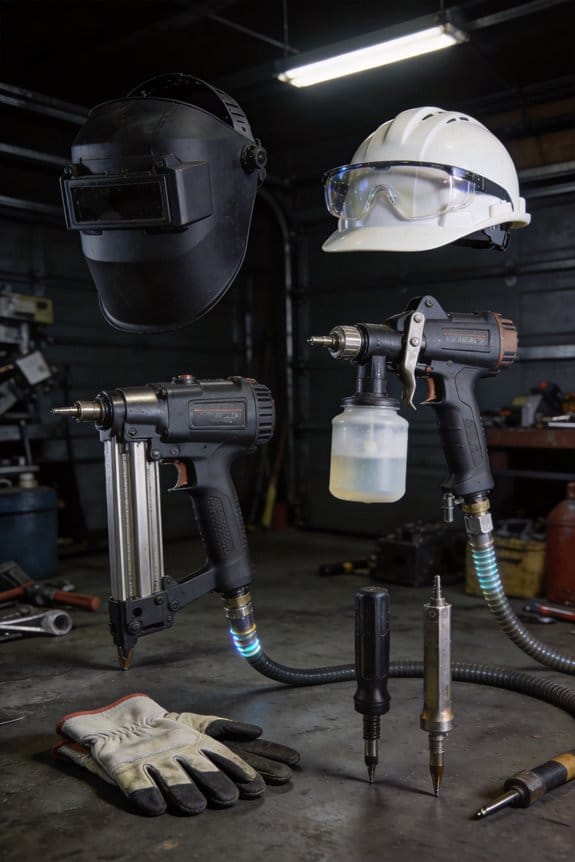

You squeeze the trigger to set a framing nail and a tiny ping skitters off the board — did that just ricochet toward your thumb? Or you lift a spray gun for a quick coat and suddenly taste solvent on your lips — where did that mist go?
Most people assume occasional use means no special gear, or they only wear one piece of PPE and call it good. This piece shows exactly which protection to wear for nailing and spraying, why each item matters, and how to choose and fit glasses, gloves, respirators, and hearing protection so you avoid eye, skin, lung, and hearing damage.
You’ll be able to pick and use the right PPE immediately. It’s easier than you think.
Key Takeaways
Before you pull the trigger on a nail gun, you need to know why your eyes and face are at risk. One ricocheted nail can travel at over 300 feet per second and shatter into fragments. Example: I once saw a 16d nail glance off a metal plate and embed in a plywood sheet four feet away, spraying tiny metal shards. To protect yourself:
- Wear ANSI Z87.1-rated safety glasses with side shields and a full-face shield when you’re working within 6 feet of the muzzle.
- Keep your head out of the nail line and clamp materials instead of holding them with your hand.
- Inspect and set the gun depth so it doesn’t overdrive nails into hidden hard surfaces.
If you’ve ever been in a paint or solvent haze, this is why you need respiratory protection before spraying. Spray guns create mists and vapors that regular clothes and surgical masks won’t stop; those particles can irritate your eyes and damage your lungs. Example: A neighbor who sprayed lacquer in a closed garage came out with stinging eyes and a headache within 20 minutes. To protect yourself:
- Use a respirator rated for the material — for solvent-based paints use a respirator with organic vapor cartridges plus P100 filters; for waterborne paints a P100 respirator is usually sufficient.
- Check the respirator fit with a seal check every time you put it on and replace filters per the manufacturer’s hours-of-use (typically 8–40 hours depending on contaminant load).
- Ventilate: open doors, run a cross-breeze exhaust fan, and keep fresh air flow at least 100 cubic feet per minute if you can.
Before you start sanding or grinding, you need to know what dust can do to your lungs so you choose the right filter. Dust like silica and coarse wood particles can cause short-term coughing and long-term scarring if you breathe them repeatedly. Example: A tile cutter operator without a respirator developed coughing fits after two months of cutting porcelain tile indoors. To protect yourself:
- Use a NIOSH-approved respirator with P100 filters for dust; for silica, follow OSHA guidance and consider a supplied-air respirator for prolonged exposure.
- Use a vacuum attachment with HEPA filtration on your tools to capture dust at the source.
- Wet-cut or mist materials when possible to reduce airborne dust by up to 70%.
It sounds obvious, but your hands are closer than you think to where nails and sharp edges fly, so protect them specifically. A puncture from a nail can go through thin work gloves and into your palm. Example: A carpenter reached past a workpiece to steady it and felt a sharp sting — a bent brad had punctured a cheap glove into the index finger. To protect yourself:
- Wear cut- and puncture-resistant gloves with at least level A3 cut resistance and a nitrile or leather palm when working near the muzzle.
- Don’t rest your hands directly behind where you’re nailing; use clamps or push sticks.
- Carry a small first-aid kit with sterile dressings and a splinter probe for field treatment.
The difference between protecting your hearing and ignoring it comes down to decibels and exposure time. Nail guns and spray equipment can exceed 100 dB, and repeated exposure at that level causes permanent hearing loss after about 15 minutes without protection. Example: A framing crew that worked eight hours with nail guns and no protection reported ringing ears at the end of each day. To protect yourself:
- Wear hearing protection rated at least NRR 25 dB — use earplugs plus over‑ear muffs for noisy, enclosed jobs.
- Take breaks away from the noise: 10 minutes of quiet every hour reduces cumulative damage.
- Use boots with steel toes and puncture-resistant midsoles (ASTM F2413) to prevent crushed or pierced feet from dropped tools or stray nails.
Quick PPE Checklist: What to Wear for Nail & Spray Guns
Before you use a nail or spray gun, you need to know what gear will actually keep you safe.
Why it matters: projectiles, loud noise, and fine particles can cause permanent injury. Example: on a renovation job, a coworker had a brad ricochet off a stud and nick his cheek because he skipped eye protection.
1) Eyes — what to wear and why
Why it matters: nails and spray particles hit your eyes fast, and one impact can cost you vision.
Wear safety glasses with side protection and anti-fog lenses. If you use a high-pressure nailer, pick polycarbonate lenses rated Z87.1; for paint spray, use sealed goggles to stop mist. Example: when you’re shooting framing nails in a dim garage, anti-fog lenses keep sight clear so you don’t aim at your fingers.
2) Hands — what to wear and why
Why it matters: punctures and cuts from nails and tool slips cause time off work.
Wear sturdy gloves with puncture-resistant palms, like leather gloves reinforced with a Kevlar liner. For spray work, switch to nitrile gloves so solvents don’t soak through. Example: while installing baseboard, Kevlar-lined gloves stopped a misfired nail that landed near your thumb.
3) Feet — what to wear and why
Why it matters: dropped tools and stray nails can crush toes or pierce soles.
Wear boots with steel or composite toe caps and puncture-resistant midsoles; choose a sole with oil-resistant tread. Example: on a site with loose nails, a puncture-resistant midsole kept a long roofing nail from going through.
4) Ears — what to wear and why
Why it matters: nail guns and compressors produce noise that gradually destroys hearing.
Use hearing protection when noise exceeds about 85 dB; that’s roughly the sound of city traffic at 25 feet. Use either foam earplugs (NRR 30) or over-ear muffs (NRR 25). Example: if you’re using a pneumatic nailer for an hour, foam plugs cut exposure so you don’t wake up with ringing.
5) Lungs — what to wear and why
Why it matters: paint and solvent sprays create fine particles and fumes that damage lungs over time.
Wear a respirator rated for the job: a NIOSH N95 for dust, or a half-face respirator with organic vapor cartridges for solvent-based paints. Example: when spraying trim with lacquer, a respirator with OV cartridges prevents dizziness and throat irritation.
6) Visibility — what to wear and why
Why it matters: being seen reduces collisions when others work nearby.
Wear a high-visibility vest when people or vehicles are moving around your workspace. Example: on a busy site with forklifts, a fluorescent vest with reflective stripes made you visible at dusk.
7) Storage and upkeep — what to do and why
Why it matters: dirty or damaged PPE won’t protect you when you need it.
- Label a clean storage bin for glasses, respirators, and ear protection.
- Inspect gear before each shift: lenses without cracks, respirator seals intact, gloves without holes.
- Replace disposable items per manufacturer guidance (e.g., foam plugs after one workday of heavy use). Example: keeping a labeled bin in your truck meant you grabbed intact goggles before a weekend paint job.
Quick checklist — do this every time
- Glasses or goggles with side protection.
- Puncture-resistant gloves (nitrile for spray).
- Steel/composite-toe boots with puncture midsole.
- Hearing protection (NRR 25–30).
- Appropriate respirator (N95 or OV cartridges).
- High-visibility vest if others are nearby.
- Inspect and store PPE in a labeled bin.
You’ll work safer if you follow these steps and check your gear.
Why PPE Matters for Nail & Spray Guns (Key Risks & Data)
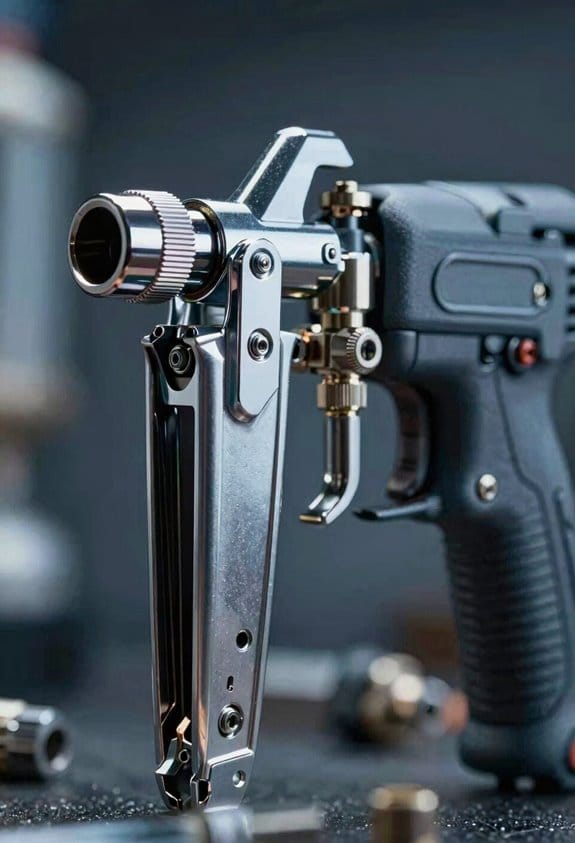
If you’ve ever had a nail ricochet off wood, this is why your gear matters.
Why it matters in one sentence: PPE cuts the chance your face, hands, or lungs get seriously injured when a nail gun or spray gun mishits. A real example: a framer on a jobsite had a nail glance off a stud and enter his cheekbone; his safety glasses shattered but saved his eye from a penetrating injury.
How PPE prevents harm
- Eye protection: Wear ANSI Z87.1-rated safety glasses every time you use a nail gun. They stop flying nails, wood chips, and ricochet fragments that cause most impact injuries. One hospital study found tens of thousands of ER visits yearly for nail-gun injuries, many to the face and eyes.
- Hand protection: Use cut-resistant gloves rated at least Level A3 for tasks where you hold material near the gun muzzle. Gloves reduce lacerations and punctures when nails glance or miss.
- Respiratory protection for spray guns: Use an N95 for light solvent paints and a half-mask respirator with P100 cartridges for heavy solvents or extended spray sessions. Respirators cut inhaled particles and vapors that cause short-term irritation and long-term lung damage.
- Hearing protection: Use earplugs or earmuffs rated NRR 25+ near repeated firing—this reduces temporary and permanent hearing loss from repeated loud shots.
Why these controls work (short)
– PPE acts as the last measurable barrier between you and injury.
A workplace example: a carpenter used a contact-trigger nailer without training; after several misfires by the same worker, the employer switched to a sequential-trigger tool, enforced ANSI-rated goggles, and provided yearly training—claims dropped and premiums fell the next year.
Steps to make PPE effective
- Inspect: Check glasses for cracks, gloves for cuts, and respirators for a proper seal before each shift.
- Replace: Replace damaged PPE immediately; safety glasses lose protection once scratched.
- Match: Use PPE matched to the task—don’t use an N95 where a P100 is needed.
- Train: Give everyone a 15-minute refresher on how to wear and maintain PPE every 6–12 months.
Insurance and employer consequences
Why this matters in one sentence: Failing to provide or enforce PPE raises injury claims, which directly increases insurance premiums and can trigger fines. For example, a small contractor who skipped training saw repeated nail-gun claims and faced a measurable premium hike the following policy year.
Practical tip: Document PPE issuance and training dates. A simple log reduces disputes when you file a claim.
Safety is a system, not a single item
Why this matters in one sentence: PPE reduces severity but works best combined with safer tools and procedures. On one site, switching to sequential triggers and logging near-miss reports cut repeat incidents by half within six months.
Quick checklist before you fire a gun
- Safety glasses ANSI Z87.1 on
- Gloves intact and appropriate level
- Respirator fitted if spraying
- Hearing protection in place
- Tool set to the correct trigger mode
Follow these steps and you’ll lower both the chance of injury and the cost consequences for your crew.
Injuries PPE Prevents: Hands, Eyes, Lungs, Ears, and More
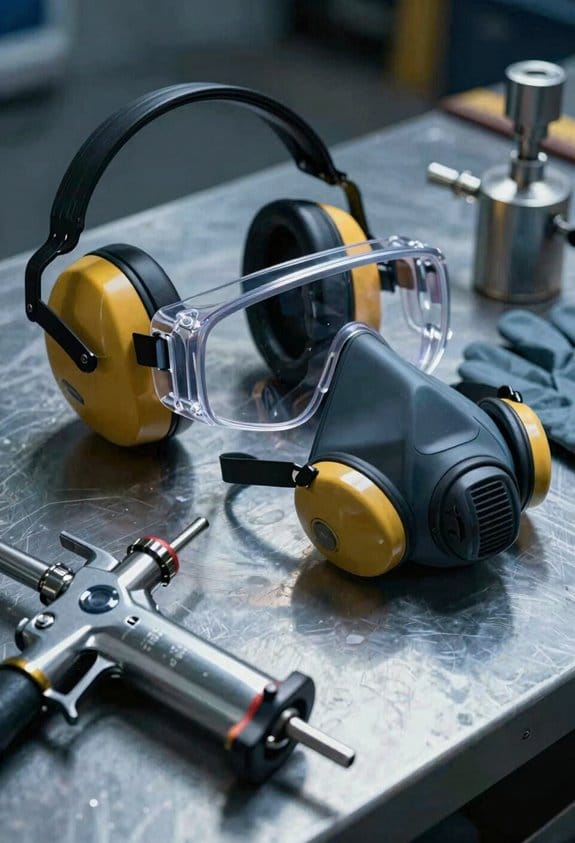
If you’ve ever felt a sting from a stray nail or coughed after a spray session, this is why.
Why it matters: the right PPE prevents injuries that can cost you time, money, and your health. For example, a coworker once missed a framing nail that ricocheted into his eye; he wore safety glasses and walked away with only minor irritation.
Gloves: how they stop hand injuries and how to pick them
Why it matters: your hands are the most-used tools and get punctured or cut fast.
1) Pick gloves rated for the task: use leather or cut-resistant gloves (ANSI A3–A5) when handling nails and thin nitrile when you need dexterity for small parts.
2) Inspect gloves before each shift: look for tears, holes, or worn palms; replace if damage shows.
3) Replace gloves every 2–4 weeks in heavy use or immediately after a puncture.
Real example: while removing a bent nail, a worker’s gloved hand slid and the leather absorbed the puncture, avoiding a hospital trip.
Eye protection: which goggles or glasses work
Why it matters: flying nails and debris can blind you in a second.
Choose goggles or safety glasses with side shields that meet ANSI Z87.1, and use anti-fog coatings for hot jobs.
Real example: during a deck build, a nail glanced off a joist and hit a coworker’s glasses; the lens cracked but his eye was unharmed.
Respirators: protecting lungs from spray and dust
Why it matters: inhaling aerosols and fine dust damages lungs over time.
1) Match respirator to the hazard: use an N95 for dust, a P100 for silica, and a respirator with organic vapor cartridges for solvent-based sprays.
2) Fit-test or do a user seal check every time; facial hair breaks the seal.
3) Replace filters per manufacturer guidance or when breathing gets harder.
Real example: a painter used a half-mask with organic vapor cartridges and avoided weeks of cough and sore throat after a long spray day.
Hearing protection: preventing sudden and cumulative damage
Why it matters: loud discharges and prolonged noise cause permanent hearing loss.
Use muffs with NRR 25–30 dB for framing guns or foam plugs when you need some ambient sound. Swap plugs for muffs if you frequently switch tasks.
Real example: after a day of continuous nailing, a worker who wore muffs had no tinnitus, while a neighbor who used no protection woke with ringing.
Footwear and head protection: stopping punctures and impacts
Why it matters: nails and falling materials crush toes and strike heads.
Wear steel-toe or composite-toe boots with puncture-resistant midsoles when driving nails overhead or working on decks. Pair with a Type I hard hat for top impacts on framing sites.
Real example: a dropped bundle of sheathing hit a worker’s hard hat; he walked away with a dented helmet and a day off for shock, not a concussion.
Training and reporting: making PPE effective
Why it matters: PPE only works when you know how to use it and learn from mistakes.
1) Train every new worker on what PPE to wear for each task and check use weekly.
2) Report near-misses with a short form describing the hazard and PPE used so you can fix gaps.
Real example: after several near-misses during spray work, a foreman started quick pre-shift checks and cut respirator failures by half.
Quick checklist before you start a task
Why it matters: a simple check prevents obvious mistakes.
- Gloves match the hazard.
- Eye protection with side shields is on.
- Respirator and cartridges are right for the material.
- Hearing protection fits.
- Boots and hard hat are worn.
Do this checklist in under a minute.
If you follow these concrete steps, you’ll reduce the most common serious injuries from nail and spray guns and keep working without losing days to preventable harm.
Choose PPE for Each Hazard: Gloves, Eye, Respiratory, Hearing
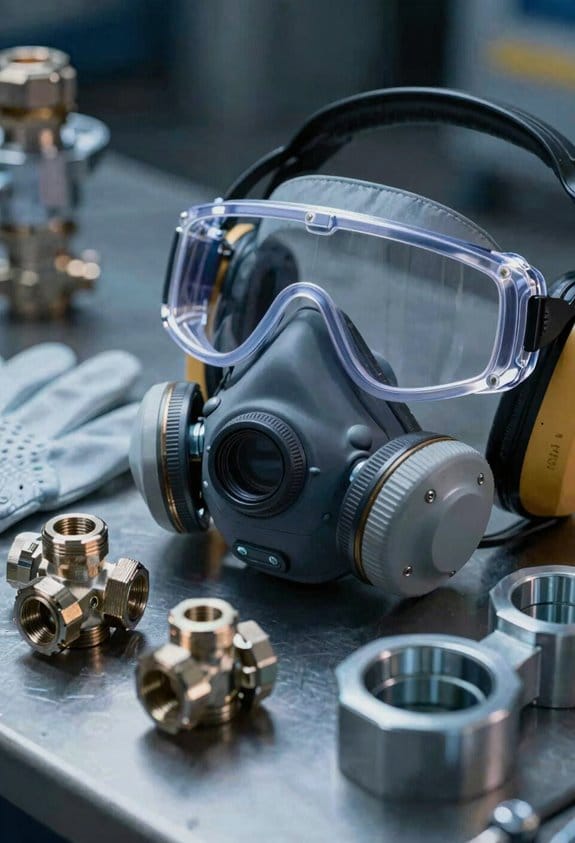
Before you pick gear, you need to know how each PPE type protects you.
Gloves — Which ones for nail work?
Why it matters: Your hands take most of the risk from punctures and cuts.
Real-world example: On a renovation job you’ll nail close to framing and sometimes miss the block; a fast-moving nail can pierce thin gloves and go into your palm.
1) Steps to pick gloves:
- Choose gloves labeled ANSI/ISEA Level 3 or higher for puncture resistance if you handle nails often.
- Pick a glove with a nitrile or leather palm and reinforced fingertips for grip and abrasion resistance.
- If you need precision, get gloves with 0.5–1.0 mm thinner material at the fingertips or hybrid gloves with microfibre tips.
- Replace gloves every 3–6 months with heavy use, or immediately after any puncture.
Short note: Fit matters — they should be snug, not tight.
Eyes — What protection should you wear?
Why it matters: Small particles and ricocheting nails can blind you.
Real-world example: While hand-holding trim, a nail can glance off and hit your cheekbone or eye within a split second.
1) Steps to protect your eyes:
- Wear ANSI Z87.1 high-impact safety glasses for most nail jobs.
- Use a full-face shield when you’re close to overhead nailing, grinding, or spraying; the shield must cover the chin and temples.
- Add side shields or wraparound glasses if you work in dusty environments.
- Clean lenses with a microfiber cloth and replace them if scratched or after 6–12 months of frequent use.
Short note: Don’t wear regular sunglasses as a substitute.
Respiratory — Which respirator to use and why?
Why it matters: Dust and solvent sprays damage lungs over time and can make you sick quickly.
Real-world example: When you’re sanding old paint and using solvent-based adhesives in a small room, dust and vapors concentrate fast.
1) Steps to choose and use a respirator:
- For dust and wood particles, use an N95 (or P2) disposable respirator; for oil-based sprays or solvents, use a respirator with organic vapor cartridges (half-mask or full-face).
- If you use a reusable respirator, perform a fit test (qualitative or quantitative) before first use and a seal check each time you put it on.
- Replace filters or cartridges per manufacturer guidance — typically N95s after a full workday of heavy dust, cartridges when you smell contaminants or every 40 hours of use.
- If you have facial hair where the mask seals, use a powered air-purifying respirator (PAPR) or shave the seal area.
Short note: A full-face respirator also protects your eyes.
Hearing — What level of protection do you need?
Why it matters: Repeated impulse noise from nail guns causes permanent hearing loss.
Real-world example: Using a framing nailer for an 8-hour day exposes you to frequent 120+ dB impulses that add up quickly.
1) Steps to protect hearing:
- Measure or estimate noise: if peak levels hit 115–130 dB during use, you need hearing protection with high attenuation.
- Use foam earplugs rated NRR 29–33 for high attenuation, or over-the-ear electronic earmuffs (NRR 23–30) that allow communication while blocking impulses.
- For the best protection, wear both earplugs and earmuffs together when noise exceeds 115 dB — combined protection can add 5–10 dB effective attenuation.
- Replace disposable earplugs after one day of use and clean reusable plugs/muffs per the manufacturer.
Short note: Test your hearing yearly if you work in noisy conditions.
Final tip: Match the PPE to the hazard, not just the tool. Pick the rated gear, check the fit every time, and replace items on a schedule — that’s how you stay safe while getting the job done.
Safer Nail Guns and PPE: Trigger Types, Work Rules, and Limits
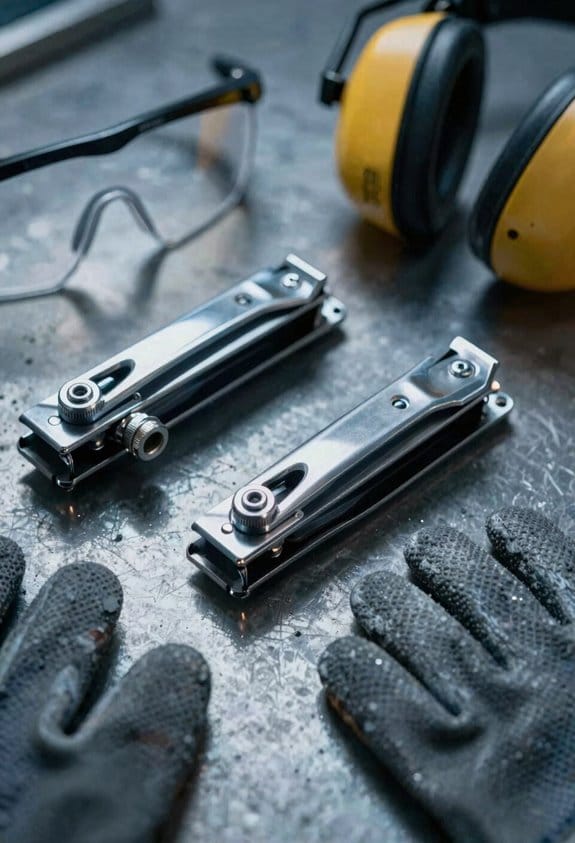
Before you pick a trigger for a nail gun, know that the choice changes how often you or a coworker gets shot by accident. For example, on a deck job a framer with a contact trigger fired a nail into a helper’s hand when they bumped the gun; that led to two weeks off work and a $5,000 medical bill.
Sequential triggers require you to press the nose against the work before you pull the trigger, and that order cuts down on bump nailing and accidental shots. If you can, buy or require sequential-action nailers for framing, roofing, and finish work.
Why training and workplace rules matter: without clear rules you get sloppy habits that cause injuries. On a remodel site I worked, crews using a written rule—no bypassing safeties, no two-handed shots, and keeping non-operators 10 feet away—had far fewer incidents than crews with no rules.
How to write and enforce useful work rules:
- Specify the trigger type required (e.g., sequential for framing).
- Require PPE for everyone within 10 feet of active nailing: safety glasses with side shields, cut-resistant gloves, and steel-toe shoes.
- Ban modifications that defeat safety features and state disciplinary steps for violations.
- Require toolbox talks: one short (5-minute) review at shift start, and a written checklist for each job.
Do these four things. They reduce mistakes.
Why PPE still matters: even with safer triggers and rules, nails can ricochet or tools can jam and fly apart. On a roofing project, a ricocheted nail glanced off a metal flashing and hit a worker’s safety glasses, leaving a scratch but preventing an eye injury.
Specific PPE to use now:
- Eye protection: ANSI Z87.1-rated glasses with side shields.
- Gloves: cut-resistant level A2 or A3 for handling materials and nails.
- Footwear: ASTM F2413-compliant steel-toe or composite-toe boots.
Get these items for every person on site.
How to reduce recoil and speed-related risks — because faster isn’t always safer. If you rush, recoil stacks up and you lose control. One subcontractor switched to a paced cadence of 20 nails per minute for deck rail posts and cut misfires by half.
Steps to limit speed safely:
- Set a practical nails-per-minute pace for each task and post it where crews see it.
- Use sequential triggers for tasks requiring controlled placement.
- Take a 5-minute reset every 30 minutes to check stance and tool condition.
Follow those three steps.
Final practical checklist you can copy to a job folder:
- Required trigger: sequential.
- PPE: Z87.1 glasses, A2/A3 gloves, ASTM F2413 boots.
- Distance: keep bystanders 10 feet away.
- No safety bypassing: zero tolerance.
- Cadence: set maximum nails/minute and take breaks every 30 minutes.
Put this checklist on the wall or in the foreperson’s phone so it’s used.
Frequently Asked Questions
Can PPE Interfere With Nail Gun Dexterity or Grip?
Yes — I’ve noticed glove thickness can reduce fingertip feel and affect trigger sensitivity perception, so I choose thinner, high-grip gloves to maintain dexterity while balancing protection, and I adjust technique accordingly for safety.
How Often Should Respirator Cartridges Be Replaced?
How often? I change respirator cartridges at scheduled service intervals or sooner during visible clogging, odor, or breakthrough—typically every 8–40 hours or per manufacturer. I track filter changeovers and document service intervals for safety.
Are Disposable Coveralls Necessary for Every Spray Job?
No — I don’t think single use suits are necessary for every spray job; I use disposable coveralls when contamination control is critical, with high-exposure materials, messy tasks, or when cross-contamination risks outweigh cost and waste.
Who Pays for Lost or Damaged PPE After an Incident?
Employer liability usually means I expect my employer to cover PPE replacement after an incident; if they don’t, I can file a claim or workers’ comp, since employers are generally responsible for PPE costs and safety.
Can PPE Protect Against Nail Ricochet or Double-Fire Injuries?
Yes — I’ll tell you: PPE can’t stop ricochet mechanics or a trigger malfunction from causing penetration, but I’ve seen gloves, safety shoes, helmets, and eye protection reduce severity and prevent many disabling outcomes.