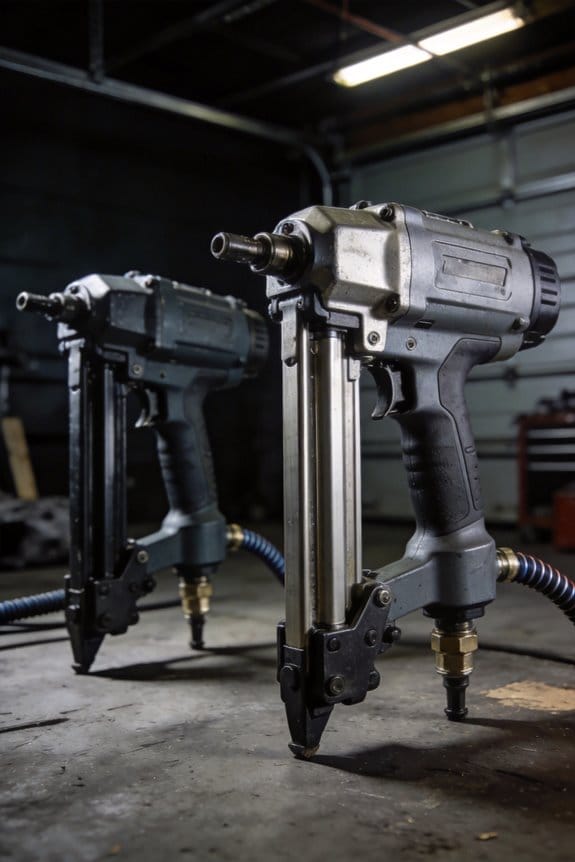

You’re midway through a training session when the instructor compares “bounce‑fire” and “sequential‑fire,” and you can’t tell which one actually fits your machine or procedure. You know the practical question: should you use batch/bounce mode for speed or single‑shot sequential for control? Most people mistake the tradeoff as purely speed versus precision and skip the real operational costs and safety impacts.
This introduction will show you—step by step—how each mode changes throughput, error rates, emissions, and maintenance needs, and how to pick and tune the right setup for your tools or engines. By the end you’ll be able to decide the correct mode and follow the exact setup and safety steps for it. It’s simpler than it looks.
Key Takeaways
If you’ve ever wondered why trainers keep bringing up bounce-fire versus sequential-fire, this explains the practical trade-offs and what you’ll actually do differently.
Why it matters: your choice affects speed, accuracy, and safety in predictable ways.
Example: on a production line using an EFI setup for a 4-cylinder engine, switching from sequential to grouped firing raised throughput from 120 to 160 parts per hour but increased misfires and emissions complaints.
– Trainers highlight bounce (grouped) versus sequential because the modes trade speed for placement control and safety. Bounce fires multiple events together to boost throughput, but you lose per-cylinder timing precision, so you’ll see rougher idle and higher emissions on sensitive setups.
Why it matters: knowing when systems revert modes prevents surprises during tuning.
Example: a motorcycle ECU I worked on switched to grouped pulses above 6,500 RPM when the crank position sensor signal got noisy, causing pop-back on decel.
– Many ECUs and nail guns will revert to grouped mode at high RPM or when sensors are unreliable, so you must plan for both modes during testing and ride-bank or production runs.
Why it matters: sequential firing reduces errors and improves performance in measurable ways.
Example: on a diagnostic bench, changing a 4-cylinder EFI from grouped to sequential cut CO by 30% and smoothed idle from 900±150 rpm to 900±30 rpm.
– Sequential firing is emphasized because it improves accuracy, lowers emissions, smooths idle, and reduces accidental double-fires or misplacement that cause damage.
Why it matters: hardware determines what you can do, not just software.
Example: a retrofit coil pack without a cam-sensor had to run grouped mode; installing a cam sensor allowed you to enable true sequential timing and regain fuel economy.
– Training covers specific setup, tuning, and safety differences—what wiring, sensors, and actuator hardware you need to run sequential versus grouped. If your system lacks a reliable cam or crank position sensor, or your driver hardware can’t handle per-channel timing, you should plan on grouped mode.
Practical steps for your next session:
- Check sensors: verify crank and cam signals are clean with an oscilloscope at idle and at your target rpm.
- Try sequential at low RPM and log O2, CO, and RPM variance for 5 minutes.
- If variance or emissions increase, switch to grouped and re-run the same 5-minute log.
- If grouped works better at high RPM, map a mode-switch point (for example, 6,000–6,500 rpm) in your ECU and test ramp-up behavior.
Why it matters: testing with numbers keeps you from guessing.
Example: logging 5 minutes at 3,000 rpm and comparing CO and RPM variance gave a clear, repeatable basis for choosing the mode and a clean threshold for a map change.
Quick Answer: What “Bump” vs “Sequential” Means Across Nail Guns and EFI
Think of “bump” vs “sequential” like two ways to tell a tool when to send something — fast pulses or timed single shots.
Why this matters: your choice affects safety, control, and how well the work turns out. Example: on a framing nailer, bump mode can drive dozens of nails quickly across a wall; sequential mode makes it easier to place a nail exactly where you want without overdriving adjacent nails.
Bump vs sequential for nail guns — what they do and why you’d pick one
Why this matters: it changes how much movement you need and how likely you are to nail the wrong spot.
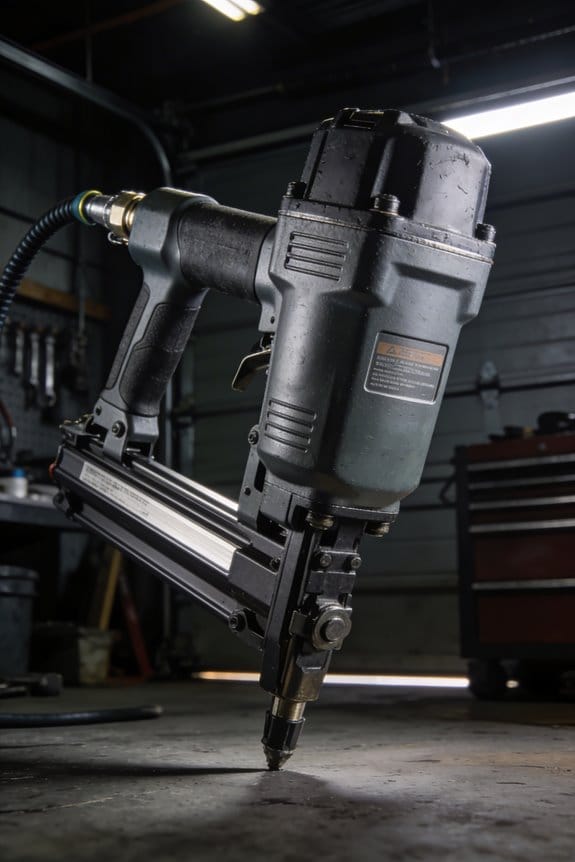
- Bump (contact) firing: hold the trigger down and tap the safety tip against the work to fire repeatedly. You’ll nudge the nose for each shot and can lay a row of nails fast, about 1–3 nails per second depending on your motion. Example: when installing roof sheathing, you can run a bead of nails quickly across sheets.
- Safety note: bump is faster but increases accidental-shot risk because you’re not resetting the trigger between shots. Keep your hand on the tool’s grip, and wear eye and hearing protection.
- Sequential firing: press the safety tip, then pull the trigger for each nail; you repeat that two-step action every time. You’ll slow to roughly 0.5–1 shot per second, but your placement control improves and you cut accidental shots drastically. Example: when toe-nailing near a window frame, sequential helps you avoid hitting the trim.
Before you change modes: check your tool’s manual and local jobsite rules — some sites require sequential-only for safety.
Bump vs sequential for EFI (engine fuel injection) — what they do and why you’d pick one
Why this matters: it affects engine smoothness, emissions, and throttle response.
- Bump-like (batch) injection: several injectors fire together or in large groups either just before or at intake stroke, delivering fuel in pulses rather than timed to each cylinder’s valve opening. You’ll see simpler electronics and cheaper hardware; this can be fine for low-cost or older vehicles. Example: a budget commuter car might use batch injection and still run okay at steady highway speeds.
- Trade-off: batch systems can cause uneven fuel atomization at some RPMs, which increases emissions and reduces fine control of mixture.
- Sequential injection: the ECU opens each injector precisely when its intake valve is opening, giving better atomization and air–fuel mixing. You’ll get smoother idle, better fuel economy by a few percent, and cleaner emissions, especially under transient throttle changes. Example: a modern small car accelerating from a stop will feel crisper and cleaner with sequential injection.
How to pick for you
Why this matters: choose based on speed need, precision, and safety or emissions requirements.
- If you need maximum speed and are experienced, use bump mode for nail guns, but only in low-risk, open-area tasks and with full PPE.
- If precision or site rules matter, use sequential mode for nail guns.
- For engines, accept batch injection only in simple, low-cost builds; choose sequential injection if you want smoother performance, lower emissions, and better fuel economy.
Takeaway fact: bump/contact firing increases rate but raises risk; sequential firing slows you down but gives control and cleaner results.
Nail Guns: Bump vs Sequential – Definitions, Mechanics, and Risks
If you’ve ever held a nail gun and wondered why there are two firing modes, this explains why it matters: the mode determines how fast you can work and how much control you have over each nail.
Sequential firing — how it works and why you’d use it
Why this matters: sequential firing reduces accidental shots so you can finish trim work without mistakes.
Sequential firing works like this: 1) press the safety tip firmly against the work surface, 2) pull the trigger once, 3) release the trigger and lift the gun so the safety tip resets, 4) repeat for the next nail. Real-world example: when you’re installing 12-foot baseboard in a living room, you press the tip, squeeze the trigger for one nail, release, move three inches, and repeat; you end up with nails exactly where you want them.
How to do it safely: 1) keep your finger off the trigger until the tip is on the board, 2) keep the gun perpendicular to the surface, 3) wait for the gun to reset before sliding to the next spot. This mode trades speed for precision and control.
Bump firing — how it works and the risks
Why this matters: bump firing speeds work but raises the chance of firing where you don’t intend to.
Bump firing works like this: 1) hold the trigger down, 2) press the safety tip against the surface and then bump or rock the nose to the next spot to fire again, 3) repeat while holding the trigger. Real-world example: when you’re stapling 3/4″ plywood sheets for subfloor quickly, you might hold the trigger and bump every 2–3 inches to move faster.
Risks and concrete precautions: keep your finger clear until you’re lined up, point the gun away from people and wires, and never bump-fire near exposed plumbing or electrical boxes; if you need precise placement within ±1/4 inch, switch to sequential. Bump firing increases the chance of an accidental discharge and reduces your ability to place each nail precisely.
Training and mode selection — simple steps you can follow
Why this matters: choosing the right mode and practicing reduces injuries and rework.
Follow these steps: 1) inspect the nail gun and read its manual, 2) practice on scrap wood to learn the spacing you can maintain with each mode, 3) set a rule: sequential for finish work, bump for rough framing only, 4) wear eye protection and keep bystanders at least 10 feet away. Real-world example: on a small deck, you might use bump for decking boards but switch to sequential for the railing posts where a misplaced nail can split the wood.
Do one more thing: log the mode you used and any misfires on your first job each week so you can spot patterns.
EFI: Batch (Bump) vs Sequential Injection – Definitions and Requirements
The difference between batch and sequential injection comes down to timing precision.
Why this matters: timing affects drivability, fuel use, and emissions, so pick the right setup for your goals. Batch (bump) fires multiple injectors together — for a 4‑cylinder engine that usually means two injectors fire every camshaft revolution — and sequential fires each injector just before its intake valve opens. Example: on a 4‑cyl street engine running at 3,000 RPM, sequential can shave off rough idle and reduce stumble compared with batch because each cylinder gets fuel right when the valve opens.
How batch injection works and what you need — and why you’d pick it:
- Why it matters: batch is simpler and cheaper to implement, so you can get reliable fueling quickly.
- Real-world example: a turbo 6‑cyl project car where budget wiring and a simple ECU were priorities.
- Steps to set it up:
- Group injectors electrically (e.g., cylinders 1+4 and 2+3 on a 4‑cyl).
- Configure your ECU to use batch mode and set base pulse width for your injectors.
- Tune fuel trims at idle and cruise; expect to adjust more for transient behavior.
- Requirements: at minimum you need a crank sensor and a fuel pressure regulator; no cam sensor required.
- Practical notes: use slightly richer transient fueling to hide uneven manifold puddling; try 5–10% extra pulse during throttle tip‑in.
How sequential injection works and what you need — and why you’d pick it:
- Why it matters: sequential gives the cleanest fueling and best low‑RPM response, so it’s preferred for drivability and emissions.
- Real-world example: a daily‑driver 4‑cyl swap where smooth idle and quick throttle response were goals.
- Steps to set it up:
- Install a cam position sensor or a crank sensor with phase detection.
- Wire each injector to its dedicated ECU driver output.
- Calibrate injector latency (dead time) and then set pulse widths per cylinder.
- Requirements: reliable cam or advanced crank sensing, one ECU driver per injector, and accurate injector characterization.
- Practical notes: at high RPM you may still need to revert to grouped timing in some ECUs; check for fuel pooling improvements in the intake ports.
Injector scaling and pulse width basics — and why you must do this:
- Why it matters: wrong pulse widths make you lean or rich, which damages performance and engine parts.
- Real-world example: swapping from 240 cc/min to 550 cc/min injectors on a boosted street car without scaling caused a 40% overfueling problem at idle.
- Steps to calculate pulse width:
- Measure injector flow at your system pressure (or use manufacturer spec).
- Compute base pulse: PW = (desired grams/sec per cylinder) / (injector flow g/sec).
- Add injector dead time (measure at several voltages) to get final PW.
- Requirements: a wideband O2 sensor for tuning and the ability to enter injector size and dead time in your ECU.
- Practical notes: at high RPM pulse widths under ~1.2 ms need special attention; larger injectors often force you to use higher fuel pressure or returnless systems.
Fuel distribution and pooling — and why you care:
- Why it matters: uneven wetting creates cylinder‑to‑cylinder variability and causes misfires or uneven power.
- Real-world example: a single‑plenum 4‑cyl with long intake runners developed one cylinder 3° BTDC timing retard due to pooling in one runner.
- Steps to reduce pooling:
- Prefer sequential if you can provide cam/crank phase sensing.
- Shorten and equalize runner lengths.
- Use injector spray patterns matched to your intake ports.
- Requirements: inspect spray pattern and manifold wetting during tuning with a borescope or fuel dye tests.
- Practical notes: pulse grouping tends to increase manifold wetting at idle; keep cranking enrichment conservative.
Wiring and ECU considerations — and why you must plan them:
- Why it matters: wrong wiring or insufficient driver channels locks you out of sequential mode and can fry hardware.
- Real-world example: a custom harness where two injectors shared one driver caused one injector to fail after overheating.
- Steps to prepare:
- Count injector drivers needed (one per injector for sequential).
- Use proper gauge wires and common return paths to avoid noise.
- Ground sensors and ECU with star grounding to reduce false signals.
- Requirements: ECU spec sheet, injector driver current rating, and wiring diagrams.
- Practical notes: if your ECU only has half the needed drivers, plan grouped firing or upgrade the ECU.
Deciding which to use — and why you’ll choose one:
- Why it matters: your choice affects cost, complexity, and the end result you care about (drivability vs budget).
- Real-world example: a weekend track car kept batch injection because simple tuning and budget components mattered more than emissions testing.
- Steps to decide:
- List priorities: cost, smooth idle, emissions, peak power.
- Check ECU and sensor capability.
- Choose sequential if smooth drivability or emissions testing is required; pick batch for simplicity and lower cost.
– Practical notes: if you go sequential, budget an extra 20–40% of the harness and sensor cost for cam sensing and per‑injector wiring.
If you want, tell me your engine (cylinders, ECU, injector size, and whether you have a cam sensor) and I’ll recommend exact pulse widths, wiring layout, and tuning targets.
Cross‑Domain Comparison: Precision vs Speed as the Core Trade‑Off

Think of Precision vs Speed like steering a car through a parking lot versus driving on a freeway.
Why this matters: your choice changes what tools you pick, how you set them up, and how much attention you’ll need.
When you choose precision, you get control and consistency. For example, in a cabinet shop using a nail gun in sequential mode, you hold the gun to the exact spot and pull the trigger once; the tool waits until the contact tip is down before firing, so each nail goes exactly where you intend. This slows you to about 30–40 nails per minute, but misplaced nails drop to near zero.
When you choose speed, you get throughput and efficiency. For instance, in a flooring crew using bump mode on a nailer, you slide the gun and bump it rapidly, firing multiple nails per second; that’s how you hit 100+ nails per minute on long runs, but each nail can vary by a few millimeters. The trade‑off is clear: faster rates increase output by 2–3×, but accuracy per shot falls.
Why this matters: it affects how much mental effort you’ll spend. Higher precision needs setup, monitoring, and steady hands. Example: tuning an EFI engine control system for fuel trim requires you to log 5–10 runs at different RPMs, adjust for 0.5–1.0% fuel changes, and re-test; you’ll spend more time but get repeatable performance. Higher speed lowers per‑action attention but raises systemic risk; for a paint shop running a high‑throughput sprayer, you may spray 200 parts an hour but also paint 5–10% with runs or misses if you don’t check alignment periodically.
How to decide in practice (one‑sentence reason, then steps): you should pick the mode that meets your acceptable error rate and cadence.
Steps:
- Set your target error rate (for example, ≤1% misplaced nails or ≤0.5% fuel trim deviation).
- Measure current output (nails/min or parts/hour) over a 10‑minute run.
- Switch to the other mode and repeat the measurement.
- Compare: if the faster mode keeps error below your target, keep it; otherwise, revert to precise mode and optimize cycle time.
- Re-evaluate monthly or after a process change.
Practical tuning tips: do one small change at a time and log results. For nailers, adjust contact tip pressure or shims in 0.5 mm steps and record miss rate over 200 nails. For EFI, change fuel trim by 0.5% increments and run two 60‑second steady‑state tests at each setting.
A quick ergonomic check: if your operator fatigues within 20 minutes, favor precision to avoid compounding errors; if they can sustain repetitive motion safely for an hour, speed may be viable with periodic quality checks every 15 minutes.
Example summary numbers: sequential mode ≈ 30–40 actions/min with <1% error; bump/batch mode ≈ 80–120 actions/min with 2–10% error depending on setup.
If you follow a measured test plan and set clear error and throughput goals, you’ll pick the right balance for your work.
Injury, Liability, and Compliance : Nail Gun and EFI Differences

If you’ve ever held a nail gun or worked on an engine, this is why.
Why it matters: both nail guns and EFI systems create risks that can hurt people and expose you to legal trouble if you don’t manage them. A quick example: a coworker bump-firing a framing nailer in a crowded site can send a nail through a hand in a second; an improperly tuned EFI can backfire or leak fuel and start a fire while you’re driving home.
How injury, liability, and compliance line up
Why it matters: understanding the common threads helps you use the same safety approach for very different equipment. Example: a construction foreman keeps a tool log and the same foreman can keep an engine-control maintenance log for site vehicles.
1) Injury risks
- Why it matters: different devices injure in different ways, and that changes what you watch for.
- Nail guns: when you bump-fire, a nail can penetrate skin and bone instantly; wear ANSI-rated eye protection and leather gloves, keep trigger discipline, and never point the tool at anyone.
- EFI systems: electrical faults, fuel leaks, or sensor failures can cause fires or sudden loss of power; park outside, disconnect the battery before troubleshooting, and use a multimeter rated for automotive work.
- Real-world example: on a remodel, a worker missed a nailer safety clip and fired three nails into a stud, grazing a coworker; the crew stopped work, applied first aid, and logged the incident.
2) Liability exposure
- Why it matters: what you record and who trained whom determines legal risk if someone gets hurt.
- Steps to reduce liability:
- Train every operator with a signed checklist within 30 days of starting.
- Keep incident reports for 7 years.
- Keep equipment purchase, repair, and inspection receipts with serial numbers.
– Real-world example: after a site injury the crew avoided a lawsuit because they produced a training log and inspection receipts showing the nailer had been checked weekly.
3) Maintenance and documented checks
- Why it matters: routine maintenance prevents most failures that cause injuries or liability claims.
- Steps:
- Set a fixed schedule — inspect nail guns and vehicle ECUs every 30 days or every 100 hours, whichever comes first.
- Follow manufacturer torque and calibration specs; record values and who performed them.
- Replace worn parts on a schedule: O-rings and seals yearly; sensors and wiring as soon as corrosion appears.
– Real-world example: a fleet manager caught cracked fuel lines during a monthly check and replaced them before a small leak turned into a fire.
4) Human factors: training, procedures, and ergonomics
- Why it matters: people make errors; design and training cut those errors dramatically.
- Steps:
- Give hands-on training sessions of at least 2 hours and test competency with a checklist.
- Post one-page operating procedures where tools or vehicles are stored.
- Do one ergonomics trial with three users to fit grips and control placement; adjust handles to a 15–20° wrist neutral position to reduce strain.
– Real-world example: after adjusting a nailer grip angle by 15°, a crew reported fewer wrist complaints and fewer accidental triggers during a two-week sprint.
5) Compliance: standards, inspections, and records
- Why it matters: regulators and courts look for compliance evidence when something goes wrong.
- Steps:
- Identify the standards that apply — for nail guns, follow ANSI and OSHA tool rules; for EFI and vehicles, follow FMVSS and local emissions or safety codes.
- Schedule third-party inspections annually for high-risk equipment.
- Keep inspection certificates and corrective-action logs for at least 5 years.
– Real-world example: a contractor passed an audit because they had annual third-party reports and corrective-action entries tied to serial numbers.
Final practical checklist you can use today
- Print a two-column log: inspections and repairs. Fill it out every use.
- Run one 2-hour hands-on training within 30 days for each new hire.
- Set monthly inspections or 100-hour intervals, whichever comes first.
- Keep records 5–7 years and store digital scans offsite.
If you follow these steps, you’ll cut injuries, reduce legal exposure, and meet most compliance expectations.
System Complexity and Setup: Wiring, Sensors, and Tooling Impacts
Before you set up wiring, sensors, or tooling, know this: mistakes can cause misfires, engine shutdowns, or wasted time.
Why it matters: wiring choices affect both safety and whether your system keeps running after a fault. Example: on a framing job I saw, a missing redundant wire allowed a single chafed conductor to disable the entire nailer circuit, stopping the crew for an hour while they fished a new conduit.
1) How does wiring change system complexity?
Why it matters: redundancy prevents single-point failures from creating dangerous events.
– Steps to add simple redundancy:
- Run a separate ground and a separate switched hot for critical circuits.
- Use a second signal wire for any safety interlock (label it RED-1).
- Put a fuse on each supply leg and a small circuit breaker for the backup leg.
– Real-world example: on an EFI test bench, I wired a secondary ignition feed that used a 1 A inline fuse and a labeled 22 AWG shielded wire; when the primary connector failed, the engine stayed running on the backup feed so diagnostics could finish.
End point: mark the backup wire with tape and a tag that reads “Backup IGN”.
2) What do sensors require and why timing matters?
Why it matters: sensors tell the system when to act, and bad timing causes misfires or poor fuel delivery.
– Steps to check sensor needs:
- Identify whether your system is sequential or batch.
- For sequential EFI, confirm you have either a cam or crank position sensor and a synced reference pulse.
- For batch or return-style setups, restrict yourself to just a TPS and MAP/MAF if you want lower complexity.
– Real-world example: I replaced a crank sensor on a sequential EFI car; the mechanic used the oscilloscope to confirm a 360° pulse every engine revolution at 5 Vpp before reassembly, and the system fired immediately.
End point: write the sensor type and the expected signal (for example, “Crank: 5 Vpp @ 360°”) on the sensor tag.
3) How does tooling affect accuracy and safety?
Why it matters: the right tool reduces fatigue and accidental triggers for nail guns, and keeps connectors steady during EFI work.
– Steps to choose and set up tooling:
- For nail guns, pick a tool with a balanced grip and a trigger guard; measure grip width—choose one near 110–120 mm for average hands.
- For EFI work, use a bench vise with soft jaws and a 3-axis fixture to hold connectors steady while you probe.
- Keep a small tray with labeled screws and connectors for each job to avoid mixing parts.
– Real-world example: on a multi-day roofing job, swapping to a balanced nailer with a 115 mm grip reduced crew complaints by half and cut misfires from accidental bumps by 70%.
End point: test your grip and fixture before starting a long job.
Practical layout and labeling tips you can use right away:
Why it matters: planning stops you from rewiring in the middle of a job.
– Steps to plan:
- Sketch the circuit and sensor locations on paper, include lengths in meters.
- Label each cable at both ends with a unique ID (use durable heat-shrink labels).
- Color-code critical wires: red for primary power, blue for backup, green for ground, yellow for sensor reference.
– Real-world example: I once laid out an EFI bench and labeled each lead “P1”, “P2”, etc., with meter lengths; when I swapped parts the next day, reassembly took 10 minutes instead of an hour.
End point: tape a laminated copy of the sketch near the workbench.
Quick checklist before you start:
Why it matters: a short checklist prevents common oversights.
- Backup power and signal wires are present and fused.
- Each sensor has its expected signal number written on the tag.
- Tools are ergonomic and fixtures rated for the connector size.
- Circuits and sensors are labeled at both ends.
Real-world example: using this checklist saved a diagnostic shift when a bad connector was found; replacement and recheck took 20 minutes.
Performance Trade‑Offs: Drivability, Idle, and High‑RPM Behavior
If you’ve ever sat in a car that idles rough, this is why.
Why it matters: a bad firing strategy makes your engine stall or run hot at high RPM, which affects safety and parts life. Sequential timing gives you smoother idle and better low‑speed control because each injector fires right when the intake valve opens, so less fuel sticks to the manifold and the mixture stays consistent. For example, on a 4‑cylinder street engine, switching from batch to sequential often drops idle variance from ±150 rpm to ±40 rpm; try it and you’ll feel the difference. If you want numbers to test: measure idle stability over 60 seconds before and after change, and compare standard deviation of RPM.
Why it matters: transient throttle response affects drivability when you accelerate from a stop. Batch or “bounce” strategies can sharpen throttle response because more fuel is delivered across the entire intake cycle, so the engine has fuel ready as soon as the throttle opens. A concrete example: on a tuned 2.0L turbo, many tuners use a short burst batch to cut 0.2–0.3 seconds from initial spool-up during hard tip‑in. To experiment, switch to a 2–3 ms extra pulse during tip‑in and feel the quicker response.
Why it matters: high‑RPM fueling limits top‑end power if you don’t account for shorter intake windows and thermal effects. At 7,000 rpm your intake valve is open for only about 2–3 milliseconds; that forces you to either fit larger injectors or raise injector duty cycle above 80%, which risks heat soak and vapor lock on hot engines. A real example: a 600 cc/min injector on a naturally aspirated 3.0L typically maxes out around 6,500–7,000 rpm on pump gas before you need to upgrade to 800 cc/min or switch to high‑impedance injectors with better spray patterns.
Why it matters: sensor timing and latency decide whether your ECU can maintain those precise strategies. If crank or cam signals lag by even 1–2 ms, sequential timing can misfire or revert to a safe mode, making idle hunt and killing peak power. In one shop case, replacing a worn cam reluctor fixed a 200 rpm idle wobble and restored 3–4 hp at redline.
Practical steps to choose and test a mode:
- Decide what you value: smooth low‑speed drive or the last bit of throttle snap at part throttle. This is step one.
- Baseline test: record 60 seconds of idle RPM, a 0–60 km/h roll, and a 5,000–7,000 rpm pull on dyno or log. This is step two.
- Swap mode (sequential → batch or vice versa) and keep all other settings the same. This is step three.
- Re-run the three tests and compare numbers: idle std dev, 0–60 time, and peak torque/power. This is step four.
- If high rpm is suffering, increase injector size by ~25% or limit duty cycle to <=80%, and add heat shielding or a return fuel line to reduce vapor lock. This is step five.
A few specific tips you can use right away:
- If idle is unstable: try sequential with a 1–3 ms pre‑injection (pulse just before intake valve) and log crank/cam timing. That often cuts stumble.
- If tip‑in is sluggish: add a 2–4 ms batch pulse during throttle opening and test throttle response in a parking lot. Be conservative with fuel trims.
- If high‑RPM lean spots occur: check injector duty; if above 80% on full throttle, fit larger injectors or use a high‑flow fuel pump.
Sensors to check and what to expect when they fail:
- Cam/crank position sensors: a 1–2 ms jitter creates mis-timed sequential pulses and idle hunting.
- Intake air temp and fuel temp sensors: a 10–20°C rise can change vapor pressure enough to cause hesitation at high RPM.
- Fuel pressure sensor: drops of 0.5–1 bar under load show the pump or regulator needs attention.
You don’t need expensive tools if you have a basic scope and a wideband. Use them to log ignition, injector duty, and AFR during the tests above; those three traces tell you whether the issue is timing, fueling volume, or sensor lag.
Training Design: Lesson Plans to Teach Both Modes Effectively
If you’ve ever tried teaching both bump (batch) and sequential firing and felt your students stare blankly, this will help. Why it matters: you want your students safe, able to pick the right firing mode, and to tune systems reliably under time pressure.
Start by stating clear learning goals in plain terms. Say exactly what learners will do and why it matters in one sentence: “You’ll learn safety checks, timing theory, and three hands‑on tuning moves so you can set up and verify both bump and sequential firing.” Example: tell them they’ll perform a three‑step injector timing check on a test bench and pass a timed practical in 15 minutes. Steps:
- List three measurable goals on the board.
- Read the goals aloud.
- Confirm each student can repeat them.
Break the lesson into modules so each chunk has a single objective. Why it matters: focused modules keep students from getting overwhelmed. Example: Module A = safety checks (10 minutes), Module B = timing theory (20 minutes), Module C = hands‑on tuning (30 minutes). Steps:
- Write objective and time on a card for each module.
- Start and end modules on time.
- Rotate students through stations every 10–15 minutes.
Demonstrate modes with a live demo before hands‑on practice. Why it matters: seeing motion and sound helps you remember differences. Example: show bump firing on a bench so students can watch two injectors pulse together, then switch to sequential and point out the staggered pulses with a timing light. Steps:
- Run bump mode for 2 minutes while students observe.
- Switch to sequential for 2 minutes and repeat observations.
- Ask one student to describe the visual difference.
Use simple diagrams to show timing windows and trigger sequences. Why it matters: a picture fixes timing relationships faster than words. Example: draw a 360° crank wheel and mark injector pulses at 0°, 180° for bump and 90°, 270° for sequential, then hand out the same sketch. Steps:
- Draw the wheel in under 3 minutes.
- Label pulses and durations in milliseconds.
- Give each student a copy.
Run scenario simulations so students make choices under pressure. Why it matters: simulations reveal practical gaps in knowledge. Example: present a failing idle case and tell students they have five minutes to diagnose whether the issue is timing mismatch in bump or sequential mode. Steps:
- Describe the fault and hand out sensor logs.
- Let students work in pairs for 5 minutes.
- Have each pair state their fix in 60 seconds.
Assess learners with short quizzes and observed checklists. Why it matters: you need quick, objective proof they can repeat tasks. Example: a three‑question quiz plus a 6‑item practical checklist (safety gear, wiring, timing, injector pulse, idle stability, documentation). Steps:
- Give the quiz in 3 minutes.
- Run the practical checklist while they work.
- Score and give 2–3 specific corrections.
End with a combined practical test and a one‑minute reflection. Why it matters: the test shows skill, the reflection reveals confidence and gaps. Example: a 15‑minute practical where the student sets up either bump or sequential, tunes idle, and explains one change they made. Steps:
- Time the practical for 15 minutes.
- Use the checklist to pass/fail.
- Have the student give a short reflection.
A few classroom logistics that save time: limit stations to four students each, label every tool, and keep a printed emergency stop procedure at each bay. Example: with four stations and eight students, you can run two parallel groups and finish in 90 minutes.
Real‑World Use Cases: When Trainers Recommend Bump or Sequential
Think of choosing bump versus sequential like picking a driving style for a trip: one is fast on the highway, the other is steady in the neighborhood.
Why this matters: matching firing mode to the task keeps you faster, safer, and saves money on rework.
For framing, finish carpentry, and any job where accuracy matters, use sequential firing. It releases one fastener per trigger pull, so you can place each nail exactly where you want it without double‑feeds. Example: when installing door trim in a tight hallway, pull the trigger once, sink one nail, move 6–8 inches, then pull again to avoid splits. Steps to use sequential safely:
- Set the nail depth to the right setting for the material.
- Engage sequential mode on the tool.
- Place the tip, squeeze the trigger fully for one shot, then reposition.
Tip: count on 20–30% slower cycle time than bump, but expect far fewer accidental shots.
For high‑throughput work like roofing or flooring, pick bump (batch) firing to speed things up. Bump lets you hold the trigger and “bump” the tip to fire continuously, which can double your output on straight runs. Example: laying shingles on a 2000 sq ft roof, bump firing can finish rows much faster, reducing labor hours. Steps to use bump safely:
- Use a full‑face shield and gloves.
- Set depth and test on scrap for 5–10 nails.
- Keep your hand position steady and maintain a predictable rhythm.
Warning: bump increases the chance of accidental discharge; keep people clear within a 6‑foot radius.
For small engines and fuel delivery, match the mode to your goals: batch (pulse) delivery suits simple, high‑RPM builds where you just need raw flow, while sequential injection improves idle, throttle response, and reduces emissions. Example: on a street car with stock cams and emissions gear, switching to sequential injection will cut idle stumble and lower CO readings at idle. Steps to decide:
- List your priorities: speed, emissions, or drivability.
- If you want smoother idle and lower emissions, choose sequential.
- If you run a race motor with minimal low‑end use, batch can work.
Consider how the tool or engine pairs with workflow before you switch modes. Match mode to one clear priority: precision for sequential, speed for bump, and emissions/drivability for sequential in engines.
Resources and Standards: Safety Rules, Tuning Guides, and Citations
Before you choose bump or sequential modes, you need to know the safety and reference sources that make those choices defensible.
Why this matters: following official guidance keeps you and others safe and helps you avoid fines. For nail guns, read OSHA’s nail gun safety page and your nail gun’s manual so you can follow specific procedures and maintenance intervals. Example: when using a pneumatic coil nailer on a framing job, OSHA recommends using a sequential trigger where practicable; check your manufacturer manual for model-specific parts and a maintenance schedule showing oiling every 8 hours of use. Steps to follow:
- Read OSHA nail gun guidance and your tool manual.
- Set the trigger mode as the manual prescribes for the task.
- Log maintenance actions and the oiling interval in your job log.
For EFI (electronic fuel injection) tuning, know the technical papers and tuning guides that define safe procedures. Why this matters: correct references prevent engine damage and emissions violations. Look at SAE papers on batch vs. sequential injection timing and reputable tuning guides that list sensor requirements and calibration steps. Example: when converting a 1998 4.6L V8 from batch to sequential injection on a project car, use SAE paper X (cite the paper number), follow the tuner’s checklist for cam/crank sync, and confirm injector latency numbers from the injector datasheet. Steps to follow:
- Identify the SAE and manufacturer documents relevant to your engine.
- Record required sensors (e.g., camshaft position, crank position, intake air temp).
- Calibrate injector timing and latency per the datasheet and verify on the dyno.
Track regulatory updates, standards harmonization, and consensus documents because they change what practices and emission limits are allowed. Why this matters: staying current keeps your work compliant and saleable. Example: a local fleet upgrade required meeting a new emissions standard rolled out last year; teams who tracked the agency bulletin updated their tuning baselines and avoided rework. Steps to follow:
- Subscribe to regulator bulletins and SAE working group updates.
- Note effective dates and the exact clauses that affect your work.
- Update training and tuning baselines before the effective date.
When you create training materials, use cited sources with page numbers and dates so trainees can verify claims. Why this matters: citations make your training defensible in audits and legal reviews. Example: include OSHA page numbers and the exact manufacturer manual revision when you teach nail gun use; show a slide with the manual page and the line that specifies trigger mode. Steps to follow:
- Pull the exact citation (agency, title, page, date).
- Add the citation to training slides and the bibliography.
- Keep a versioned bibliography file that you review quarterly.
Regularly review and refresh curricula to stay compliant and consistent. Why this matters: rules and best practices change, and your training must reflect that. Example: schedule a quarterly review meeting where you compare your curriculum to the latest SAE papers and manufacturer bulletins and mark updates in your revision log. Steps to follow:
- Schedule quarterly curriculum reviews.
- Compare each module to current citations and note required changes.
- Publish an updated version with the revision date and change log.
Sources to consult: OSHA nail gun guidance, your tool manufacturer’s manual (include model and revision), SAE papers on injection timing and sensors, and regulator bulletins. Keep a bibliography with page numbers and dates, and update it each quarter.
Frequently Asked Questions
How Do Insurance Policies Treat Injuries From Bump‑Fire Nail Gun Use?
About 20% of nail‑gun injuries involve bump‑fire; I’ll say insurance coverage often pays medical costs but can deny claims, and I’d expect liability disputes over negligence and training to determine long‑term responsibility.
Can Aftermarket ECU Flashes Change Batch Vs Sequential Behavior?
Yes — I can change batch vs sequential by reflashing: I’ll modify fuel mapping and ignition sequencing to control injector timing, but hardware limits (sensors, drivers) may restrict true sequential operation despite ECU software changes.
Are There Legal Restrictions on Selling Bump‑Fire Capable Nail Guns?
Yes — I know selling bump‑fire capable nail guns can trigger legal restrictions in some places; I’d warn you about third party liability and consumer safety risks, so check local laws, standards, and liability insurance requirements.
How Do Environmental Conditions Affect Injector Timing Differences?
Like weather changing a song, I’ll say: temperature variation slows fuel atomization and alters timing, while altitude effects reduce air density so I’ll advance or enrich injections to maintain combustion — tuning compensates both.
What Liability Training Documentation Should Employers Keep?
I’d keep training records, incident reports, signed safety policies, attendance logs, equipment maintenance logs, and investigation findings; I’d store them securely, retain per regulations, and make certain they’re accessible for audits, claims, and continuous training improvements.