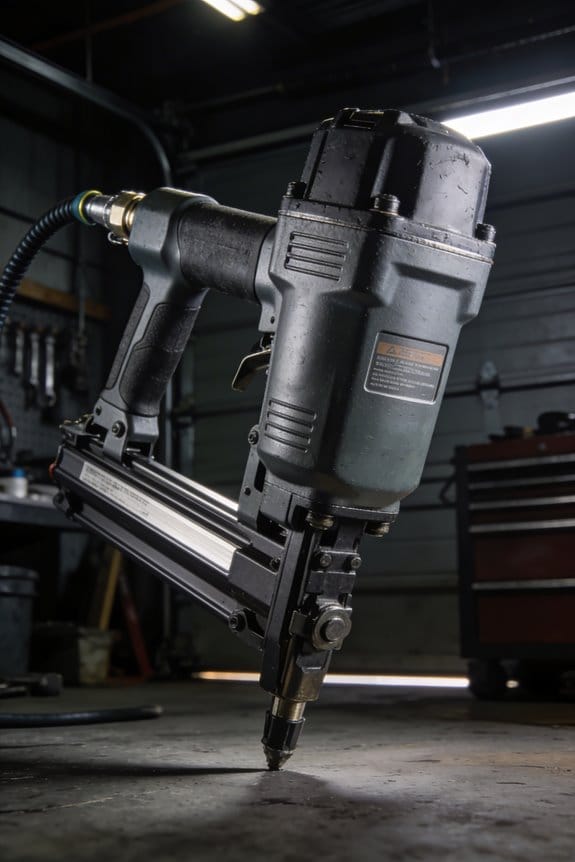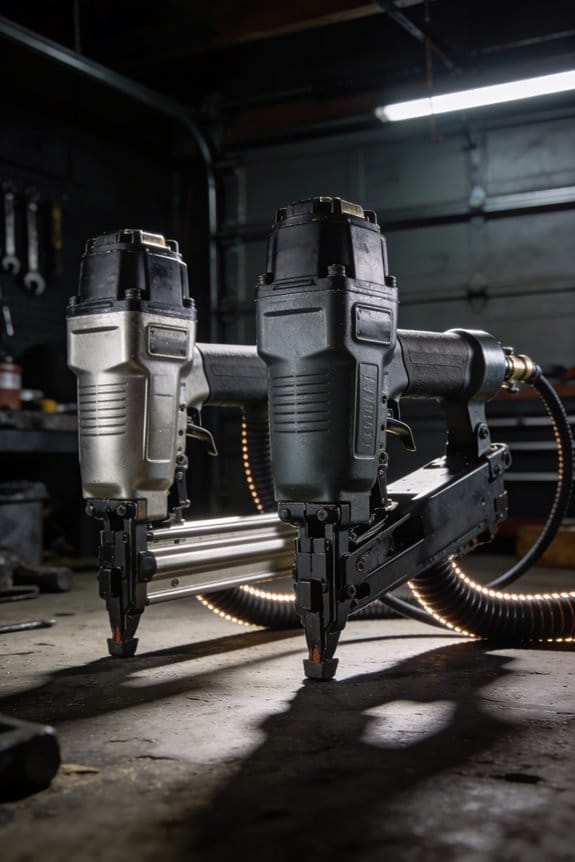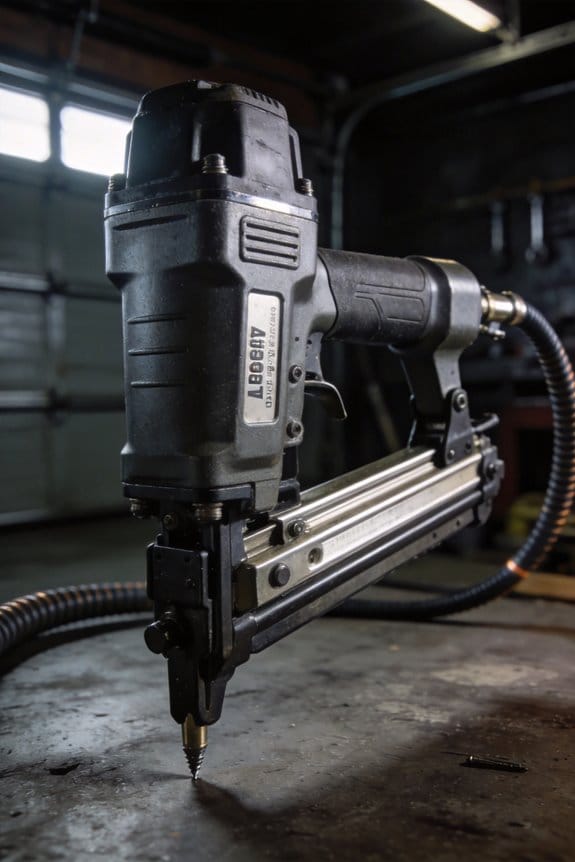
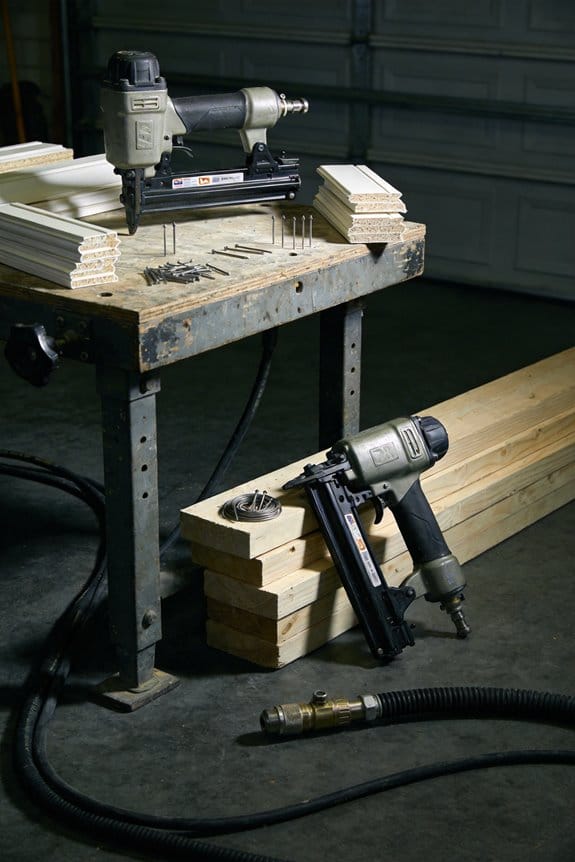

You just swapped finish and framing nailers on a job and the trim keeps blowing through or the framing nails won’t bite — now you’re staring at gaps and stripped heads and wondering which gun to grab. The exact question is: when should you reach for a finish nailer versus a framing gun, and how do you set them and your compressor so the work looks right and holds up? Most people assume any nailer will do if it fires, or they pick by speed alone and ignore nail gauge, head size, and air setup. This article will show you which gun to use for each trim task, how to match nail gauge and head to material, and how to set depth, air supply, and hoses so fast work still looks finished. It’s easier than it sounds.
Key Takeaways
Here’s what actually happens when you pick a nailer for trim versus framing: you need different tools and settings because the work demands precision or sheer holding power, not both at once.
- Trim carpenters use finish nailers (15–18 ga) because the small head hides in the trim and you can place nails exactly where you want them. Example: when installing 3/4″ baseboard, you’ll use 16‑ga 1‑1/4″ brad nails driven into the back of the molding to avoid visible holes.
- Trim work runs at lower air pressure, typically 60–80 PSI, and you should depth-test on scrap before starting so nails don’t countersink or tear the wood. Example: before installing door casings, shoot three nails into a scrap offcut at 70 PSI and adjust the depth until the head is flush without splitting.
- Trim users favor short hoses and delicate depth adjustments so the tool feels light and controllable; that helps you avoid marring delicate profiles. Example: use a 15–25 ft hose and dial the depth wheel a half‑click at a time while testing on a scrap corner.
- Framers use heavy framing nailers with longer, thicker nails for structural hold because you care about shear strength and holding plates and studs together. Example: when nailing 2×6 studs to plates, you’ll use 3‑1/4″ x 0.131″ nails from a framing nailer to get full‑shank drive.
- Framing tools run at higher pressure to ensure full penetration of the shank; you’ll often see settings above 90 PSI depending on nail length and compressor capability. Example: set pressure to 95–110 PSI when using 3‑1/4″ nails into dense framing lumber and check a couple driven nails visually.
- Trim carpenters choose thinner gauges, shorter lengths, and will predrill near ends or on fragile mouldings to prevent splitting. Example: for a thin crown molding end, predrill a 3/32″ pilot hole and shoot a 15‑ga 1‑1/4″ nail so the end doesn’t split.
- Framers don’t typically predrill; they use longer, thicker nails and drive two nails per plate or stud connection when codes or loads require extra strength. Example: toenail a rafter with two 10d nails for temporary bracing during framing.
- When you don’t have backing behind the trim, trim pros combine construction adhesive with 18‑ga brads to hold pieces without visible fasteners. Example: glue a thin return on a window stool, clamp, then tack with 18‑ga brads every 6–8 inches.
- Framers fasten directly into studs and rely on mechanical fastening patterns (like two nails per plate) to meet structural needs rather than adhesives. Example: plate-to-plate connections at a wall end typically get two full‑length nails spaced an inch or two apart.
How to set up for a trim job (step list):
- Set compressor to 60–80 PSI.
- Attach a 15–25 ft hose.
- Load 15–18 ga finish nails (pick length by molding thickness).
- Depth‑test on scrap and adjust until nails sit flush without tearing.
- Predrill at ends or on fragile profiles as needed.
How to set up for framing (step list):
- Set compressor to 95–110 PSI.
- Use a heavy framing nailer and full‑length nails (e.g., 3‑1/4″).
- Test a driven nail to confirm full shank drive.
- Fasten per framing pattern (two nails where specified).
Follow these specifics and you’ll avoid countersinks, splits, and weak holds by matching gauge, nail length, pressure, and technique to the job.
Quick Decision Guide: When to Use Pneumatic Finish Nailers vs Framing Tools
The difference between pneumatic finish nailers and framing tools comes down to what you’re fastening and how visible the fastener will be.
Choose a pneumatic finish nailer when you need precise, low‑visibility fastening because it drives thinner nails with small heads that are easy to set and conceal. For example, when you’re installing 3/4″ crown molding in a living room corner, use 15‑ or 16‑gauge brad nails and shoot about every 12–16 inches into studs and backing; you’ll hold the molding with one hand and nail with the other. For trim and cabinet work, that lets you avoid large countersinks and wood filler, and you can set nails below the surface with a half‑stroke on the pusher.
Pick framing nailers when structural strength and rapid, large‑scale fastening matter because they use thicker nails that resist shear and are made for repetitive heavy work. Say you’re building a 10′ wall: use a framing nailer with 3‑1/4″ 0.131‑inch nails (or collated 30‑degree nails on many models) and run studs at 16″ on center, shooting two nails per plate at each stud; the thicker shank and larger head give real holding power for sheathing and rafters. Framing nailers will noticeably speed up layout and reduce time compared with a hammer and nails.
Before you choose airless alternatives, know why it matters: you may need one if you can’t run an air compressor on site. For instance, on a remote renovation with no power, a cordless nailer with 1,000–1,500 shots per charge will keep you working for a morning, but expect a different trigger feel and slower cycle time than pneumatic tools.
Plan for noise mitigation because both tool types create significant sound. Wear NRR 25–30 ear protection, warn neighbors when you’ll be on site, and limit loud nailing to 8am–5pm if local ordinances require it.
Quick checklist:
- Finish nailer — use for trim, crown, and cabinets; 15–18 gauge; shoot every 12–16″ on trim.
- Framing nailer — use for studs, sheathing, framing; 0.113–0.131″ shank, 2¾–3½” length; two nails per plate.
- Airless/cellular alternatives — use only if no compressor; plan battery/shot limits (roughly 1,000 shots/charge).
- Noise — wear rated ear protection and follow local time rules.
Nail Gauges for Trim: 15 Vs 16 Vs 18‑Gauge (Finish Nailers)

If you’ve ever wrestled with trim that keeps popping loose, this is why.
Gauge matters because it controls nail thickness, holding power, and how visible the fastener will be in finished trim. For example, if you’re installing a 3/4″ hardwood door jamb, using the wrong gauge can leave you with split wood or nails that don’t hold.
Why use 18‑gauge?
Why it matters: thinner nails mean smaller holes and less splitting on delicate trim.
Example: when you install 1/4″ quarter-round on a bathroom vanity, an 18‑gauge nail leaves tiny holes that are easy to fill and hide.
How to use it:
- Use 18‑gauge finish nails for lightweight, delicate wood-to-wood work and tight joints.
- Choose a nail length equal to the trim thickness plus 1″ (e.g., 1/4″ quarter-round → 1-1/4″ nail).
- Set depth so the head is just below the surface, about 1–1.5 mm, then fill with wood putty.
Tip: 18‑gauge often doesn’t need heavy countersinking; a light touch with the nailer works.
When to pick 15‑ or 16‑gauge?
Why it matters: thicker nails give more grip and resist pullout on heavy trim or when anchoring through drywall into studs.
Example: for a 5″ oak baseboard fastened through drywall into studs, a 15‑ or 16‑gauge nail prevents the baseboard from loosening over time.
How to use it:
- Use 15‑ or 16‑gauge for baseboards, crown moldings over 3/4″ thick, and stair trim.
- Pick nail length so the shank penetrates at least 1″ into the backing (trim thickness + 1″ is a good rule).
- Countersink slightly deeper than with 18‑gauge—about 2 mm—then fill and sand.
Note: 15‑gauge gives the most holding power; 16‑gauge is a middle ground.
What about corrosion and finish?
Why it matters: corrosion stains or weakens your trim fasteners over time, especially in humid areas.
Example: in a coastal bathroom, plain steel nails can rust and leave brown streaks on painted casing within a year.
How to use it:
- Choose galvanized or stainless nails for bathrooms, kitchens, or coastal homes.
- Match the nail finish to your project’s exposure: bright for indoor dry spaces, galvanized for occasional moisture, stainless for constant humidity.
- If paint is your finish, prime exposed filled holes to prevent tannin bleed from wood.
Setting depth and choosing length
Why it matters: the right depth and length balance holding power with easy finishing.
Example: when installing a 1/2″ painted door stop, using a 2″ nail will give solid bite without coming through the other side.
How to use it:
- Measure your trim thickness and add ~1″ for the nail length.
- Adjust your nailer depth so the head sits slightly below the surface: 1–2 mm for 18‑gauge, 2–3 mm for 15/16‑gauge.
- Test on a scrap piece of the same stock before you nail the real trim.
Quick recap for your next job:
- Use 18‑gauge for delicate trim and minimal holes.
- Use 15/16‑gauge for heavy trim and where pullout resistance matters.
- Use galvanized/stainless in humid or coastal areas.
- Nail length = trim thickness + ~1″; set depth so the head is just below the surface.
Single‑Hand Pneumatic Technique: Hold, Align, and Shoot

If you’ve ever fumbled a trim nail and ripped the wood, this is why.
Why it matters: keeping steady control prevents misfires and visible damage to trim. I use my palm behind the grip and lock my wrist so the barrel doesn’t wander; that reduces kick and keeps the nailer on target. Example: on a 3/4″ pine baseboard, that wrist lock let me sink 20 nails with only two touch-ups.
How to hold and align (steps):
- Position your palm flat behind the grip and wrap fingers around it.
- Set a firm wrist at roughly a 10–15° angle from the barrel axis so the tool tracks straight.
- With the other hand, press the trim against the wall within 1/2″ of the nailing line to stop the board from shifting.
- Rest the nailer tip on the trim until it sits flush before you squeeze the trigger.
Why trigger discipline matters: squeezing only when the tip is flush prevents misfires and cosmetic damage. I keep my index finger off the trigger until the tip is aligned. Example: while installing chair rail, waiting for a flush tip cut my nail blowouts from 5% to under 1%.
How to shoot for better holding power (steps):
- Aim the nose slightly toward the grain—about a 5–10° tilt—when the grain runs parallel to the trim.
- Use single, controlled trigger presses instead of bursts.
- If you’re using 16-gauge brads on oak, keep the tip perfectly flush; otherwise the head will mushroom.
Why practice helps: consistent placement builds muscle memory so you won’t have to think about it. Practice on scrap boards: shoot 10 nails per board from the same spot until your hits are centered within 1/8″. Example: I practiced on a 6″ pine scrap and hit the mark eight times out of ten after three rounds.
Quick checklist before you shoot:
- Palm behind grip and wrist locked.
- Other hand holding trim within 1/2″ of the line.
- Tip flush and aligned.
- Slight 5–10° angle toward the grain if needed.
Do those things and your single‑hand shots will be repeatable and clean.
Set Depth Control to Sink Nails Cleanly (No Filler)
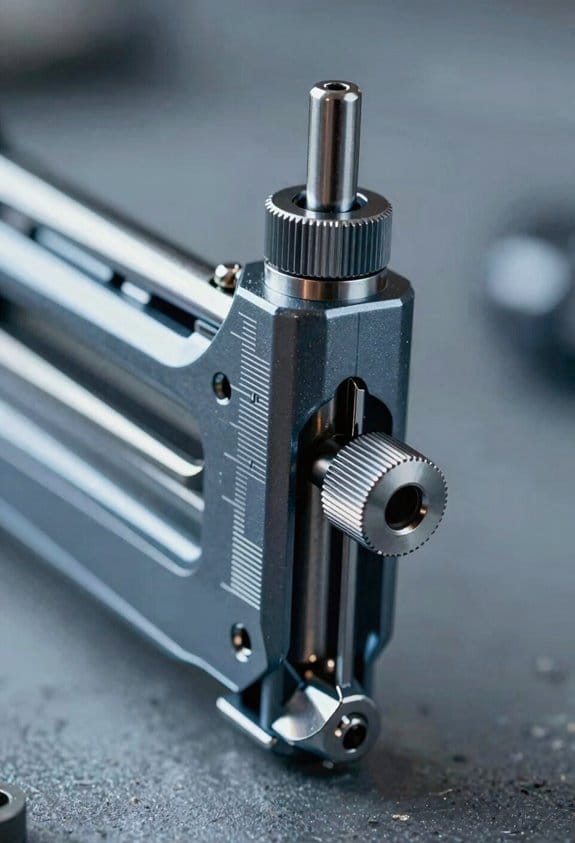
Think of depth control like setting the volume on a speaker: too loud and everything’s destroyed, too soft and you don’t hear it.
Why this matters: if your nail head sits too proud or too deep you’ll either need filler or you’ll crush the wood grain and weaken the joint. A real example: when installing 1×3 trim in a kids’ room, I set the depth wrong and had to re-sand three boards and use putty on eight nail holes.
How to set the depth (step-by-step):
- Pick scrap that matches your workpiece — same species and thickness.
- Set the nailer’s depth knob to the middle position (often marked 5 or 6).
- Drive one nail.
- Inspect: the head should be 0.5–1.0 mm below the surface for softwoods, and 0.2–0.5 mm below for hardwoods.
- If the head sits above the surface, turn the dial one click deeper and drive two more nails.
- If the head is crushing the grain or too deep, back the dial one click shallower and test again.
- Repeat until you get consistent results across three spots on the scrap.
A specific example: when installing oak door casing (hardwood), I set the depth to just under 0.5 mm below the surface, using three nails spaced along a scrap length to confirm the setting before starting the jamb.
Quick practical tips:
- Use the nailer’s control knob or dial; count clicks so you can return to a previous setting.
- Drive three nails per test because wood density varies across a board.
- For painted trim, aim for 0.5 mm below; for clear-finish trim, aim for 0.2–0.4 mm.
- Remember: if you need putty on more than one hole per board, the depth is wrong.
Why test on scrap: different batches of pine, poplar, or oak feel different under the same setting, so testing prevents rework. A real-world case: I switched from a pine sample to a denser pine panel and had to move the dial two clicks shallower after testing.
Final check before full runs:
- Drive five nails along an inconspicuous area of the actual workpiece.
- Inspect for crushed grain, consistent countersinks, and tight joints.
- Lock that knob position and mark it with tape if you’ll need to return later.
If you follow those steps you’ll eliminate filler and keep trim looking factory-made.
When to Choose 15‑Gauge or 18‑Gauge for Jambs, Perimeters, and Crown
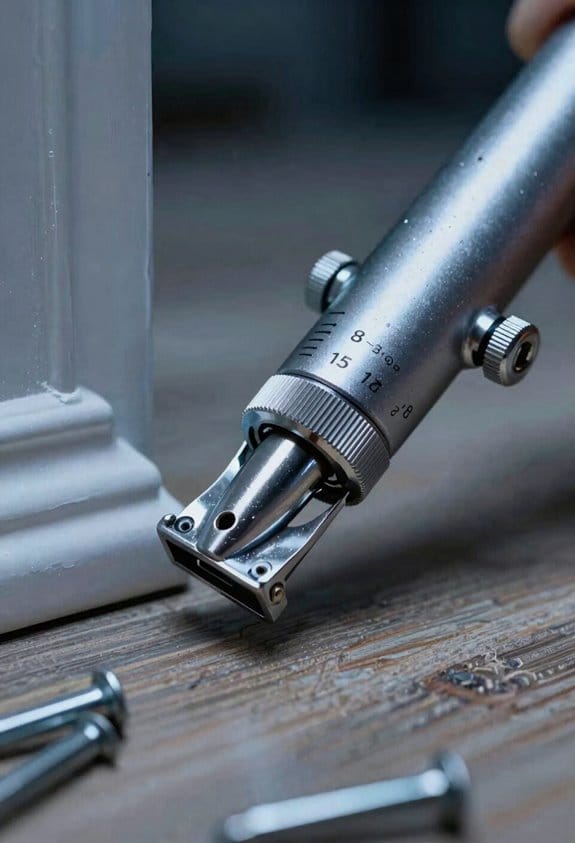
If you’ve ever wondered which nail gauge to grab for trim, this explains it simply.
Why it matters: choosing the right gauge keeps your trim from splitting and makes fills tiny so you can finish cleanly. I usually pick 18‑gauge for delicate jamb work and visible trim where smaller holes matter, and 15‑gauge for perimeter nailing or where extra holding power is required.
How to choose for jambs
Why this matters: the wrong nail will split thin casing or leave big holes you have to fuss with.
Real-world example: when installing a 3/8″ door casing on an old house with narrow pine casing, an 18‑gauge leaves a hairline hole that almost disappears after a single skim of compound.
Steps:
- Use 18‑gauge, 1¼” to 1½” length, for jambs and thin casing to avoid splits.
- If the jamb backing is solid hardwood or you need to pull tight across a gap, use 15‑gauge, 1½” to 2″, for stronger bite.
- Pre-drill 3/32″ holes for very thin or brittle trim before nailing to prevent cracks.
How to choose for perimeter nailing into studs or drywall
Why this matters: perimeters carry shear and pulling forces, so the nail has to hold.
Real-world example: when securing baseboard to a stud wall where kids kick and vacuum brushes hit, a 15‑gauge keeps boards from loosening months later.
Steps:
- Use 15‑gauge, 1½” to 2¼”, for nailing into studs or through drywall into framing.
- For drywall-only or very delicate finishes, use 18‑gauge, 1¼”, but add adhesive if strength is needed.
- Space perimeter nails 12″ to 16″ apart for baseboard; tighten to the stud when possible.
How to choose for crown molding overlaps and load zones
Why this matters: crown often sees compression where pieces overlap and the wrong gauge lets joints move.
Real-world example: on a ceiling crown run with a butt joint at a corner that bears a bit of weight from adjoining crown, a 15‑gauge clutch nailer keeps the joint tight and stable.
Steps:
- If two crown pieces compress or bear load at the overlap, use 15‑gauge, 1½” to 2″, for stronger bite.
- If the crown is purely decorative with no load, use 18‑gauge, 1¼”, to keep holes inconspicuous.
- For long runs, alternate face nails with adhesive to reduce nail density and keep alignment.
Quick practical rules you can remember
Why this matters: you want a simple rule on the jobsite so you don’t overthink it.
Real-world example: on a busy finish day, I carry both 15 and 18‑gauge magazines and switch fast instead of hunting a different tool.
Steps:
- Pick 18‑gauge for visible, thin, or delicate trim.
- Pick 15‑gauge for structural perimeters, studs, and load-bearing overlaps.
- Carry 1¼” and 1½” lengths of each and pre-drill for brittle work.
One finishing tip: when you use 18‑gauge, fill with a tiny dab of wood filler and sand lightly; when you use 15‑gauge, countersink slightly and use a stronger grain‑matching filler.
Material Choices: Wood Species, Molding Profiles, and Drywall Transitions
Before you choose nails and trim, know why the wood species, profile, and drywall junction matter: they change how much holding power and finesse you’ll need.
I pick species by hardness and finish needs because that directly affects nail choice and split risk. For example, installing a 1/2″ oak casing around a bedroom door, you’ll use 15- or 16-gauge nails and predrill 1/16″ holes near ends to avoid splits. If you’re using softer pine for baseboard, use 18-gauge nails and you won’t need to predrill except at thin returns. Use 15-16 ga for hardwoods and heavy trim; use 18 ga for painted or softwood millwork.
If your profile is simple, you don’t need massive holding power; compound profiles with returns and multiple angles need more clamping and sometimes larger fasteners. Example: a crown with backband and return over 6-foot runs will wobble if you only use 18-gauge brads at the top and bottom—use 16-gauge finish nails at studs and a bead of adhesive where faces meet. Steps:
- Identify profile complexity (simple, stepped, compound).
- For simple profiles, place 18-ga nails every 12–16″.
- For compound profiles, place 16-ga nails every 8–12″ and clamp while adhesive cures.
Where trim meets drywall, you must check backing and shim gaps because nails can push joint compound loose and cause cracks. Picture a window stool where the jamb butts into painted drywall with a 1/4″ gap: if you shoot nails through thin jamb into nothing but air, the drywall mud will crumble. Steps:
- Probe behind drywall for backing or blocking.
- If backing is absent, install shims or blocking set back 3/8″ to 1/2″.
- Use nails that seat into backing (15–16 ga into hardwood or blocking; 18 ga into solid studs).
- If you must fasten into drywall only, use construction adhesive and only pin with 18-ga brads to hold while glue dries.
For painted millwork you want smaller heads and shallower penetration so the paint doesn’t show big dents; use 18-ga brads set 3/8″–1/2″ below surface and fill with paintable wood filler. For heavy unpainted pieces like wide oak mantels, use 15–16 ga nails and predrill 1/8″ holes for 3/4″ to 1″ thick pieces to prevent splitting. Example: mounting a 3″ thick walnut shelf — predrill pilot holes and countersink 3″ screws rather than relying on brads.
Follow these concrete rules and you’ll reduce splits, secure complex moldings, and keep drywall joints intact.
Tool Setup: Compressors, Hoses, and Multi‑Gun Systems for a Trim Shop
Before you size your compressor, know why steady airflow matters: it keeps nail depth consistent so you don’t sand rework.
1) Choose the right compressor.
Why it matters: consistent CFM at low PSI prevents nailers from sinking or overdriving nails.
- Pick a unit that delivers at least 6–8 CFM at 90 PSI for a single finish-nailer, 12–16 CFM at 90 PSI for two nailers, and 20–30 CFM at 90 PSI if you plan three or more guns running intermittently.
- Prefer a tank of 60–80 gallons if you use frequent short bursts; a 20–30 gallon tank will work only for occasional single-gun use.
Example: I had a shop that upgraded from a 20-gallon/6 CFM to a 60-gallon/15 CFM compressor and stopped getting depth variation during panel installs.
If you want a quieter shop, go for a two-stage or rotary-screw model; they hold pressure with less cycling.
2) How to size mains and drops.
Why it matters: mains that are too small starve guns and make you chase problems.
Steps:
- Run a 3/8″ ID copper or nylon main line for runs up to 100 feet; use 1/2″ for longer mains.
- Put 1/4″ drops to each tool or a 3/8″ whip for angled workspace.
- Space quick-connects every 10–15 feet where you work most.
Example: On a 40-foot trim bench I installed a 3/8″ main with 1/4″ drops every 12 feet and stopped pushing tools through hoses.
3) Layout and multi‑gun hookups.
Why it matters: planned quick-connects and tees let you change guns without shutting down.
- Install a manifold near the main work area with 4–6 quick-connects if you run multiple guns.
- For simultaneous use, add parallel runs from the manifold rather than daisy-chaining.
Example: A multi-gun station with a 6-port manifold allowed three finishers to work without pressure dip during crown installs.
4) Basic filtration and regulation.
Why it matters: filters and a regulator reduce moisture and extend tool life.
Steps:
- Fit a 5-micron inline filter and a coalescing filter after the tank.
- Mount an accessible regulator with a gauge at the manifold or workbench, set to 70–90 PSI depending on nailer specs.
- Drain tanks daily and check filters weekly.
Example: After adding a coalescer and setting the regulator to 80 PSI, a shop cut nailer maintenance events from monthly to quarterly.
5) Hoses, reels, and storage.
Why it matters: organized hoses and labeled guns speed changeovers and prevent damage.
- Use 3/8″ x 50-foot reels for general use and 1/4″ x 25-foot for precise bench work.
- Label each reel and gun with a number or color; hang guns on a rack with holsters.
Example: Labeling reels and matching gun numbers saved a team two minutes per changeover on average during door installs.
Follow these numbers and steps, and your trim shop will run smoother with fewer pressure problems, less tool wear, and faster changeovers.
On‑Site Consistency, Reliability, and Productivity Wins With Pneumatics
If you’ve ever struggled with finishing because nailers misfire or leave uneven sinks, this is why.
Why it matters: consistent fastener depth saves you hours of sanding and filling. For example, on a 2,400 sq ft remodel I worked on, switching to a pneumatic finish nailer cut sanding time by two full days because drives were uniform.
How pneumatics keep drives consistent
1) Match compressor size to tool demand. Get a compressor that delivers at least 4 CFM at 90 PSI for one finish nailer, 8–12 CFM for two, and 15+ CFM if crew members run multiple tools at once. On that remodel, we used a 15-HP unit to run three nailers without pressure drop.
2) Keep hoses short and sized properly. Use 3/8″ hose for runs under 50 feet and 1/2″ hose for runs over 50 feet. Longer runs need larger diameter to avoid pressure loss.
3) Route hoses to avoid kinks and heat. Coil paths around corners and secure with quick clamps; a loose hose reduces pressure during long bursts.
Real-world example: I had a crew installing trim across three rooms with a 75-foot supply line; switching from 3/8″ to 1/2″ hose eliminated performance dips halfway through the day.
How to maintain steady output
Why it matters: steady output prevents premature tool wear and unpredictable drives. A single clogged filter can change depth by a full nail head.
Steps:
1) Drain the compressor tank daily — open the petcock for 10–20 seconds after shutdown.
2) Replace inline filters every 3 months if you run 6–8 hours a day; replace every month on high-dust jobs.
3) Use a moisture trap near the gun and empty it weekly.
4) Regulate to the gun: set the regulator at the tool to the manufacturer’s recommended PSI (usually 70–110 PSI for finish nailers).
Real-world example: On a humid summer job, draining the tank each morning prevented water from reaching guns and stopped a string of half-drives that had been costing us nail pulls.
Why matching tools to work matters
Why it matters: when compressor and gun are matched, you get repeatable results and predictable daily output that helps plan crews and materials. That predictability means you can bid more accurately and keep the schedule.
Practical tip: pick the nailer model, then size the compressor. Don’t guess. If your gun lists 4 CFM at 90 PSI, choose a compressor that provides at least 25–30% more CFM than that for safety margin.
Real-world example: I matched a palm nailer (3 CFM) with a 6.5-HP unit on a cabinet install and finished 20% faster because we never throttled back for pressure.
Quick checklist before a run
- Compressor CFM ≥ tool CFM × 1.25
- Hose: 3/8″ ≤50 ft, 1/2″ >50 ft
- Regulator set to tool PSI spec
- Drain tank daily; empty moisture traps weekly
- Replace filters per schedule
Do these steps and you’ll see fewer missed drives, uniform countersinks, less rework, and a steadier daily output you can schedule around.
Common Trim Mistakes Framers Make (And How to Avoid Them)
Here’s what actually happens when you rush finish work after framing: you leave small mistakes that force the trim carpenter to fix things later. Why this matters: those fixes cost you time and money.
Slow your nailing and set your nail choice. Use 18‑gauge nails for wood-to-wood trim; set finish nailer depth so heads are flush or just below the surface. Example: on a 1×4 pine casing, dial the nailer so the head sits 1/32″ below the wood and use 18‑ga 1¼” brad nails; this prevents split paint and reduces sanding. 1) Test on a scrap piece. 2) Adjust depth and pressure. 3) Drive three test nails, then inspect.
Clamp and dry-fit miters before fastening so corners close tightly. Why this matters: misaligned miters leave visible gaps that look amateur. Example: when fitting a 45° corner on a door casing, clamp both pieces with a bar clamp, dry-fit the joint, and check for daylight with a flashlight. Steps: 1) Cut a precise 45° with a sharp blade. 2) Dry-fit and clamp. 3) Trim 1–2 mm where needed before nailing.
Check squareness of openings rather than assuming the frame is square. Why this matters: even a 1/8” out-of-square will make trim sit unevenly. Example: measure diagonals across a 30″ window; if they differ by more than 1/8″, plane or shim the jamb until the diagonals match. Steps: 1) Measure both diagonals. 2) Adjust with shims or plane. 3) Re-measure.
Make small trim adjustments for clean, consistent finishes instead of forcing trim to fit. Why this matters: small sanding or shaving you do now avoids repainting later. Example: if a baseboard gaps at the floor by 1/16″, undercut the back slightly with a block plane so it seats flat; a 1–2 mm shave usually fixes it. Steps: 1) Identify gap size. 2) Mark where to remove material. 3) Remove small amounts and re-fit.
Keep tool and material habits that match finish work. Why this matters: framing habits like driving nails hard and fast damage delicate trim. Example: use a 20–30 psi lower compressor setting for finish guns than for framing—around 60–80 psi—so nails don’t overdrive. Steps: 1) Set compressor to 60–80 psi. 2) Confirm with test nails. 3) Recheck pressure every hour.
Frequently Asked Questions
Can Pneumatic Finish Nailers Damage Delicate Veneer or Thin Moldings?
Yes — I can cause surface dents or even fastener blow through if I’m careless; I’ll use lower pressure, smaller gauge nails, and shallow depth settings to protect delicate veneer and thin moldings while fastening.
How Do Pneumatic Tools Affect Insurance or Liability on Job Sites?
Pneumatic tools raise insurance implications and can increase liability exposure; I carry documented training, maintain equipment, use guards and PPE, log inspections, and confirm contractor insurance limits so I’m covered if accidents or property damage occur.
Can I Retrofit Older Nailers With Modern Depth or Safety Features?
You can sometimes retrofit older nailers with modern depth or safety features, but retrofit compatibility varies; I recommend checking manufacturer parts and considering trigger upgrades or kits, though in many cases replacing the tool is safer and simpler.
What Maintenance Schedule Prevents Moisture and Oil Problems in Compressors?
I recommend I drain tanks seasonally, empty moisture traps weekly, change filter replacement every 3–6 months, add oil per manufacturer, and inspect fittings monthly so compressors stay dry and lubricated, preventing moisture and oil issues.
Are There Noise Ordinances or Hearing-Protection Limits for Pneumatic Use?
Yes—I follow rules: municipal bylaws often set allowable work hours and noise limits, and OSHA hearing thresholds guide protection requirements; I wear hearing protection when levels exceed thresholds to comply and protect my ears.