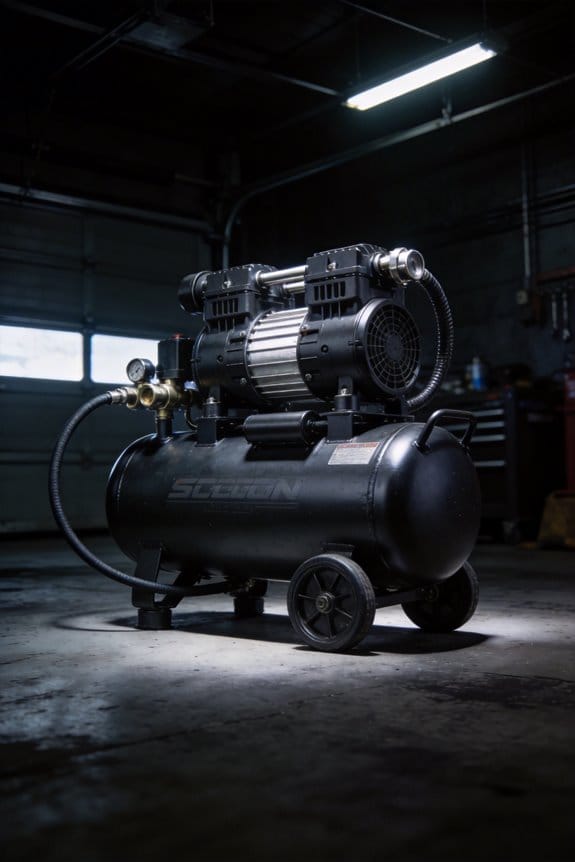

You’re standing in front of a fresh paint run or an assembled circuit board and notice tiny cloudy spots, flaking, or unexpected failures—what went wrong with your drying process? You need to know whether ambient moisture or condensation during finishing ruined adhesion or caused corrosion. Most people assume simple dehumidification or refrigeration will fix it and don’t target the true dew point required for moisture‑sensitive finishes.
This article shows you exactly how desiccant dryers prevent condensation by delivering ultra‑low dew points, how to choose the right target dew point for painting versus electronics, and how to size and select regeneration type so production stays reliable.
You’ll finish with step‑by‑step selection and operation actions to stop finish failures. It’s easier than it seems.
Key Takeaways
Before you specify a desiccant dryer, know why dew point matters: it prevents paint blushing, adhesion failure, and corrosion by keeping moisture out of your finish.
– Desiccant dryers get you down to ultra‑low dew points (−40°C to −70°C). For example, a small automotive booth that consistently needs glossy clearcoats will often target about −30°C to −40°C to stop blushing during humid summer days.
If you’ve ever tried painting in humid air, here’s how to pick the right outlet dew point for your work and why.
1) Pick the target dew point
– For most finishing operations specify at least −40°C outlet dew point; painting often targets −20°C to −40°C depending on the coating. Example: for waterborne primers in a 200 m² shop you might set a constant −40°C dew point to avoid rework during seasonal humidity swings.
2) Keep substrates dry relative to the air
– Maintain substrates 3–5°C above the outlet dew point so you don’t get condensation on parts. Example: if your dryer gives −40°C, keep the parts about −37°C to −35°C during staging to prevent surface moisture.
3) Prevent transient moisture spikes
– Use vestibules or airlocks at booth and storage entrances to stop humid air from rushing in when doors open. Example: a two-door vestibule with a 30-second sequencing delay will cut short spikes that otherwise ruin a run.
Why sizing matters: undersized units let dew points rise under peak load and ruin a batch.
4) Size the dryer for peak flow and future growth
– Size for peak SCFM (actual maximum flow during operations), add a 20% planned‑expansion margin, and confirm the manufacturer’s dew‑point vs flow curve at that flow. Example: if peak is 500 SCFM, buy a dryer rated for at least 600 SCFM on the dew‑point curve to allow the margin.
5) Match regeneration style to your costs and flow
– Choose a regeneration method—heatless, heated, blower, or vacuum—based on your flow rate and compressed‑air energy cost to minimize operating expense. Example: for <200 SCFM and low capital budget, a heatless unit is simple; for 2,000 SCFM with cheap steam/thermal energy, a heated or vacuum‑regenerated system will run cheaper per unit of dried air.
Final practical checks before buying
1) Verify the vendor’s dew‑point vs flow curve at your operating pressure.
2) Inspect control logic for purge and regeneration so you can set dew‑point alarms.
3) Plan for periodic sieve replacement and a maintenance schedule.
If you follow those concrete steps—choose the right dew point, keep parts a few degrees warmer than dew point, size with a 20% margin, and pick regeneration by flow and energy cost—you’ll avoid common finish failures and keep production moving.
What This Guide Covers : Who Needs Desiccant Dryers and Why
Think of moisture like invisible rust that ruins finishes and electronics.
Although people assume any dryer works, you need a desiccant dryer when your process requires air at very low dew points, typically -40°C to -70°C (-40°F to -94°F). Why this matters: water vapor at those dew points can condense on painted surfaces or inside electronic assemblies, causing splotches, adhesion failure, or corrosion. Example: a paint shop that uses 60 m2 panels and runs 4 spray booths often rejects 3–5% of panels from blushing when inlet air dew point rises above -20°C; switching to a desiccant system fixed the rejects.
Before you pick a dryer, decide the target dew point and the maximum flow rate you’ll need. Step 1: measure or estimate your peak compressed-air flow in standard cubic feet per minute (SCFM) or normal cubic meters per hour (Nm3/h). Step 2: set your target dew point (for painting choose -40°C or lower). Step 3: add a 20–30% safety margin to capacity. Example: a plant with peak 500 SCFM should specify 600–650 SCFM capacity.
How do desiccant dryers remove moisture and why that’s better than refrigeration? You need the explanation so you know what failure modes to watch for. Desiccant dryers use adsorption: air passes through a bed of desiccant beads that trap water molecules, producing the ultra-low dew points refrigeration dryers can’t reach. Example: a PCB coating line switched from refrigerated to desiccant drying and saw surface defects drop from 8% to 0.5% because desiccant held dew point steady at -60°C during humid summer shifts.
Which regeneration methods exist, and how do they change operating cost and footprint? This matters because regeneration determines energy use and maintenance. There are three common methods:
- Heatless (purge) regeneration — simple, uses 15–20% of dry air as purge, no heaters. Example: a small assembly shop used a heatless 200 SCFM unit with 18% purge and paid 20% more in compressed-air energy versus heated options.
- Heated regeneration — uses electric or gas heaters, lower purge (5–8%), higher energy but less compressed-air waste.
- Vacuum-assisted or blower purge — lower energy than heatless with moderate complexity.
Pick by comparing operating energy per year and your compressed-air cost.
How do you match dryer capacity to production and layout? You need accurate matching so you don’t undersize or overspend. Steps:
- Calculate peak and average air demand (SCFM or Nm3/h).
- Select dew point and required outlet stability.
- Choose regeneration type and required spare capacity (20–30%).
- Confirm pressure-drop limits (keep below 1–2 bar/15–30 psi where possible).
Example: a paint line with 1,000 SCFM peak ran two 600 SCFM units in parallel for redundancy and to allow staged regeneration, cutting maintenance downtime to near zero.
What maintenance will keep your dryer reliable? You need to plan maintenance so you won’t have sudden production stops. Steps:
- Inspect pre-filters weekly and change quarterly or when pressure drop exceeds spec.
- Monitor dew point continuously and log it; set alarms at 3–5°C above target.
- Replace desiccant every 3–5 years or per vendor hours, checking for fines and channeling.
Example: a pharmaceutical coating room logged dew point spikes and found a failed valve; replacing the valve solved spikes immediately.
How should you compare suppliers? You need objective criteria to choose the best fit. Use these specific points:
- Measured dew point performance at your flow (ask for test reports).
- Installed energy use (kW or SCFM purge) across a year.
- Maintenance intervals and parts availability.
- Local service response time (target under 24 hours for critical lines).
Example: two vendors offered similar capital costs, but one provided 8-hour on-site support and detailed performance curves at your flow; that vendor reduced your downtime risk.
If you plan installation, account for space, piping, and controls. You need to avoid common installation mistakes. Steps:
- Reserve 1.5–2x the manufacturer’s service clearance around units.
- Install after your dryers’ pre-filters and dryers’ outlet dew-point sensor at point-of-use for accurate control.
- Use isolation valves for each dryer so you can service one while the other runs.
Example: a paint facility saved a week of shutdown by installing isolation valves and spare piping before startup.
Follow these practical checks before you buy: confirm peak flow plus margin, choose a regeneration method based on energy and purge trade-offs, require vendor dew-point proof at your flow, and plan maintenance and spare parts. One concrete target: for most finishing operations specify at least -40°C dew point and 20–30% capacity margin.
Why Ultra‑Dry Air Matters for Finishing: Contamination, Defects, and Downtime
If you’ve ever seen a painted part with little craters or cloudy spots, this is why. One sentence on why it matters: moisture ruins finishes by causing visible defects, contamination, and equipment stoppages. In a spray booth, just −20°C (−4°F) dew point air versus +10°C (50°F) dew point air can be the difference between a smooth gloss and tiny fisheyes on every panel.
Why moisture causes trouble
Moisture changes surface tension, so coatings spread unevenly and bead or sag. For example, on an automotive door panel in a downtown body shop, dew under +5°C (41°F) makes clearcoat bead into specks you can see from across the bay.
How moisture contaminates
Moisture makes particles clump and stick, which increases contamination in sprays and cleanrooms. In one electronics assembly line I visited, a single humid night caused solder defects because airborne particles agglomerated and settled on pads.
Practical steps to control moisture
Why this matters: without specific actions you’ll keep chasing rejects. Follow these steps:
- Specify a dew point for each station (e.g., −40°C (−40°F) for high-end coatings, −20°C (−4°F) for general finishing).
- Install continuous dew-point monitors at the spray booth inlet and at the tool face; set alarms at 5°C (9°F) above your spec.
- Prioritize dry-air feeds: dedicate a supply line to critical stations and use aftercoolers and refrigerated dryers followed by a desiccant dryer for very low dew points.
- Log readings and review weekly; look for drifts of more than 2°C (3.6°F) over a shift.
Example (visual): a cabinet manufacturer switched from plant compressed air with a refrigerated dryer to a dedicated desiccant system for the paint line and cut visible pinholes from dozens per run to zero over a month.
Maintenance and downtime prevention
Why this matters: wet components corrode and jam valves, causing unscheduled stops. Check these things monthly:
- Drain traps and replace filter housings.
- Inspect quick-connect fittings and solenoid valves for rust and replace any with pitting.
- Service desiccant cartridges on the manufacturer’s schedule or sooner if dew-point logs climb.
Example (visual): a powder coat shop that ignored trap drains had a valve seize mid-run; after adding a monthly drain-and-inspect routine, mean time between failures tripled.
Monitoring and troubleshooting
Why this matters: early detection keeps runs productive. Steps to troubleshoot rising dew point:
- Verify inlet air temperature and pressure.
- Check prefilters and aftercooler operation.
- Swap or regenerate desiccant if dew point is above spec.
If the monitor shows sudden spikes, check for a broken line or an open condensate trap first.
Example (visual): a printer’s dew-point alarm blared during a night shift; techs found a condensate drain stuck open and cleared it in 10 minutes, avoiding a full-day shutdown.
Quick checklist you can use today
- Set dew-point targets for each process station.
- Install continuous monitors with alarms.
- Use dedicated dry-air lines for critical areas.
- Log and act on trends weekly.
Follow these concrete steps and you’ll cut defects and downtime caused by moisture.
How Desiccant Dryers Work: Adsorption, Dew Point Basics, Two‑Tower Cycling
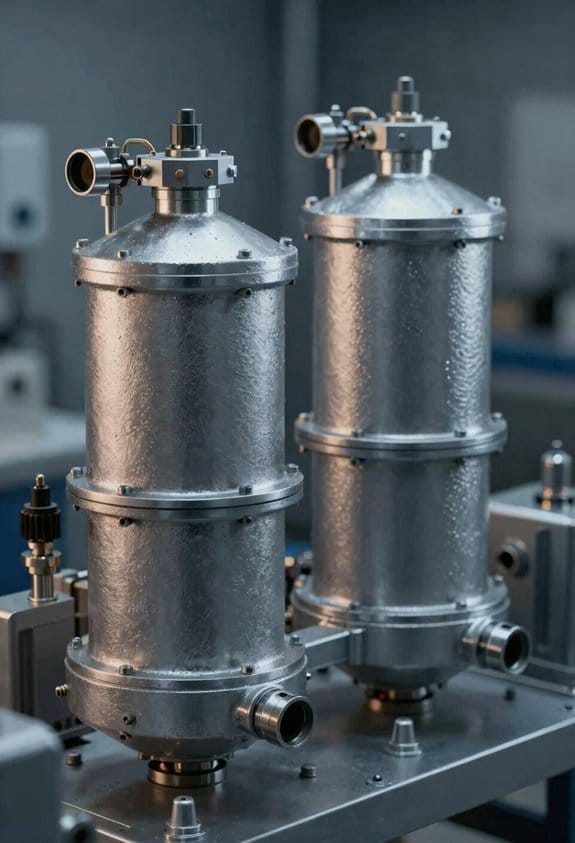
Think of a desiccant dryer like a sponge for water vapor so you know why you care: it keeps your finishing operations from getting ruined by moisture.
How adsorption works — why it matters in one sentence: adsorption pulls water out of your air so coatings and parts don’t fail. Think of the desiccant surface as microscopic Velcro that grabs water molecules and holds them. In practice, this happens in two steps: 1) adsorption at the surface, where water sticks quickly in seconds to minutes depending on flow, and 2) pore diffusion, where vapor moves into internal pores over minutes to hours until capacity is used. Example: in a small spray-paint booth running 100 scfm at 80°F and 50% RH, the adsorbent will load noticeably in a few hours; you’ll see dew point rise from -40°F toward -20°F as the bed fills.
Dew point basics — why it matters in one sentence: dew point tells you how dry your output air is so you can avoid condensation on parts. Dew point is an actual temperature; lower means drier air, so -40°F is much drier than -20°F. Watch for vapor breakthrough when the measured dew point starts rising steadily because that signals the bed is near saturation and you’ll lose protection. Example: in a finishing line, if dew point drifts from -40°F to -10°F over a shift, you’ll get blushing on clearcoats within hours.
Two-tower cycling — why it matters in one sentence: cycling keeps your dryer supplying ultra-dry air continuously by regenerating one tower while the other dries. Two towers alternate so one tower is drying and the other is being regenerated by either heat or purge. Steps for basic heat-regenerative cycling: 1) Drying tower carries process air until its timer or dew point trigger ends the cycle. 2) The system switches valves so the second tower takes the load. 3) The first tower is heated (typically 300–800°F depending on desiccant) and vented to drive off moisture. Steps for purge-regenerative cycling: 1) Switch load to fresh tower. 2) Use a small portion of dry process air (5–15% of flow) at ambient temperature to purge moisture from the offline tower. Example: a finishing plant running 500 scfm often sets purge at 10% and cycle times of 30–60 minutes to balance regeneration efficiency and operating cost.
Quick practical checks you can do: 1) Monitor outlet dew point with a sensor set to log every minute so you catch breakthrough. 2) Check cycle timers and heater setpoints monthly; typical heater temps range 300–700°F based on desiccant. 3) Inspect valves and seals quarterly for air leakage. Example: a maintenance tech who logs dew point and notices regular spikes at shift change found a leaking valve and eliminated product rejects.
If you want, tell me your system flow and target dew point and I’ll help pick cycle times and purge percentage.
Dew‑Point Targets by Application and Scale: Painting, Electronics, Pharma, Food, Labs
If you’ve ever waited on paint to dry and watched blushing ruin the finish, this is why.
Why it matters: controlling dew point prevents defects like blushing, corrosion, and microbial growth. For painting you want a dew point around -20°C to -40°C so solvent evaporation and adhesion stay predictable. Example: when you spray a car door in a two-stage shop, hold the booth dew point near -30°C and keep substrate temperature 3–5°C above dew to avoid condensation. Steps: 1) measure with a calibrated hygrometer; 2) set booth dehumidifier to reach target; 3) verify with surface temperature checks before spraying.
If you’ve ever had a tiny solder joint fail after assembly, this is why.
Why it matters: electronics need much lower dew points because tiny moisture traces cause corrosion and solder defects. Target -40°C to -70°C for sensitive boards. Example: for a fine-pitch BGA assembly run, set your dry room to -50°C dew point and store PCBs in sealed dry boxes at the same target between process steps. Steps: 1) use a chilled mirror or chilled sensor for accuracy; 2) implement rapid entry protocols (vestibule or airlock) to avoid spikes; 3) log dew point continuously and alarm at +5°C above target.
If you’ve ever opened a sterile vial and seen fog or droplets on the inside, this is why.
Why it matters: pharmaceuticals and food packaging require stable dew points to meet cleanliness and regulatory standards. Aim for the dew point your humidity mapping says—typically between -40°C and -20°C depending on product sensitivity—and follow environmental monitoring. Example: when sealing blister packs of sterile syringes, run the fill/seal room at a dew point of about -30°C and document hourly readings. Steps: 1) perform humidity mapping to set the specific target; 2) install validated sensors with audit trails; 3) review logs during each batch release.
Think of lab humidity like a camera lens: even tiny fog ruins the image.
Why it matters: some instruments need ultra-low dew points to get repeatable data. Targets can be -73°C (‑100°F) or lower for hygroscopic or cryogenic experiments. Example: for a mass spec inlet that’s sensitive to water, maintain a dry box at -80°C dew point and condition samples inside it. Steps: 1) identify instrument susceptibility; 2) choose a dessicant or refrigeration dryer capable of your target; 3) run qualification tests and record stability over the intended run time.
Quick practical tips you can use across applications:
- Keep surfaces 3–5°C above dew point to prevent condensation.
- Calibrate dew-point sensors every 6–12 months.
- Use airlocks or vestibules for operator and material transfer.
Follow these targets and steps, and you’ll reduce defects, protect products, and make environmental monitoring actionable.
Picking the Right Desiccant Dryer: Heatless, Heated, Blower‑Purge, Externally Heated
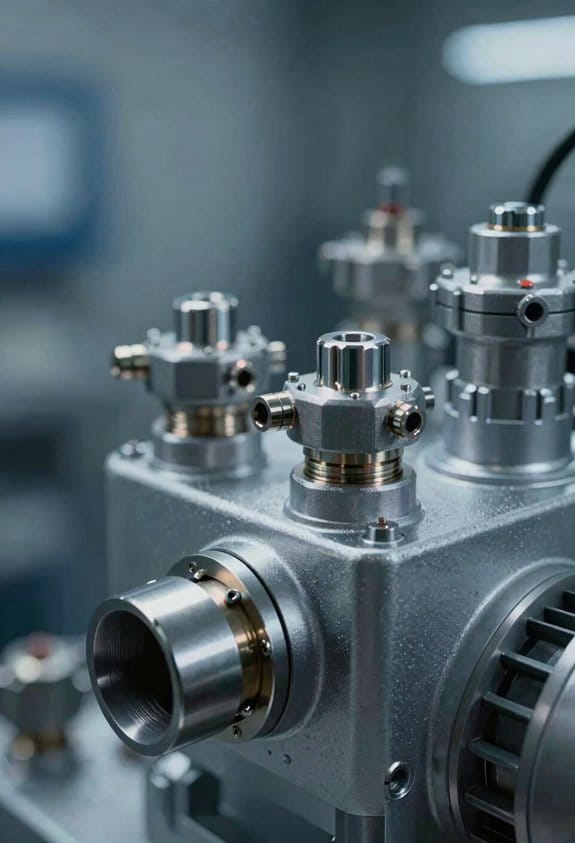
Think of choosing a desiccant dryer like picking a tool for a job: the right one saves you money and headaches.
Heatless dryers — why they matter: they’re cheap and simple so they work when your flow is small. Example: a 5–20 scfm paint booth on a small shop press where you only dry a few pounds of resin per hour; a heatless unit fits under a bench and connects to your line. How to choose one:
- Check your flow: use a flowmeter or calculate from cycle times; pick heatless if under about 30 scfm.
- Estimate purge loss: expect roughly 15–25% of your dry air used for purge.
- Allow maintenance space: plan for desiccant change every 6–12 months depending on duty.
A practical tip: label the inlet and outlet to avoid piping mistakes. The dried air is slightly wasted.
Heated dryers — why they matter: they cut purge loss so you save air and extend desiccant life. Example: a 50 scfm extrusion line that ran out of capacity with a heatless unit and saw desiccant swaps every three months; switching to a heated dryer dropped purge to ~5–8% and doubled desiccant life. How to pick and use one:
- Match regeneration power to bed size: aim for 300–600 W per cubic foot of desiccant for general polymer drying.
- Check controls: choose units with timed and dew‑point options so you can fine‑tune regeneration.
- Plan for wiring and space: heated units need power and ventilation; reserve a 3 ft clearance around the cabinet.
Tip: monitor inlet temperature; keep it within manufacturer limits to avoid overheating the desiccant.
Blower‑purge systems — why they matter: they drastically reduce plant air loss by using a blower to supply purge, lowering operating cost. Example: a 200 scfm medical-grade finishing line that paid thousands monthly for compressed air; installing blower‑purge cut compressed air purge by ~80% and reduced monthly energy use noticeably. How to evaluate one:
- Size the blower to provide 1.5–2.5 times the purge volume compared with a heatless purge at the same regeneration time.
- Confirm blower reliability: choose motors with IP54 or better for dusty plants.
- Check controls for soft start and purge sequencing to avoid pressure spikes.
Do this and you’ll see compressed air bills fall.
Externally heated dryers — why they matter: they give the most precise control so you can hit low dew points consistently for critical finishes. Example: a high-end automotive coating line that needs –40 °F (~–40 °C) dew point during long runs; an externally heated system held dew point within ±2 °F and kept rejects near zero. How to decide:
- Specify required dew point and duty cycle: if you need below –40 °F or highly stable dew point across shifts, go external.
- Ask for advanced controls: look for closed‑loop PID control and dew‑point feedback.
- Confirm integration: ensure the heat source (steam, thermal oil, electric) matches plant utilities.
One concrete action: request a performance curve from the vendor showing dew point vs. flow at your operating temperature.
Quick selection checklist for your situation:
- If your flow is under ~30 scfm and you want low cost, pick heatless.
- If you want lower purge and less frequent desiccant changes, pick heated.
- If your compressed air cost is high and flow is moderate to large, pick blower‑purge.
- If you need very low or tightly controlled dew points, pick externally heated.
Final practical step: measure your actual compressed‑air flow for one full production shift, note desired dew point and available utilities, then get three quotes specifying those numbers so you can compare purge percentages, energy use, and warranty terms.
Sizing Desiccant Dryers: Matching Flow (Scfm / M³·H) to Finishing Demand
Before you size a desiccant dryer, you need to know why matching flow to demand matters: undersizing gives you wet parts and oversizing wastes money and floor space.
1) How do you find your true process flow?
Why it matters: the dryer must handle peak and future loads, not just average use.
Steps:
- Measure or estimate peak volumetric flow in scfm or m³/h during the busiest cycle (for example, a bagging line that blows compressed air at 120 scfm for 20 seconds every minute averages 40 scfm but peaks at 120 scfm).
- Add a planned-expansion margin, typically 10–25% depending on how soon you’ll add equipment — use 20% if you plan changes within two years.
- Record units and rounding: round up to the next practical model rating.
Example: a painter uses 200 scfm peak; with 20% growth plan you size for 240 scfm.
2) How do inlet conditions change the moisture load?
Why it matters: higher ambient humidity raises the water vapor the dryer must remove.
Steps:
- Note ambient temperature and relative humidity where your compressor intakes air (for instance, 30°C and 70% RH).
- Convert that to absolute moisture (grains per pound or g/m³) using a psychrometric chart or an online calculator.
- Multiply by your peak flow to get moisture mass flow and compare to dryer capacity.
Example: 30°C/70% RH has roughly 20 g/m³ moisture; at 240 m³/h that’s about 4.8 kg/h of water load.
3) How does pressure drop affect delivered flow and dew point?
Why it matters: higher pressure drop reduces the air the dryer can deliver and can worsen regeneration.
Steps:
- Add up pressure drops across filters, piping, and fittings in psi or bar.
- Subtract that from supply pressure to check delivered scfm (compressible flow falls with pressure).
- Choose dryers rated with the same allowable pressure-drop condition shown on manufacturer curves.
Example: a system with 15 psi drop at 100 psig supply may deliver 10–12% less flow than nominal.
4) How do you pick the right size on paper and in real life?
Why it matters: you want reliable dew point without excessive cost.
Steps:
- Take your adjusted demand (peak flow + growth + inlet moisture + pressure-drop effects).
- Select a dryer with rated capacity above that adjusted number — a common rule is 10–20% buffer.
- Verify on manufacturer flow vs. dew point curves at your operating pressure and allowable pressure drop.
Example: adjusted need = 240 scfm, pick a dryer rated for 270–290 scfm and check the curve shows -40°C dew point at your conditions.
Practical checklist before ordering:
- Measure peak scfm/m³·h.
- Add 10–25% for planned growth.
- Convert inlet temp/RH to moisture mass and include it.
- Calculate system pressure drop and adjust delivered flow.
- Pick a dryer 10–20% above adjusted need and confirm using manufacturer curves.
If you follow those steps, you’ll avoid wet parts and wasted capital.
Regeneration Strategies and Operating Efficiency for Continuous Lines
If you’ve ever stopped a continuous finishing line for air system work, this is why you want the right dryer setup.
Why it matters: downtime costs you product and hours of labor. Use a two-tower desiccant dryer with staggered cycling so one tower dries while the other regenerates. For example, on a PET film line running 24/7 at 1,200 m/min, set the towers to 60‑minute cycles staggered by 30 minutes so you always have one tower at low dew point; that keeps dew point under −40 °C while the other tower bakes out heat.
How to pick regeneration style and size
Why it matters: choice changes your fuel, electricity, and maintenance needs.
1) Choose two towers sized for your peak moisture load: calculate required drying capacity by multiplying your compressed air flow (m³/min) by inlet humidity difference (g/kg). Example: 10 m³/min at 40% RH and 35 °C requires roughly 0.5–1 kg/hr water removal—pick towers rated above that.
2) Use staggered cycling so regeneration always alternates; set cycle length to match process load (start with 30–90 minutes).
3) Match purge rates: start at 5–10% purge of your dry air for typical loads and adjust based on measured dew point.
Real-world example: at a powder-coating line, operators reduced product rejects by switching to a two-tower system sized 25% above measured peak flow and using a 45‑minute staggered cycle.
Energy efficiency: heated regeneration with heat recovery
Why it matters: you lower fuel or electric draw and cut costs. Use heated regeneration with heat recovery that preheats the regeneration air using the tower being switched to dry. Set regeneration heater temperature between 120–200 °C depending on desiccant spec; monitor power draw and adjust to keep regeneration energy under target kWh per kg moisture removed (track monthly).
Practical steps:
1) Install a heat exchanger to reclaim at least 40–60% of regeneration heat.
2) Use a 3‑way valve and temperature interlocks so recovered heat is only applied when safe.
3) Log heater power and compare to baseline for at least 30 days.
Example: a film coater cut regeneration energy by 30% after adding a plate heat exchanger that reclaimed 50% of exhaust heat.
Maintenance and monitoring
Why it matters: catching problems early prevents line stops.
1) Fit sensors: dew point, pressure drop across towers, and inlet/outlet temperatures.
2) Schedule checks: visual/desiccant inspection every 6 months, filter changes every 3 months, and sensor calibration yearly.
3) Use predictive alarms: set pressure-drop thresholds (for example, 0.2–0.4 bar rise) and dew point drift (rise of 5 °C from baseline) to trigger maintenance.
Example: a textile finisher avoided a week-long outage by replacing degraded desiccant after a 0.3 bar pressure rise alarm alerted them two weeks before failure.
Optimizing purge and cycle times
Why it matters: you balance compressed air use against dew point and cost.
1) Start with a purge rate of 5% of dry flow and a cycle of 30–60 minutes.
2) Measure dew point and compressed air consumption for 7 days.
3) If dew point drifts upward, increase purge in 1% increments or shorten cycle by 10 minutes until dew point stabilizes.
Example: a laminator lowered purge from 8% to 5% over two weeks and kept dew point at −50 °C while saving compressed-air energy.
Documentation and continual tuning
Why it matters: recorded data lets you improve settings without risking quality.
1) Log cycle times, purge rates, dew point, and energy use daily for 30 days after changes.
2) Compare runs and keep the best settings as the new baseline.
3) Review quarterly and after any process change.
Example: keeping a 30‑day log helped an extrusion line find that a 15‑minute longer cycle reduced rejects by 12%.
Final quick checklist you can use now:
- Two-tower, staggered cycles installed.
- Cycle start: 30–60 minutes; stagger by half the cycle.
- Purge: 5–10% to start; adjust based on dew point.
- Regeneration heater: 120–200 °C with heat recovery.
- Sensors: dew point, pressure drop, temps.
- Maintenance: filters every 3 months, desiccant check every 6 months.
- Log data daily for 30 days after any change.
Start with these numbers and adjust based on your measurements.
Installing Dryers Into Finishing Systems: Piping, Filtration, and Controls
If you’ve ever installed pneumatic equipment in a production line, this is why dryer piping and controls matter: wet or dirty air causes finish defects and downtime.
H2: How should you route piping to minimize pressure drop and condensate?
Why it matters: higher pressure drop makes your finish guns run uneven and can force you to oversize compressors.
1) Plan the route.
- Keep runs under 50 feet where possible; every 10-foot run adds measurable drop.
- Use a maximum of two 90° elbows per 20 feet; each 90° elbow equals about 2–3 feet of equivalent straight pipe in pressure loss.
- Choose 1-1/4″ or 1-1/2″ pipe for flows up to 100 scfm, 2″ for 100–300 scfm; upsizing by one nominal size lowers velocity and condensate carryover.
Example: on a 60 ft finishing island that uses 120 scfm, run a 2″ main with two 45° bends to the dryer to keep drop low.
H2: What filters protect the desiccant and the finish?
Why it matters: particulates and oil ruin desiccant beds quickly and can show up in your finish.
1) Install upstream protection in this order:
- Coalescing filter (0.01–0.3 µm) to remove oil and liquid water.
- Particulate filter (0.01–1 µm) to capture dust and rust.
- A pre-filter with a differential pressure indicator is useful.
2) Downstream protection:
– Final particulate filter 0.01 µm right before the finishing manifold to catch dust from desiccant or piping.
Example: a powder-coat line I worked on used a 0.01 µm coalescer and a 0.1 µm particulate upstream, then a 0.01 µm downstream final filter; it extended desiccant life from six months to 18 months.
H2: How do you integrate dryer controls with the plant PLC?
Why it matters: if regeneration runs during a spray cycle you’ll get ruined parts or alarms.
1) Signals to tie into the PLC:
- Dryer cycle status (in service/regenerating).
- Alarm outputs (low dew point, high pressure drop, heater fault).
- Manual bypass and remote start/stop.
2) Sensors to provide feedback:
- Pressure sensors upstream and downstream (0–150 psi range typical).
- Dew-point sensor at the dryer outlet (range −100°C to +20°C dp, choose accuracy ±2°C or better).
3) Logic suggestions:
- Prevent regeneration during active spray calls; allow regeneration during planned pauses or breaks.
- Trigger alarms when delta-P across filters exceeds 5–10 psid for small systems, 10–15 psid for larger ones.
Example: on a wood-finishing line, we programmed the PLC to block regeneration while the spray booth fan was on; regeneration then ran automatically during scheduled 15-minute parts changeovers.
H2: What service and safety hardware should you include?
Why it matters: without isolation and drains you’ll risk contamination and unsafe maintenance.
1) Install isolation and maintenance items:
- Block valves upstream and downstream of the dryer for safe isolation.
- A full-bore bypass with a lockable valve for emergencies.
- Automatic and manual condensate drains at low points; use timed or electronic drains on mains.
- Pressure-relief valve sized to system volume and max pressure.
Example: a car-assembly plant I visited had lockable isolation valves and a full-bore bypass; technicians could swap dryers in ten minutes without shutting down the compressor.
H2: How do you test and commission the whole package?
Why it matters: commissioning proves you built it right and prevents surprises on first production runs.
1) Test steps:
- Leak test the piping at 1.5× operating pressure for 15 minutes.
- Run the dryer under expected flow for 8 hours while logging inlet/outlet pressure and dew point every 5 minutes.
- Verify PLC interlocks by simulating a spray call and a regeneration event.
Example: during commissioning of a small spray booth, the dew point log showed a spike during an unnoticed loose fitting; fixing it dropped dew point from −10°C to −40°C under load.
If you want, send me the flow (scfm), pipe lengths, and your compressor pressure and I’ll sketch a suggested pipe size and filter train for your line.
Maintenance Checklist and Diagnostic Signs Your Desiccant Dryer Needs Service
Before you maintain your desiccant dryer, know why it matters: if you skip checks you’ll get wet, contaminated air that ruins downstream equipment.
I start with filters because clogged filters let oil and particles reach the desiccant and shorten its life. Do this: 1) check inlet and coalescing filters every 3 months; 2) replace filters when differential pressure rises by 5–7 psi or every 12 months; 3) carry a spare element for same-day swap. Example: on a food-packaging line I saw pressure jump from 2 to 9 psi in two months, and replacing the inlet filter stopped oil carryover.
If your sensors are off, your dryer can look fine while it’s underperforming, so you need accurate readings. Calibrate dew point and pressure sensors every 6 months using a handheld dew point meter or send them to a lab if readings are inconsistent by more than 2°C. Example: a plant technician matched the dryer dew point to a portable meter and found a faulty sensor reporting −40°C when the actual reading was −20°C.
You must inspect the desiccant towers because degraded desiccant fails to adsorb moisture. Open a tower during a planned shutdown and look for channeling, gray/black discoloration, or dusty fines; replace desiccant if more than 10% is discolored or if airflow is visibly uneven. Example: a compressor room showed powdered desiccant at the base of the tower and the dew point rose from −40°C to −10°C within a week.
Valve timing and actuator sequencing control regeneration, so check them to prevent moisture carryover. Verify valve open/close times against the manufacturer’s spec — typical cycle times are 6–10 minutes for swing valves and regeneration purges of 30–60 seconds — and adjust actuators if stroke times differ by more than 0.5 seconds. Example: correcting a 1.2 second lag on a switching valve restored full regeneration and fixed intermittent wet air downstream.
Listen and measure because sound and numbers reveal issues you can’t see. Listen for clunks or air leaks during switching; measure purge flow and system pressure drop monthly — a healthy dryer usually has a purge rate of 2–10% of system flow depending on load. Document every reading in a log with date, operator, and values so trends trigger service before failure. Example: a log showed purge rate creeping from 3% to 9% over six weeks, prompting a timed valve rebuild that brought it back to 3.5%.
Follow these concrete steps to keep service predictable: 1) set a calendar for quarterly filter checks and biannual sensor calibration; 2) schedule tower inspections during planned shutdowns once per year; 3) record valve timing and purge rates monthly and act when numbers move outside spec. These actions let you spot problems while you still have time to fix them.
ROI and Lifecycle Costs: Reducing Defects, Protecting Equipment, Cost Trade‑Offs
If you’ve ever had a production run ruined by damp air, this is why drying pays off. Why it matters: moisture and contaminants cause corrosion, paint blisters, and electronic failures that can stop your line and cost you thousands per incident.
When you compare ROI and lifecycle costs for a desiccant dryer, do this step-by-step so you don’t miss hidden savings:
- List capital cost, maintenance, and annual energy cost for each dryer option.
- Estimate defect savings: multiply your current scrap/rework rate by the reduction you expect (for example, cutting a 2% scrap rate on a $50 part to 0.5% saves $375 per 1,000 parts).
- Add avoided downtime: assign a dollar value per hour and estimate hours saved from fewer failures.
- Include downstream benefits: estimate compressor and paint‑booth service life gains and lower warranty claims.
- Calculate simple payback and a 5‑year net cost using those numbers.
Example: a mid‑size shop switching to a regenerative desiccant dryer paid $8,000 up front, saved about $3,200/year in reduced scrap and one avoided eight‑hour shutdown each year (valued at $1,200), and cut energy by $600/year with heat recovery—payback in under two years.
Consider energy recovery because it can halve operating cost for some systems, and that directly changes your payback math. Why it matters: regeneration heat or purge‑air reuse reduces the electricity or gas you consume over years. Example: reusing regeneration heat on a plant with a $10,000/year energy bill can lower that to $5,000, saving $25,000 over five years.
Protecting downstream equipment matters because replacement compressors or repainting booths are expensive and disruptive. Example: one failed compressor in a small plant cost $12,000 in parts and labor plus two days of lost production; a properly specified dryer prevented that failure after installation.
Practical trade‑offs to weigh, with actions you can take now:
- If upfront cash is tight, choose a smaller capital cost unit but budget for higher energy and maintenance; then plan to upgrade when cash allows.
- If uptime is your priority, pay more for redundancy and heat recovery to minimize interruptions.
- If energy costs are high at your site, prioritize efficient regeneration methods and calculate energy savings over five years.
Example: choose a $12,000 unit with heat recovery if your electricity is $0.15/kWh and you run 24/7, because energy savings alone may justify the extra $4,000 within three years.
Quick checklist before you buy:
- Measure inlet air dew point and contamination right now.
- Estimate scrap and downtime costs for one year.
- Get vendor data on energy, maintenance intervals, and warranty effects.
- Run the five‑year payback numbers using your actual costs.
If you follow these steps, you’ll pick a dryer that balances capital, maintenance, and energy in a way that actually improves your margins and protects your equipment.
Frequently Asked Questions
Can Desiccant Dryers Remove Oil Vapor and Smells as Well as Moisture?
No, they primarily remove moisture; I can’t promise oil capture or odor mitigation without additional filtration like coalescing filters or activated carbon aftertreatment, which target oil vapor and smells alongside desiccant dryers for dry air.
How Do Ambient Temperature Swings Affect Dryer Performance and Cycling?
Ambient temperature swings cause performance degradation by shifting adsorption capacity and pressure; I’ll see more frequent regeneration and cycle hunting as towers over- or under-run, so I adjust setpoints and purge timing to stabilize cycling.
Are There Safety Risks From Desiccant Dust or Spent Desiccant Disposal?
Like a dry storm’s residue, yes—I’m cautious: dust exposure can irritate lungs and contaminate products, so I follow PPE, containment, and disposal regulations strictly, and arrange proper waste classification, transport, and licensed disposal.
Can Desiccant Dryers Be Retrofitted to Existing Compressed Air Systems Easily?
Yes, I can — retrofitting desiccant dryers is feasible but involves retrofit challenges like space, piping, controls and downtime; I’ll plan installation sequencing carefully to minimize disruption and guarantee proper regeneration and purge integration.
What Controls Integrate Desiccant Dryers With Plant Automation and Alarms?
Want reliable alerts and control? I connect desiccant dryers via PLC integration for sequencing, status and regenerations, set Alarm thresholds for dew point, pressure and faults, and send notifications to SCADA, HMI, or email.