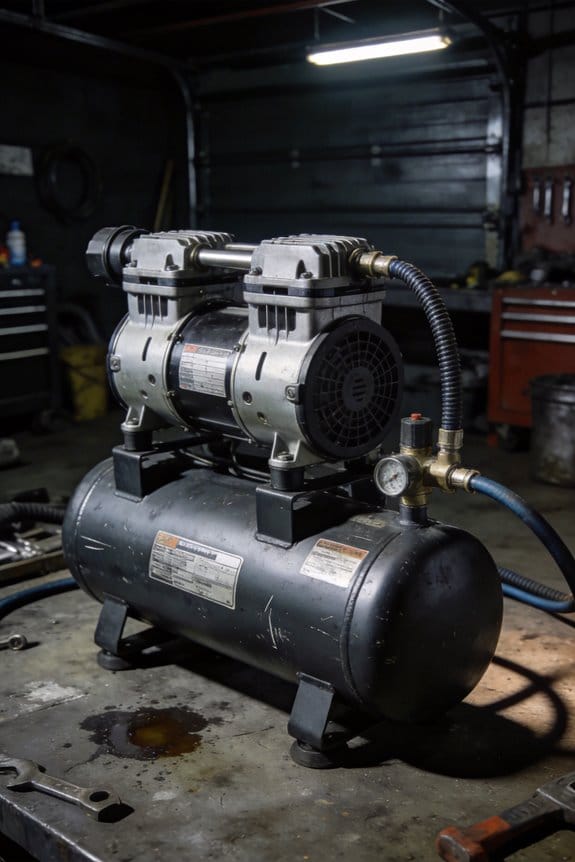

You walk into a plant floor after hours and the compressor room still sounds like it’s constantly cycling, and your energy bills spike every month — why is the system wasting so much power?
You’ve noticed inverter-driven compressors keep coming up in newsletters and vendor pitches, but you don’t know if they actually solve your peak and part-load problems. Most people assume swapping a compressor is just about size or brand and miss how control strategy drives real savings.
This short piece will show you how inverter drives cut part-load energy 20–40%, eliminate startup current spikes, and smooth temperature control so equipment lasts longer.
You’ll learn typical retrofit steps, rough costs, and how to estimate payback for your site. It’s simpler than it sounds.
Key Takeaways
If you’ve ever watched a compressor kick on and off, this is why it matters: inverter-driven compressors match motor speed to the actual cooling or heating need, so you cut energy use by roughly 20–40% in real situations, which lowers your kWh bill and CO2 emissions by similar percentages.
Why that helps your equipment: inverter units avoid the big start-up current spikes and mechanical shock that happen when a compressor always starts at full power, so your system lasts longer and you spend less on repairs. Example: a grocery store that replaced fixed-speed compressors saw motor starters last twice as long and reduced annual downtime during busy summer months.
Before you swap a unit, you should know they give steadier temperature control because variable-frequency drives (VFDs), PID loops, or brushless DC motors keep output smooth; that cuts spoilage in refrigeration and reduces process variation in manufacturing. Example: a small bakery that installed an inverter compressor kept dough proofing temperature within ±0.5°C instead of ±2°C and lowered batch rejects by 15%.
Here’s what actually happens when prices and design change: smaller, retrofit-friendly inverter units are getting cheaper—especially because Asia-Pacific manufacturing has scaled up—so you can fit them into tight mechanical rooms or replace old compressors without redoing piping. Example: a convenience store retrofitted an inverter condensing unit in an afternoon and reclaimed two square feet of floor space.
The difference between incentives and plain savings comes down to timing: utilities and demand-charge programs often offer rebates for measured peak-demand reductions, so you can get upfront credits and cut monthly demand charges as well. Steps to capture that value:
- Measure current peak demand for 2–4 weeks.
- Install the inverter unit and a simple data logger.
- Submit pre- and post-installation data to your utility for rebate qualification.
If you’re budgeting, remember two quick numbers: expect 20–40% lower energy use and typical payback of 1–4 years depending on run hours and your local electricity rates.
Inverter Compressors Explained : The Quick Verdict
If you’ve ever wondered why some compressors sip power while others gulp it, this is why.
Why it matters: using less energy saves you money and reduces wear on your system.
Because inverter compressors change motor speed to match demand, they use energy much more efficiently than fixed‑speed units. In practical terms, that means instead of the compressor cycling fully on and off, it varies RPM to follow the load, which avoids the big current spikes you get at startup and reduces mechanical shock. Example: in a 2.5‑ton residential HVAC system, an inverter unit might run at 40–100% RPM as the house cools, whereas a fixed‑speed model just bangs on at full power until the set temperature is reached.
Why it matters: steadier temperatures make your home more comfortable and prevent overshooting the setpoint.
That smoother control keeps temperatures steadier because the compressor can nudge output up or down in small steps rather than overshooting by several degrees. For instance, if your thermostat is set to 72°F, an inverter unit might hold indoor temps within ±0.5°F, while a fixed‑speed unit commonly swings ±2–3°F.
Why it matters: smaller, lighter equipment is easier to fit and install.
Inverter units support a more compact design because the combination of electronic controls and efficient motors shrinks the compressor footprint. A concrete example: an inverter outdoor condensing unit for an apartment balcony can be about 15–25% smaller in volume than a comparable fixed‑speed model, letting you mount it in tighter spaces and making rooftop installations simpler.
Why it matters: different maintenance means fewer surprise failures if you check the right things.
Maintenance differs too: the electronics need periodic inspection and the system benefits from soft starts that reduce wear. Follow these steps for basic care:
- Inspect electrical connections every 12 months for corrosion or looseness.
- Have a technician test the inverter drive and capacitors every 3–5 years.
- Replace filters and check refrigerant charge on the same schedule as a fixed‑speed unit.
Example: an apartment building maintenance crew found a failing capacitor during a 4‑year check and avoided a full compressor replacement.
Why it matters: higher upfront cost can pay back through lower bills and longer life.
Energy and Efficiency Benefits of Inverter Compressors
If you’ve ever left a room and felt the air conditioning kick in suddenly, this explains why. You’ll save energy because an inverter compressor varies motor speed to match the exact cooling or compressed-air demand instead of switching fully on and off.
Why it matters before details: lower energy use directly cuts your electric bill and reduces wear on parts. Example: in a small café with a single split AC, replacing a fixed-speed unit with an inverter model cut runtime by about 30% and dropped monthly energy use from roughly 450 kWh to 315 kWh.
How variable-speed control works and what you’ll see
Why it matters before details: understanding the mechanics helps you spot performance problems early. An inverter changes frequency to the compressor motor so it runs at, say, 30–100% of full speed depending on load, rather than cycling. You’ll notice steadier temperatures and fewer loud startup jolts. Example: a bakery that used to have ovens and an AC competing for power saw indoor temperature swings shrink from ±3°C to ±0.7°C during peak hours.
Steps to assess if an inverter upgrade suits your system
Why it matters before details: a simple assessment prevents wasted upfront cost.
- Measure typical duty cycle over a week (record runtime in minutes each hour).
- Check average load: if your system runs under 70% of peak more than 80% of the time, an inverter likely pays back faster.
- Confirm control compatibility: match the inverter drive to your compressor brand and control signals.
Example: measure runtime with a plug energy monitor or your building management system; a retail store that recorded 12–16 minutes of run per hour qualified as a part-load operation ideal for an inverter.
Practical energy and maintenance benefits
Why it matters before details: real savings and longer component life affect your bottom line. Because inverters avoid frequent starts, you cut start-stop energy spikes (often 2–3× steady running current) and reduce mechanical stress. You can expect motor wear and contactor failures to drop, and typical CO2 emissions tied to grid electricity to fall proportionally to your kWh reduction. Example: an industrial air compressor retrofit reported 25% energy savings and extended oil-change intervals by 40%.
How to compare lifecycle savings vs. initial cost
Why it matters before details: this gives you a clear payback number.
- Calculate current annual energy use for cooling/compressed air (kWh).
- Estimate inverter savings — conservative: 20–30% for mixed loads; aggressive: 40% for heavy part-loads.
- Multiply saved kWh by your electricity price to get yearly $ savings.
- Subtract maintenance savings (estimated), add inverter purchase and installation cost, then divide to get payback years.
Example: if you use 10,000 kWh/year, a 25% saving at $0.15/kWh saves $375/year; with a $2,000 upgrade, payback ≈ 5.3 years.
Quick checklist before you buy
Why it matters before details: follow these to avoid common pitfalls.
- Record duty cycles and peak loads.
- Confirm physical fit and electrical capacity (+10–20% margin).
- Verify controls and warranty terms.
Example: bring a photo of your current nameplate and control panel to the vendor; they matched a retrofit drive to a 50 HP compressor that way.
If you follow these steps you’ll pick the right system and see measurable savings.
Regulations and Incentives Driving Inverter Compressor Adoption
If you’ve ever installed or upgraded HVAC equipment, this is why inverter compressors matter: they cut energy use and emissions by matching motor speed to demand instead of running full-on all the time.
Why that matters: lower energy bills and fewer regulatory headaches. For example, a 100-ton chiller retrofitted with an inverter compressor at a midwestern hospital dropped annual electricity use by about 25%, saving roughly $30,000 a year.
Policy incentives that lower your upfront cost
Why that matters: incentives shrink the payback time so you can afford better equipment sooner.
- Check federal and state tax credits first. Example: a business in California could claim a state tax credit that covered up to 30% of the incremental cost for high-efficiency HVAC upgrades.
- Search for utility rebates. Many utilities pay $200–$1,000 per ton of capacity for variable-speed units; call your utility and ask for the HVAC rebate worksheet.
- Apply for grants or low-interest loans. Local energy offices sometimes offer grants covering 10–50% of equipment cost for public buildings.
Actionable step: gather rebate rules, serial numbers, and pre-install photos before buying so you don’t miss deadlines.
How regulations force adoption and what you should do
Why that matters: compliance timelines create hard deadlines for upgrades and can ban older models from sale.
Manufacturers and building owners face sales cutoffs and minimum efficiency levels, so you’ll need to plan. For example, the EU set phased efficiency targets that required factories to replace older compressors within three years or stop buying noncompliant units.
- Identify your compliance date. Look up your jurisdiction’s HVAC efficiency rule and note the exact cutoff.
- Schedule upgrades at least six months before that date to allow for procurement and rebates.
- Track model certification numbers to prove compliance during inspections.
Pick systems that meet the upcoming standard, not just today’s.
How inverter compressors save energy in technical terms
Why that matters: you get measurable reductions instead of promised improvements.
Inverter compressors vary motor speed to match load, which reduces cycling losses and keeps output closer to actual demand. For a small commercial rooftop unit, that typically lowers part-load energy use by 20–40% compared with a fixed-speed unit. Example: a grocery store replaced a fixed-speed unit with an inverter model and saw meat-case cooling electricity fall by 35% over winter months.
Practical buying and retrofit advice for facility managers
Why that matters: small choices now determine rebate eligibility and total cost.
- Prioritize proven controls. Choose models with factory-integrated variable-frequency drives and vendor performance reports showing part-load COP (coefficient of performance).
- Check rebate eligibility early. Confirm model numbers and required documentation before ordering.
- Align your retrofit schedule with compliance and seasonal demand. Retrofit in shoulder seasons to avoid peak cooling needs and to meet regulatory deadlines.
Concrete example: a school district scheduled three rooftop unit retrofits in April, secured $25,000 in utility rebates, and avoided summer disruption.
Final takeaway
Why that matters: acting sooner saves money and avoids compliance pain. Pick compliant inverter models, lock in rebates before purchase, and time your retrofit at least six months ahead of regulatory cutoffs to spread costs and keep operations smooth.
Applications and Regional Market Leaders (APAC, China, UK, US)
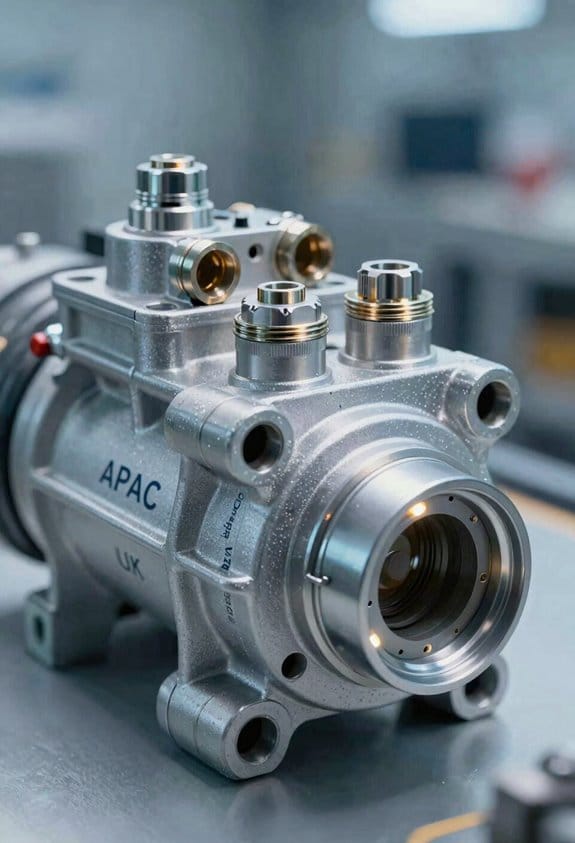
If you’ve ever wondered where inverter compressors actually get used, this will explain it and why it matters in one sentence: they cut energy use and give tighter temperature control across home, commercial, and industrial cooling.
Home and small commercial uses — where you’ll see them most
Why it matters: saving 20–50% energy compared with fixed‑speed units reduces your bills and wear.
1) What they power: your home air conditioners, refrigerators, and heat pumps, plus small commercial HVAC and display cases.
Example: a 3‑ton inverter HVAC in an apartment will ramp speed to match a thermostat instead of cycling on and off, so your monthly electric bill can drop by around 30%.
- In APAC — led by China, Japan, and India — urban growth and appliance demand push wide adoption; manufacturers there scale production and often offer cheaper units.
- In the UK — adoption targets industrial upgrades in chemicals and automotive with government‑driven specs and retrofit programs.
- In the US — you’ll find retrofits and utility incentives that favor variable‑speed units in manufacturing and large HVAC.
Cold‑chain logistics — why you should care about variable speed
Why it matters: better temperature stability protects goods and lowers spoilage rates, which saves you money.
1) What it helps: refrigerated trucks, warehouses, and distribution centers where tight control keeps vaccines, seafood, or dairy safe.
Example: a refrigerated trailer using a variable‑speed compressor holds ±0.5°C instead of ±2°C, reducing product loss during a weeklong trip.
– Variable speed gives tighter control and lower energy use, so operating costs fall while product quality stays consistent.
Industrial and high‑capacity cooling — the case for continuous operation
Why it matters: continuous, high‑capacity cooling keeps processes stable and reduces downtime.
1) What they do: large cold rooms, process chillers, and industrial refrigeration that require continuous running and high volume.
Example: a food‑processing plant replacing fixed compressors with inverter models cut peak demand charges by 15% and reduced temperature swings during heavy loads.
– APAC market dominance is visible here too, with China scaling production and utilities incentivizing efficiency upgrades.
Quick practical steps if you want to pick or upgrade to an inverter compressor
Why it matters: following steps saves you money and avoids bad choices.
1) Check your load profile: short, frequent cycles favor inverter units; long steady loads may not.
2) Match capacity: size the compressor to peak and typical loads — oversizing wastes money.
3) Look for incentives: search local utility rebates in the US and UK; in China, check manufacturer programs.
4) Get a baseline: measure current consumption for 1–2 weeks before switching so you can compare.
Example: measure kWh for a refrigerated warehouse for seven days, install a 15% smaller inverter system sized to average load, and expect 20–40% energy savings.
Region summary — who’s leading and where to focus
Why it matters: knowing leaders helps you find suppliers and incentives quickly.
1) APAC (China, Japan, India): mass production, lower prices, fast adoption in homes and industry.
2) China specifically: local manufacturers scale up and utilities promote efficient units.
3) UK: targeted industrial upgrades in chemicals and automotive driven by regulation.
4) US: retrofits and incentives in manufacturing and large HVAC encourage variable‑speed adoption.
Example: if you operate in India, contact local manufacturers first for competitive pricing and rapid delivery.
If you want, tell me your application (home AC, refrigerated truck, or plant chiller), and I’ll give specific sizing and expected savings numbers for your case.
Innovations and Challenges in Inverter Compressor Development
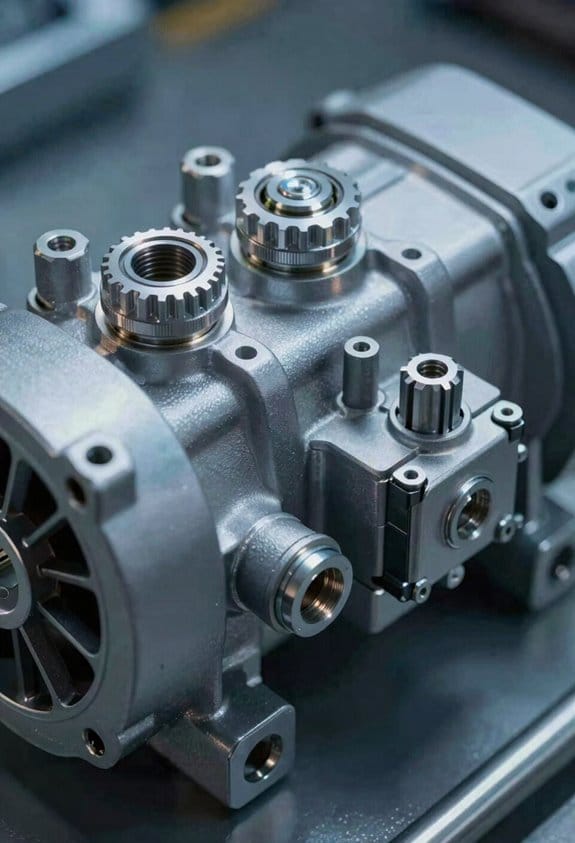
If you’ve ever tried to make a noisy, power-hungry compressor run quieter and cheaper to operate, this explains what matters and why.
Why it matters: inverter compressors cut energy use across varying loads, so they lower your electricity bill and run more smoothly.
– Brushless DC motors save energy because they cut mechanical friction and let you control speed precisely. For example, in a 10-ton HVAC unit, switching from a fixed-speed motor to a BLDC motor can reduce part-load power draw by around 30%. To use one, you’ll pick a motor rated for the peak torque you need (e.g., 15–20 Nm for medium-sized units), match the inverter’s voltage and current limits, and mount it on vibration-isolating pads rated for at least 3000 N per corner.
Why it matters: better control keeps pressures stable and prevents short-cycling that wears components.
– Modern control algorithms modulate compressor power to stabilize the system, but they add software you must test. Example: a PID-based speed controller tuned for a heat pump reduced pressure swings from ±12% to ±3% during a hot-day test in a commercial chiller. Steps to implement:
- Choose control architecture (e.g., PID, model predictive).
- Simulate with real thermodynamic curves.
- Run hardware-in-the-loop for at least 48 hours under variable loads.
- Validate safety interlocks with fault-injection tests.
Why it matters: sensors catch small problems before they become costly failures.
– IoT sensors let you do predictive maintenance by tracking vibration, temperature, and performance over time. For instance, fitting an accelerometer and thermistor to a supermarket compressor revealed a bearing bearing fault three weeks before failure, saving $6,000 in emergency repairs. To set this up:
- Install sensors at key points: motor housing, discharge line, and mounting feet.
- Sample vibration at ≥1 kHz for bearing diagnostics and temperature at 1 Hz.
- Send anomalies to your dashboard using MQTT with TLS encryption.
Why it matters: new refrigerants change how the compressor must operate and what materials will last.
– The refrigerant shift to low-GWP fluids changes thermodynamic behavior and requires redesign and material checks. Example: replacing R-22 with a mildly flammable low-GWP refrigerant raised discharge temperatures by about 15°C in a split system, so the head gasket and discharge tubing needed alloys rated for higher thermal stress. Practical actions:
- Recalculate pressure–enthalpy cycles with the new refrigerant.
- Check compatibility for seals, lubricants, and valves against supplier chemical tables.
- Add a 10–20% safety margin to temperature and pressure ratings.
Why it matters: higher upfront costs and integration issues can derail projects if not planned.
– Manufacturers face higher upfront costs, so you must budget for testing, standards alignment, and training. For a mid-size OEM, certification and test rigs can add $200k–$500k to development. Practical steps:
- Allocate at least 8% of project budget for compliance testing (EMC, pressure, flammability).
- Schedule a two-week factory training for service teams before product launch.
- Create test protocols that include endurance runs of 1,000 hours at representative loads.
If you follow these steps—pick the right BLDC motor, validate control software, install IoT sensors correctly, verify materials for new refrigerants, and budget for testing and training—you’ll have a much better chance of deploying a reliable, efficient inverter compressor system.
Buying Inverter Compressors: Cost, Retrofitability, and ROI
Here’s what actually happens when you buy an inverter compressor: you pay more up front and usually pay less in energy bills later.
Separate upfront price from lifecycle cost so you can compare apples to apples. For example, a new 50-HP inverter compressor might cost $25,000 installed, while a basic fixed-speed unit is $15,000; expect energy savings of 20–40% depending on duty cycle. Why this matters: if your system runs at partial load most of the day, the inverter pays back faster. Real-world example: a food-packaging plant replaced a 50-HP fixed compressor and cut energy use by 35%, dropping its annual electric bill by about $8,000.
Before you retrofit, check physical and control compatibility. Older compressor frames often won’t accept modern inverters, and you may need new variable-frequency drives (VFDs), control panels, or piping changes. How to evaluate retrofitability:
- Inspect the motor nameplate and frame size.
- Confirm VFD mounting space and ventilation in the motor room.
- Check control I/O compatibility with your building management system.
If the motor frame doesn’t match or the control protocol differs, you may need a new motor or adapter plate. Example: a refrigeration unit from the 1990s required a new baseplate and VFD-mounted filter to prevent nuisance trips.
To estimate ROI, compare measured load profiles, projected energy savings, and local incentives, then calculate simple payback. Why this matters: this gives a realistic timeline for recouping your investment. Steps to calculate payback:
- Measure current average kW and annual run hours (use a power logger over 1–2 weeks).
- Estimate percent energy reduction (use vendor data or 20–40% for variable load situations).
- Multiply current annual kWh by the expected savings percentage and your electricity rate to get annual $ savings.
- Subtract available incentives or rebates.
- Divide net installed cost by annual savings to get payback years.
Example: if you use 200,000 kWh/year, expect 30% savings at $0.10/kWh, and have $5,000 in rebates on a $25,000 retrofit, payback = ($25,000–$5,000) / (200,000×0.30×0.10) = 6.7 years.
Include maintenance differences when projecting lifecycle costs because electronics and sensors change what you do and when. You’ll still need routine mechanical checks, but plan for VFD cooling-fan replacements, occasional firmware updates, and better fault logging that enables predictive maintenance. Example: a plant saved one unplanned shutdown per year after adding inverter monitoring, which recovered an estimated $12,000 in lost production.
If retrofit barriers are high, consider staged replacement or a hybrid approach. Why this matters: it lowers near-term capital while improving efficiency where it counts. Steps for a staged plan:
- Replace the most-loaded unit first.
- Add VFDs to secondary units if savings justify it.
- Monitor performance and adjust the schedule based on measured results.
Example: a distribution center swapped one of three compressors and saw a 15% site-wide energy drop before committing to the rest.
Quick checklist before you sign a purchase order:
- Confirm measured load profile (hours and kW).
- Get installed cost quotes including controls and wiring.
- Verify motor-frame and shaft compatibility.
- Estimate incentives and calculate payback years.
- Plan for VFD maintenance and spare parts.
If you follow these concrete steps, you’ll know whether an inverter compressor is a smart move for your site and how long it will take to pay for itself.
Frequently Asked Questions
How Do Inverter Compressors Affect Equipment Noise Levels Long-Term?
Honestly, they massively lower noise initially, but long term acoustic degradation can occur from vibration-induced wear; I’ll monitor resonance shifts and mounts, since changed vibration patterns may slowly raise noise unless I maintain bearings, dampers, and alignment regularly.
Are Spare Parts Widely Available for Inverter Compressor Models?
Yes — I’ve found parts availability is generally good for popular inverter compressor models, though availability varies; I always check warranty terms and local distributor stock, since warranties may require authorized parts and affect repair options.
What Cybersecurity Risks Do Iot-Enabled Inverter Compressors Pose?
I’m worried: over 45% of connected industrial devices lack robust security, so IoT-enabled inverter compressors risk data exfiltration and firmware tampering, enabling operational disruption, IP theft, and prolonged downtime unless patched and segmented.
How Do Inverter Compressors Perform in Extreme Cold Climates?
They handle cold startups better than fixed-speed units, and I’ve seen good capacity retention at low temps thanks to variable-speed control, though starting torque limits and lubricant/valve design can still challenge absolute cold extremes.
Can Inverter Technology Be Leased or Financed for SMES?
Yes — I can confirm lease options and financing plans are available for SMEs; I’d recommend exploring vendor leases, equipment-as-a-service, lease-to-own, and green financing to spread costs and access inverter benefits without large upfront investment.