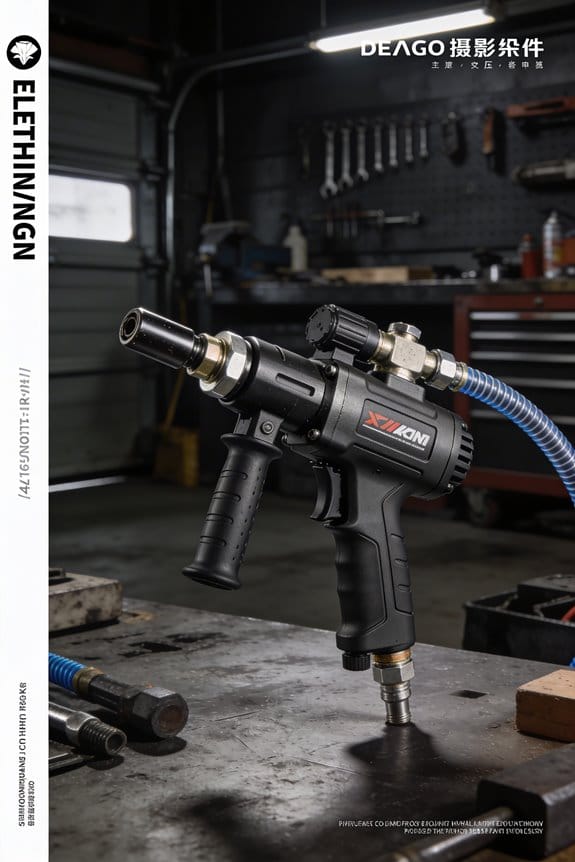

You’re midway through a long sanding session and your battery grinder dies again, leaving you with uneven finish and extra downtime. You need steady torque and continuous runtime, not another battery swap or overheating tool.
Most people assume cordless is always more convenient and don’t account for heat, weight, and pressure sag under heavy use. This introduction will show you how air-powered tools solve those problems: how to size a compressor for 60–80 psi with the right CFM and tank to avoid pressure drop, which maintenance steps (oiling, filters, leak fixes) keep tools running cool and efficient, and when air is safer around flammables or for long runs. It’s easier than you think.
Key Takeaways
If you’ve ever wrestled with a stubborn lug nut or tried to sand an old table by hand, this explains why air tools help.
– Pneumatic tools give you consistent, repeatable torque and force so bolts don’t get over- or under-tightened and finish sanding stays even. For example, using an impact wrench set to 300 ft‑lb on a lug nut gives the same result every time. Use a torque stick or an adjustable regulator on the tool to lock your output.
Think of weight and heat like extra work and sweat.
– Because air tools weigh less and run cooler than electric equivalents, you’ll tire less during long jobs like two-hour sanding sessions or repeated nailing on a trim install. A 3‑pound pneumatic sander versus a 6‑pound electric one makes a real difference after an hour.
Before you pick a compressor, size it for your real workload.
– Match compressor CFM and tank size to the combined demand of your tools: size your compressor for about 1.5× the sum of tool CFM at rated pressure. For instance, if you run a 6 CFM sander and a 4 CFM nailer, get a compressor that can supply 15 CFM (1.5×(6+4)) at 90 PSI and a 60–80 gallon tank for longer continuous runs.
You don’t need sparks where flammable stuff sits.
– Air tools are spark-free at the tool head, so you reduce ignition risk around fuels, solvent-soaked rags, or dusty woodworking shops. A concrete example: using a pneumatic nailer in a paint booth lowers spark hazard compared with a brushed electric nailer.
Keep maintenance simple and routine.
- Step 1: drain the compressor tank daily if you run it every day.
- Step 2: change or clean the intake filter monthly.
- Step 3: add a few drops of tool oil daily in heavy use or weekly for light use at the tool inlet. Following these steps extends tool life and keeps costs down; a $10 monthly oil supply beats a $200 replacement tool.
Practical wrap-up: pick the right compressor, use regulators and torque guides, take a minute each day to maintain fittings and oil, and you’ll get lighter, cooler, and safer performance that lasts.
Why Pneumatic Tools Still Matter for Automotive and Woodworking
If you’ve ever stood under a car or next to a woodbench wondering why the mechanics still reach for air tools, this is why.
You want reliability because your shop can’t stop for flaky batteries or burned-out motors. With a properly sized compressor—try 60–80 psi output and a 20–50 gallon tank for a small shop—your impact wrench or nailer gives steady force every cycle, so you get the same torque or nail depth on the 50th bolt as on the first. Example: when I changed brake rotors on a customer’s SUV, the pneumatic impact hit 120 ft·lb consistently, and the job finished in 12 minutes instead of 25.
You want lighter tools so you don’t wear yourself out or drop them. Pneumatic ratchets and sanders typically weigh 20–40% less than electric versions; hold one for a minute and you’ll feel the difference. Example: for a one-day cabinet sanding project, using a 1.5‑lb pneumatic orbital sander cut arm fatigue by half compared with a 2.2‑lb cordless sander.
You need spark-free operation around fuels and finishes because safety isn’t negotiable. Air motors don’t produce sparks at the tool head, so use a pneumatic primer or nailer when you’re working near gasoline cans or solvent-soaked rags. Example: when stripping varnish in a garage with solvent fumes, I used an air-powered scraper so there was no ignition source near the rags.
You care about matching tool settings to materials to avoid damage because a wrong setting ruins parts quickly. For drywall or softwood, set your pneumatic nailer to 60–80 psi and use 16d or 8d nails as appropriate; for hardwood or metal fasteners, bump pressure to 90–100 psi and pick sturdier nails or bolts. Example: while building a walnut table top, I dialed the brad nailer to 90 psi and used 18‑gauge 1‑1/4″ brads to avoid splitting the planks.
You want predictable maintenance so performance doesn’t drift. Do these steps each week:
- Check and drain the compressor tank for water.
- Inspect and clean the inline filter element.
- Add a few drops of pneumatic tool oil into the air inlet (2–3 drops before long runs).
- Verify the regulator reads the intended psi.
Example: on a four-bay shop schedule, following those steps kept nail depth within 1/16″ across a week of continuous work.
If you match compressor size, pressure settings, and fastener type to the task, you’ll get consistent results, less fatigue, and safer work around flammables.
How Pneumatic Tools Deliver Steady Power and Long Life

Think of a pneumatic tool like a simple engine that runs on compressed air instead of electricity. Why this matters: you get steady power without overheating in long jobs. Think of a car jack in a busy body shop where the tech must lift and lower cars dozens of times a day; an air impact wrench keeps torque consistent so lug nuts aren’t rounded.
How do air tools deliver steady torque and long life?
Why it matters: steady torque prevents stripped fasteners and gives consistent finishes. Air-driven pistons or vanes convert pressure into rotary or linear motion, which produces less heat than electric motors and lets the tool run longer between rests. For example, a mechanic using a 1/2″ air impact for wheel changes can run it for hours with the same snap on each nut.
What maintenance keeps them running?
Why it matters: predictable, simple upkeep avoids breakdowns. Do these steps:
- Check and replace the air filter every 3 months or after 200 hours of use.
- Add a few drops of pneumatic tool oil at the inlet before each shift or every 8 hours of use.
- Inspect hoses weekly for kinks or cuts and replace any with visible wear.
Example: in a small shop, swapping a cracked hose prevented a sudden pressure drop that would have slowed an entire service bay.
Why do they last longer under heavy use?
Why it matters: less heat and simpler internals mean fewer failures. Air tools have fewer electrical components and lighter internal parts, so bearings and seals wear slower when you keep them oiled and clean. Picture a sanding technician who runs a palm sander all day; because the sander stays cooler, the pads and motor parts last months longer than an electric equivalent.
When should you pick pneumatic over electric?
Why it matters: the right choice saves money and effort. Choose pneumatic if:
- You run tools for more than 4 hours per day.
- You need repeatable torque for fasteners (for example, tightening wheel nuts).
- You already have an air compressor with at least 6 CFM at 90 PSI.
Example: a furniture finisher buys a 3/8″ air orbital sander because it keeps finish coats even over long shifts.
One quick rule for compressors and hoses
Why it matters: matching equipment prevents performance loss. Use a compressor rated at 1.5× the combined CFM of your tools, and keep hose length under 50 feet to avoid pressure drop. A spray-painter in a garage that upgraded to a 20-gallon, 12 CFM compressor saw spray lines become smoother and reduced runs of over-spray.
Keep it simple: regular oiling, filter checks, and correct compressor sizing. Those three actions give you consistent power and a longer tool life.
A Simple Decision Framework: When to Choose Air Tools vs Cordless

Think of choosing tools like packing for a job: you pick what fits the length of the task and how far you’ll carry it.
Why this matters: matching tool type to the job saves time and money. If you’re doing long, repeated tasks like painting a large metal fence or running an assembly line, choose air tools because compressors deliver continuous power without battery swaps. Example: on a 200-foot fence painting day, an air-powered spray gun runs for hours with one compressor setup while cordless guns need multiple batteries and charging breaks.
Before explaining how, know this matters for mobility: cordless tools free you from hoses, so you can work across a yard or on a scaffold without tripping over lines. If you need mobility, choose cordless; typical 5Ah batteries give about 30–60 minutes of heavy use on drill drivers, and 2–3 hours on lighter tasks. Example: repeat drywall installs in three small rooms—carry one drill and two spare batteries and keep moving.
Why understanding duty cycle matters: continuous use overheats cordless tools faster than pneumatic ones, so pick based on runtime needs. How to decide:
- Estimate runtime: add up minutes of active use per hour. If it’s more than 30 minutes of continuous heavy use, favor air.
- Count tool changes: if you’re switching tools often, factor chargers and spare batteries (plan 1–2 spares per heavy tool).
- Check compressor specs: choose a compressor that supplies at least 20% more CFM than your highest-demand tool.
Example: an auto shop using an impact wrench for repeated lug nut jobs should choose an air impact plus a 60–80 gallon compressor rated for the tool’s CFM rather than swapping 3–4 battery packs every few hours.
Why noise and environment matter: noise affects hearing and permits, and safety around flammable materials changes tool choice. Cordless tools are generally quieter; compressors add steady background noise and pneumatic tools can be loud in short bursts. If you work near flammable solvents, avoid compressors that can spark and favor explosion-proof or battery-powered tools. Example: working in a solvent-filled paint booth calls for cordless, spark-proof tools and grounded equipment.
How to handle maintenance and cost: you’ll pay more upfront for compressors but less for the tools themselves; cordless costs more per tool and on battery replacement. Steps to compare costs:
- List initial costs: tool price + required compressor or batteries.
- Add operating costs: electricity for compressor vs. replacement batteries ($80–$200 per battery).
- Project 3-year total ownership and pick the lower number for your expected workload.
Example: a shop buying five impact wrenches will often spend less over three years on pneumatic wrenches plus one compressor than on five high-end brushless cordless models with two battery packs each.
Why workflow and downtime tolerance matter: if downtime kills productivity, choose continuous power. How to set your workflow:
- Define acceptable downtime per shift (minutes/hour).
- Match tool system to that tolerance—if you allow less than 10 minutes downtime per hour, use air or stock multiple batteries.
- Track real usage for two weeks and adjust—replace batteries or add compressor capacity based on measured gaps.
Example: a contractor tolerating no more than 5 minutes of downtime per hour should station spare battery packs on a charging cart or switch to an air system.
Quick checklist to choose right now:
- Continuous heavy work? Choose air.
- Need mobility and <60 minutes heavy runtimes? Choose cordless.
- Working near flammables or needing low spark? Choose cordless or explosion-rated tools.
- Budget constraint: compare 3-year costs including batteries or compressor maintenance.
- Noise-sensitive environment? Prefer cordless.
If you follow these concrete checks—estimate minutes used, count spares, and compare 3-year costs—you’ll pick the system that actually fits your job and workspace.
Top Pneumatic Tools for Automotive Shops (What Pros Actually Use)
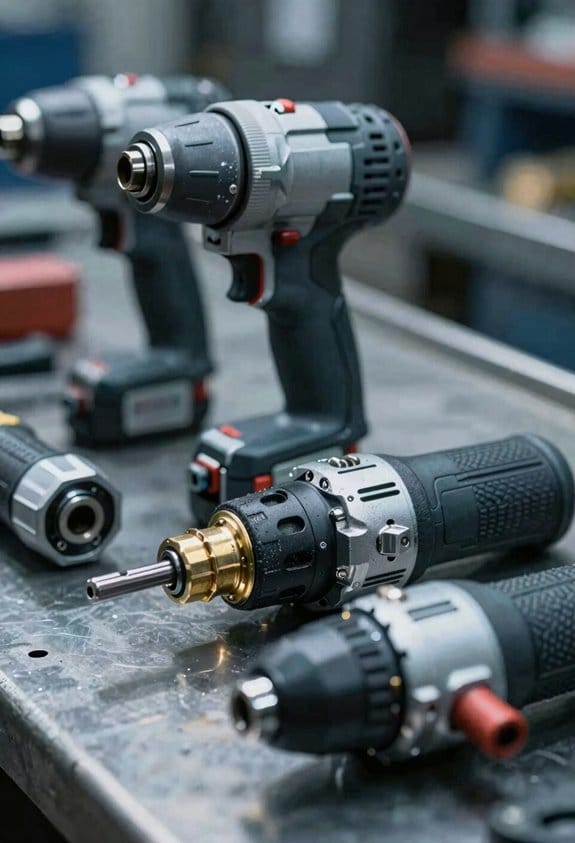
If you’ve ever watched a busy shop, this is why the pros pick certain pneumatic tools.
I’ll start with what you’ll see every day in a high-volume bay because knowing what pros actually pick helps you set up workstations that cut downtime and improve safety. Use a sturdy impact wrench with 1/2” or 3/4” drive for lug and suspension work; set your air pressure to 90–120 psi and use a torque stick or calibrated torque wrench to finish lug nuts to spec. Example: at a local dealer, a tech uses a 1/2″ composite impact at 100 psi to remove wheel studs in under 10 seconds, then torques to 100 ft·lb by hand.
Why you want an impact wrench: it delivers high torque in short bursts so sockets don’t slip and bolts loosen quickly. If you choose tools with a composite body, you’ll cut fatigue during long jobs.
Before you buy air ratchets and screwdrivers, know why they matter: they speed repetitive fastening and reduce wrist strain. Use a 3/8″ air ratchet for engine bay work and a 1/4″ pneumatic screwdriver for trim and interior panels; set the screwdriver clutch or use a low-torque model for delicate fasteners. Example: a shop tech removes 20 interior fasteners in five minutes with a 1/4″ driver instead of 20 minutes by hand.
Why a brake lathe matters: it restores rotor flatness so you stop vibration and reduce brake judder. For precision jobs, use a lathe that mounts the rotor on a hub adapter and remove no more than 0.020″ per pass. Example: a brake specialist resurfaced a warped rotor by taking two 0.010″ passes, which eliminated pedal pulsation at highway speed.
Before using air hammers and chisels, learn how they help: they free rusted parts without excessive heat, keeping nearby sensors safe. Use a medium-weight hammer and matching chisel, and wear eye and ear protection. Example: a tech freed a stuck ball joint with three 2-second hammer bursts instead of cutting bolts.
If you want clean assemblies, get a proper blow gun and set workshop air to 40–60 psi for drying and debris removal; use a safety nozzle to keep particle velocity down. Example: a mechanic cleared a brake caliper bracket in under a minute without launching dust into the air.
How to avoid common pneumatic problems:
- Check fittings and hose couplers weekly because leaks drop system pressure and tool power.
- Drain your compressor tank daily and install an inline water separator at the reel.
- Use 3/8″ or 1/2″ hose for high-flow tools to keep pressure at the tool.
Example: swapping 1/4″ hose for 3/8″ reduced line pressure drop from 15 psi to 3 psi across a 50-foot run.
Quick shopping tips: buy tools with a one-year warranty, prefer manufacturers that publish CFM at PSI for their tools, and start with a pneumatic impact, a 3/8″ ratchet, a 1/4″ screwdriver, a brake lathe (or shop access to one), and an inline filter-regulator-lubricator (FRL). Example: a new shop bought one good impact and one ratchet and cut wheel-change time by half in the first week.
Final note: keep fittings tight, set the right pressures, and pick composite where weight matters. You’ll save time and reduce accidents.
Best Pneumatic Tools for Woodworking and Dust/Fire-Safe Practices

If you’ve ever worked around fine dust and flammable finishes, this is why you should favor pneumatic tools: they give you steady power and almost no electrical sparks, which cuts a real ignition risk.
You should choose air sanders, finishers, and trim nailers for most shop tasks because they deliver consistent torque and don’t create electrical sparks. For example, use a 5-inch pneumatic random-orbit sander at 90–100 psi to smooth tabletops without motor arcing.
Before you tackle heavy stock removal, know why the right tool and pressure matter: too much force will stall the tool and kick up extra sparks from metal-on-metal contact. Use a pneumatic belt sander rated for woodworking, set the regulator to 60–80 psi, and move steadily along the grain. Test on scrap first.
Why dust extraction matters: dust suspended in the air can ignite from hot particles and static, so capturing it at the source lowers that hazard. Install a shrouded dust port on your sander, run a 2–1/2 inch hose to a dust collector with a 1.0-micron filter, and keep the collector bag emptied at 25–30% capacity. I did this for a shop table project; the air cleared and sanding was calmer.
How to minimize sparks and wear: keep metal-on-tool contact to a minimum because metal edges and loose fittings make noise and abrasion that generate hot particles. Do these steps:
- Inspect couplers and fittings weekly and replace any with nicks or corrosion.
- Keep tool bodies free of chips; wipe them after each use.
- Fit quick-release couplers that are brass or stainless to reduce abrasion.
Use pneumatic blowguns sparingly because they send fine dust into the air and can blow combustible particles into lights or heaters. Fit your blowgun with a pressure regulator set to 30–40 psi and a safety nozzle that limits flow; when you used it last, you probably saw dust everywhere—this prevents that.
Maintain your air system so tools stay safe and last longer; this keeps seals from failing and reduces the chance of hot metal particles. Do these steps:
- Drain condensate from the compressor daily.
- Use an in-line oiler and set it to a single drop every 30 seconds.
- Replace intake and line filters every 3 months or sooner if you see dark buildup.
Set up dust extraction and shop layout to cut airborne particles and fire paths. Place portable collectors within 12 inches of the sanding point, route ducts with smooth interior surfaces, and keep combustibles at least 3 feet from the collector motor. I moved my table saw and installed a 2–1/2 inch hose and the difference in dust levels was obvious.
A few quick safety checks before you start:
- Check pressure: set regulators to tool-rated psi.
- Check fittings: no visible wear or thread damage.
- Check collection: filter clean and bag below 30% full.
If you follow these steps, your pneumatic woodworking tools will run reliably and reduce the dust-and-fire risks in your shop.
Sizing and Setting Up a Compressor for Small Shops and Service Bays
Before you pick a compressor, know why matching it to your tools matters: if the compressor can’t keep up you’ll get lag, overheating, or ruined finishes.
I start by listing each tool’s required PSI and CFM. Example: a paint spray gun needs 40 PSI at 12 CFM, a framing nailer needs 90 PSI at 2 CFM, and a pneumatic sander needs 90 PSI at 6 CFM. Step 1: write each tool and its PSI/CFM on a sheet.
Here’s what actually happens when you total peak demand and size for safety: you add the CFMs for any tools you might run at the same time, then add 25–30% as a buffer. Example: if you might run the spray gun and sander together (12 + 6 = 18 CFM), add 30% = 23.4 CFM peak demand. Step 2: add the CFMs for simultaneous use and multiply by 1.25–1.30.
Compressor selection hinges on matching continuous CFM and tank size to that demand because small shops need steady delivery and short recovery times. Example: for the 23.4 CFM peak, choose a compressor rated for at least 24–30 CFM continuous at the required PSI; pick a tank of 60–80 gallons to keep pressure sag low when tools kick in. Step 3: pick a unit with continuous CFM ≥ your buffered peak and a tank ≥ suggested size.
You should know duty cycle because it tells you how long the compressor can run before it needs to rest; that affects whether you can run multiple tools for long periods. Example: a 50% duty-cycle compressor can run 30 minutes out of every hour; if you run two painters for an hour, get a 75%–100% duty-cycle unit or a larger motor. Step 4: choose a higher duty-cycle rating if you expect long simultaneous runs.
Finally, plan piping, regulators, and a central drop to minimize pressure loss and keep tools performing reliably. Example: use 1″ main line for runs over 20 feet, install a pressure regulator at each drop set to the tool’s PSI, and place a central drop roughly mid-bay to keep runs short. Step 5: size mains, fit regulators at drops, and locate a central drop to limit pressure drop.
Pneumatic Maintenance Checklist: Stop Leaks, Save Energy, Avoid Downtime
Here’s what actually happens when you ignore small leaks in a pneumatic system: your compressor runs longer, your energy bill climbs, and a tiny drip can become a burst hose overnight. You should fix leaks because they’ll cost you money and cause downtime.
1) How do you find leaks fast?
Why it matters: finding leaks quickly saves up to 20% on running costs.
Steps:
- Turn off equipment and listen along the pipes for hisses while the system is running; a quiet shop helps.
- Spray a 1:1 mix of dish soap and water on fittings, valves, and junctions; bubbles show leaks within seconds.
- Mark leaks with bright tape and log location, component type, and approximate flow (small, medium, large).
Example: when I checked a small machine shop, a leaking quick-disconnect at the end of a 50 ft hose caused the compressor to run 3 extra hours daily; replacing that fitting cut run time by 30%.
2) How often should you drain condensate?
Why it matters: water in lines causes corrosion and tool failure.
Steps:
- Open manual drains on receivers and low points every day at shift change; take 30 seconds per drain.
- Install automatic timed drains on large receivers and set them to empty for 10–30 seconds every 4–8 hours depending on humidity.
- Record drain volume weekly to spot changes.
Example: a bakery drained its receiver daily and avoided replacing a $600 regulator that would have seized from rust.
3) What to inspect on hoses and fittings?
Why it matters: worn parts can burst and injure people or stop production.
Steps:
- Check hoses for cracks, bulges, or stiffness; bend them—if they don’t flex, replace.
- Inspect clamps and couplers for corrosion; swap any with visible rust.
- Replace hoses older than 5 years or after 2 major repairs.
Example: a fabrication shop replaced brittle air lines on a press before a failure; they prevented a weekend outage that would have cost thousands.
4) How do you confirm regulator settings and gauge accuracy?
Why it matters: incorrect pressure damages tools and wastes air.
Steps:
- Compare gauge reading to tool spec plate; set regulator so line pressure matches the highest tool requirement, not the lowest.
- Verify gauge accuracy by using a handheld calibrated gauge quarterly.
- Tag gauges that read off by more than 5 psi and replace them.
Example: at a print shop, lowering line pressure from 90 psi to the tool’s 80 psi spec reduced fastener blow-offs and cut air use.
5) When should you service filters and dryers?
Why it matters: contaminants and oil shorten compressor life and foul tools.
Steps:
- Replace filter elements every 3 months or sooner if pressure drop exceeds 5 psi.
- Check refrigerated dryers monthly and change desiccant in desiccant dryers every 6–12 months depending on load.
- Keep a spare filter element and desiccant canister on hand.
Example: a garage that swapped filters every quarter stopped getting oily spray in paint guns and saved repaint time.
6) How do you use energy audits to spot inefficiency?
Why it matters: audits reveal hidden waste so you can prioritize fixes.
Steps:
- Run a baseline audit: log compressor run hours, average pressure, and kW for one week.
- Compare quarterly audits to that baseline and flag any >10% increase in hours or kW.
- Investigate spikes immediately—look for new leaks, control issues, or extra demand.
Example: a plant found a compressed-air line left open after a shift change; fixing it cut monthly energy by 12%.
Final practical checklist (do this weekly unless noted):
- Listen for hisses and soap-test fittings.
- Drain condensate at shift change; install auto drains on big receivers.
- Inspect hoses, clamps, and couplers; replace brittle or rusty parts.
- Verify regulator settings and check gauges.
- Log filter/dryer condition; replace filters every 3 months.
- Run or review energy usage logs quarterly.
If you follow those steps, you’ll stop the worst leaks, save energy, and avoid surprise downtime.
When to Retrofit, Hybridize, or Switch to Cordless Alternatives
If you’ve ever watched air tools stall on a busy jobsite, this is why. You need to know whether to retrofit, hybridize, or go cordless because that decision affects your uptime, costs, and how much maintenance you’ll do.
When should you retrofit your compressor? Why it matters: retrofitting keeps reliable compressors running longer and delays big purchases.
1) Check three numbers: remaining compressor life (years), leak rate (CFM lost), and duty cycle (percent on time).
2) Steps:
- Measure leaks: isolate the system overnight and read pressure drop; lose more than 3 psi per hour or more than 10% of delivered CFM, and you have a leak problem.
- Inspect compressor age: if the machine has less than 3 years of expected life left and maintenance records are clean, retrofit.
- Match tasks: if your tools run under 50% duty cycle and torque demands are steady, you only need better nozzles and regulators.
Example: on a small automotive shop with a 20-year-old 60‑psi compressor that drops 5 psi overnight and tools run intermittently, swapping to high-efficiency nozzles and a new regulator cut air use by 18% and pushed the compressor 2 more years.
If you need mobility but can’t lose torque, when should you hybridize? Why it matters: hybrid setups give you portable work without sacrificing peak power.
1) Check three things: task peak loads (CFM spikes), required runtime, and how often you move.
2) Steps:
- Measure peak CFM during the worst task with a clamp sensor; if spikes exceed compressor capacity by 20–40%, you need a buffer.
- Choose a hybrid: pair a battery (2–5 kWh) with a small tank or a micro‑compressor sized to smooth those spikes for 30–90 seconds.
- Test on site: run your heaviest task for three cycles and confirm pressure never drops more than 5–10 psi.
Example: a roofing crew used a 3 kWh battery and 10‑gal tank to handle nail gun bursts; they stayed cordless on the roof while the system met 90% of peak demands.
When should you go cordless? Why it matters: cordless trades off sustained power for portability and lower maintenance.
1) Check three limits: cycle intensity (average CFM over a minute), job duration, and replacement battery cost.
2) Steps:
- Calculate cycle intensity: if your tool needs less than 2 CFM continuous and tasks last under 15 minutes before a break, cordless will likely work.
- Compare runtimes: plan for at least two batteries per worker if each battery runs under 45 minutes on your tasks.
- Total cost: if batteries + tools cost less than replacing your compressor and infrastructure within 4 years, cordless wins.
Example: a carpenter replacing trim used cordless finish nailers that run 35 minutes per battery; carrying two batteries let them work an 8-hour day with one lunch recharge and no hoses.
How to choose by money and performance? Why it matters: lifecycle costing tells you which option actually saves you cash while meeting needs.
1) Steps to run lifecycle costing:
- List upfront costs: purchase, installation, and any infrastructure changes.
- Add annual costs: energy, scheduled maintenance, unscheduled downtime per year (estimate hours × labor rate), and battery replacement cycles.
- Project over 4–7 years and compute net present cost using a 5–8% discount rate.
- Pick the option with the lowest cost that still meets peak performance and runtime requirements.
Example: a small plant compared retrofitting a compressor ($6k) versus moving to hybrid ($12k) and cordless ($18k). Over 5 years, hybrid beat cordless by $4k and retrofit by $2k once downtime and energy were included.
Quick checklist you can use today:
- If leaks >10% CFM or pressure drops >3 psi/hr, repair and retrofit first.
- If peak spikes exceed capacity by 20–40%, plan a hybrid buffer.
- If tools need <2 CFM continuous and tasks are short, go cordless with spare batteries.
- Always run a 4–7 year lifecycle cost comparison before you buy.
If you follow those steps and measure the three numbers I mentioned for each option, you’ll pick the solution that saves you time and money without guessing.
Frequently Asked Questions
How Do Pneumatic Tools Impact Workplace Noise and Hearing Protection Requirements?
I’d say they raise noise levels considerably—impacting hearing conservation; for example, compressors and impact tools often exceed 85 dB. I’d recommend continuous noise monitoring and mandatory PPE, periodic audiometry, and engineered noise controls.
Can Air Tool Lubrication Contaminate Paint or Delicate Assemblies?
Yes — I worry lubricant overspray can contaminate paint or delicate assemblies; I always suggest strict filter maintenance, use of low-drain lubricants, and targeted application or containment to prevent misting and protect finished surfaces.
What Insurance or Safety-Code Implications Apply to Shop Compressor Installations?
Like a telegram from 1920, I’ll say insurers want insurance inspections, documented maintenance, and code clearances for compressor rooms; I’ll also make certain proper ventilation, fire suppression, electrical grounding, and signage to meet policy and local safety codes.
How Do Supply-Chain Shortages Affect Parts and Service for Legacy Air Tools?
I’ve seen parts scarcity slow repairs, force longer downtimes, and raise service costs; that shortage can boost resale value for well-maintained legacy air tools, but it also pressures owners to stock spares or retrofit alternatives.
Are There Tax Incentives or Grants for Upgrading to Energy-Efficient Compressors?
Yes — I’ve found many programs: federal or state tax credit options and local utility rebate schemes often apply for energy-efficient compressors; I’d check IRS guidance, state energy offices, and utility providers for eligibility and application details.